Sourdough can be found referred to by a wide variety of terms such as mother yeast, levain, sourdough, or starter dough, but they all have the same purpose: to begin our artisan bread making with natural ferments.
Some historians say that sourdough originated in Egypt between 4000 and 3000 BC. Legend tells of a woman who lived near the Nile River and baked unleavened bread. One day, she forgot a piece of dough while preparing her loaves. When she returned, she noticed the dough had risen.
She incorporated this portion into a new batch of dough and baked it as usual. The result of that mistake was the discovery of the sourdough fermentation process.
For a long time, this method baffled bakers, as they didn’t understand why it happened. Thanks to advances in science, and especially microbiology, this natural fermentation process is now much better understood.
Table of Contents
What Is Sourdough Starter?
It is a natural ferment that can be used to replace commercial yeast, or to greatly reduce its proportion when making bread or dough.
If I had to recommend one ferment above all others for bread making, it would be this one. Not only for the benefits it provides to the dough and our health, but also for the connection we create with it. From the moment we begin, we slowly develop our own living culture that gives each loaf a unique character.
Many people think sourdough is very “slave-like”:
- I have to feed it every day
- I don’t have time
- What if I go away?
- What if I don’t bake bread for 30 days?
Absolutely nothing will happen. There is a solution for every situation, and it can easily be adapted to daily life.
What Do We Need to Make It?
Very little, actually:
- Flour
- Water
- Patience
To begin preparing your starter, it’s best to use wholemeal or rye flour, as it activates faster. If you live in an area with high chlorine levels, the water should be chlorine-free.
Chlorine inhibits bacterial growth, which is exactly what we want to avoid. To remove it, simply leave water uncovered overnight. This step is only necessary if your local water supply contains a high amount of chlorine.
After the first week of feeding the MaMa, enough yeast will have developed along with a good balance of beneficial bacteria. After two weeks, the MaMa stabilizes and is ready to use.
Benefits of Bread Made With MaMa
The benefits are noticeable both in flavor and health.
Flavor and Texture Benefits
- Rich aroma and deeper flavor
- A subtle acidic note (never overpowering)
- Crispy crust
- Extended shelf life (up to 5 days)
Health Benefits
Bread made with commercial yeast inhibits the absorption of essential minerals such as calcium and iron. Bread made with MaMa allows better nutrient absorption while remaining easier to digest.
As the MaMa ages, its acidity level naturally changes depending on the time between feedings.
Mother’s food is essential. To thrive, MaMa needs:
- Food
- Water
- Oxygen
It may be demanding, but the results are consistently excellent.
How to Feed a Sourdough Starter?
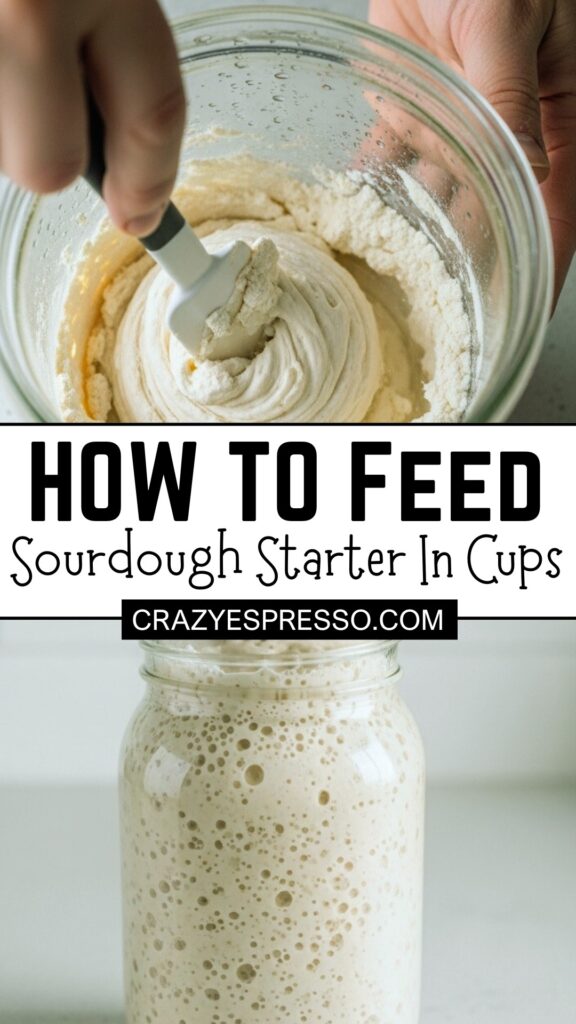
Sourdough (also called levain) is created through the controlled feeding of flour and water, producing a lactic ferment capable of leavening bread, pizza, and other doughs without commercial yeast.
Over several days, flour and water form a symbiotic community of bacteria, yeasts, and fungi (SCOBY). Unlike commercial yeast, which contains a single microorganism, sourdough contains multiple strains, resulting in richer flavor, better digestion, and improved nutrition.
Ingredients and Equipment
Ingredients Table
| Ingredient | Quantity |
|---|---|
| White flour (0, 00, 000, or 0000) | 1 kg |
| Rye or wholemeal flour | 1 kg |
| Chlorine-free water | As needed |
Equipment Table
| Tool | Purpose |
|---|---|
| Glass jar (500 ml or larger) | Fermentation |
| Precision scale | Accurate feeding |
| Tea towel | Airflow and protection |
Day-by-Day Feeding Schedule
Day 1
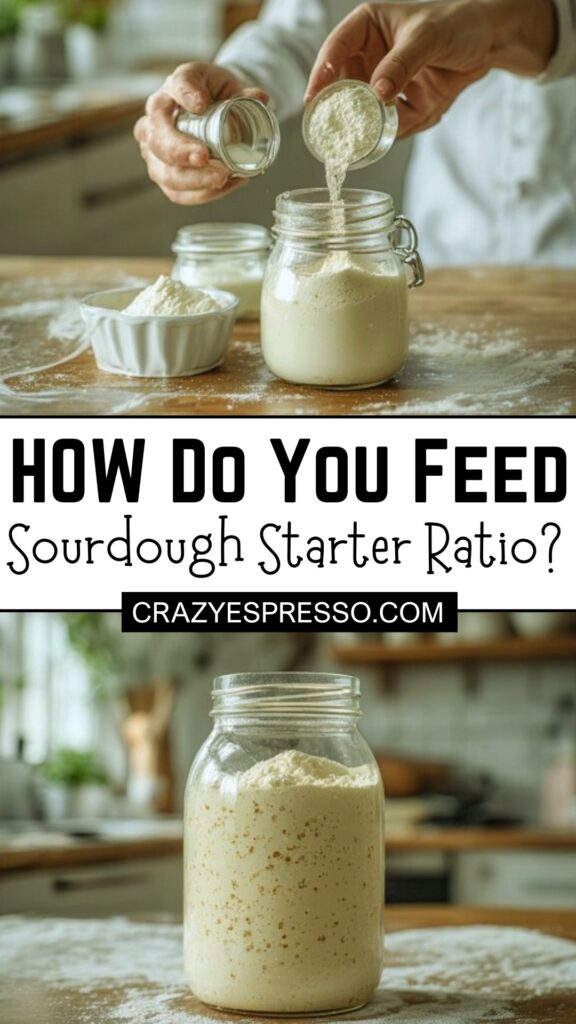
- Mix 500 g white flour with 500 g rye or wholemeal flour.
- Combine 50 g flour mix with 50 g water in a jar.
- Cover with a tea towel and leave at 23–30°C.
Day 2
- Add 50 g flour mix and 50 g water.
- Return to a warm place.
- Bubbles may appear, but the starter is not ready.
Day 3
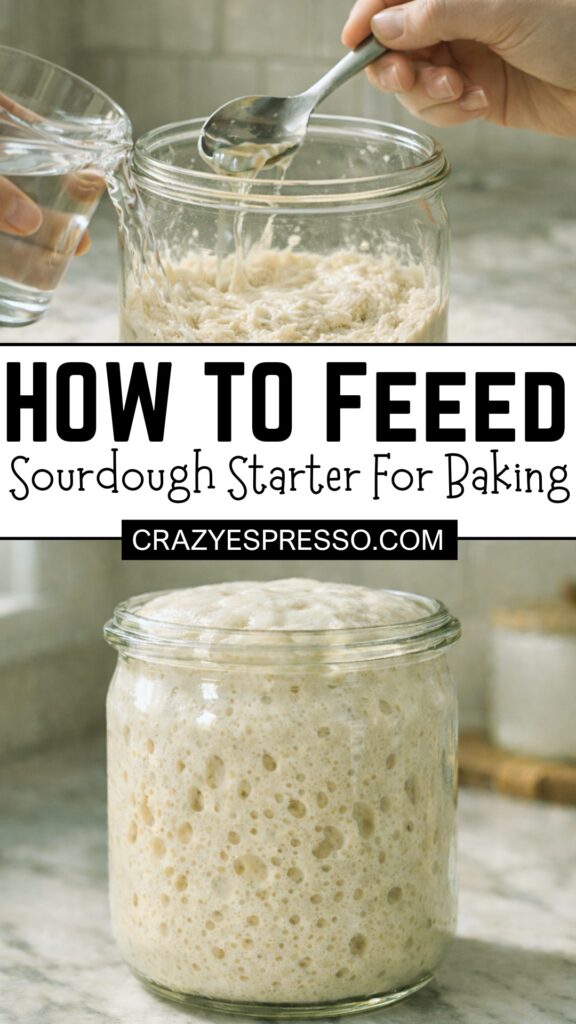
Begin feeding every 12 hours:
- 35 g starter
- 70 g flour mix
- 70 g lukewarm water (33–34°C)
Repeat after 12 hours.
Days 4–6
Continue feeding every 12 hours using the same ratios.
By day 5 or 6, the starter should show strong activity and pass the float test.
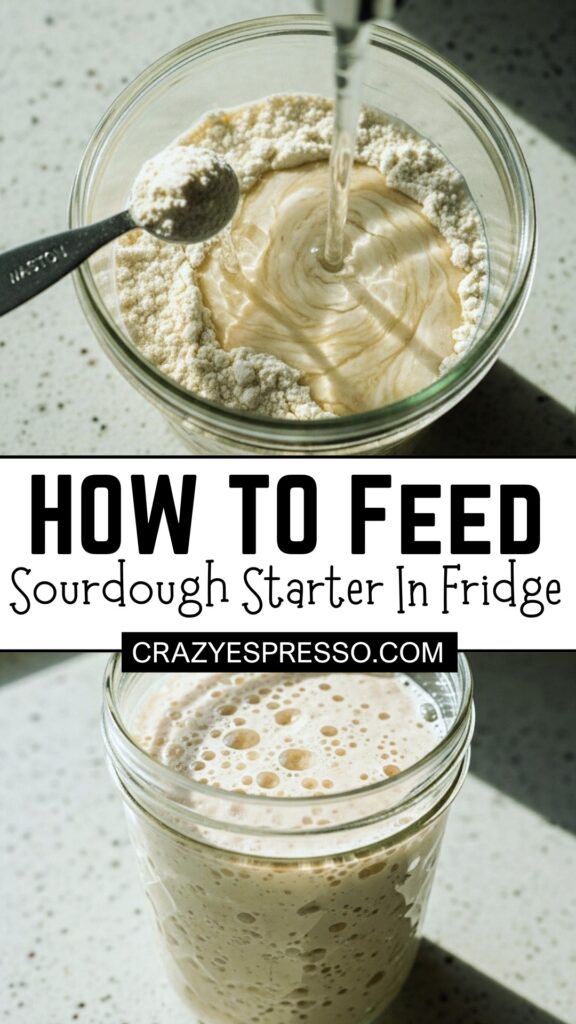
Storage and Maintenance: Once active, the starter can be stored in the refrigerator for several months.
If unused for more than a week, reactivate it by feeding every 12 hours for 2 days before baking. Nutritional Facts (Per Slice of Sourdough Bread)
| Nutrient | Approximate Amount |
|---|---|
| Calories | 160 kcal |
| Carbohydrates | 32 g |
| Protein | 6 g |
| Fat | 1 g |
| Fiber | 2 g |
| Sodium | 230 mg |
Frequently Asked Questions
Can I use only white flour?
Yes, but fermentation will be slower, and some refined flours may not work well.
Why does my starter smell sour?
A mild sour smell is normal. Strong or unpleasant odors usually mean it needs feeding.
Can sourdough become too acidic?
Yes, if underfed or kept too warm. Proper feeding keeps acidity balanced.
Do I need to feed it daily?
Only if kept at room temperature. Refrigerated starters need less frequent feeding.
Conclusion
Sourdough is more than just a baking method—it’s a living culture that connects tradition, flavor, and nutrition. With simple ingredients and regular care, MaMa rewards us with bread that is healthier, tastier, and longer-lasting than bread made with commercial yeast.
Once you understand it, sourdough easily adapts to your lifestyle and becomes a reliable baking companion.