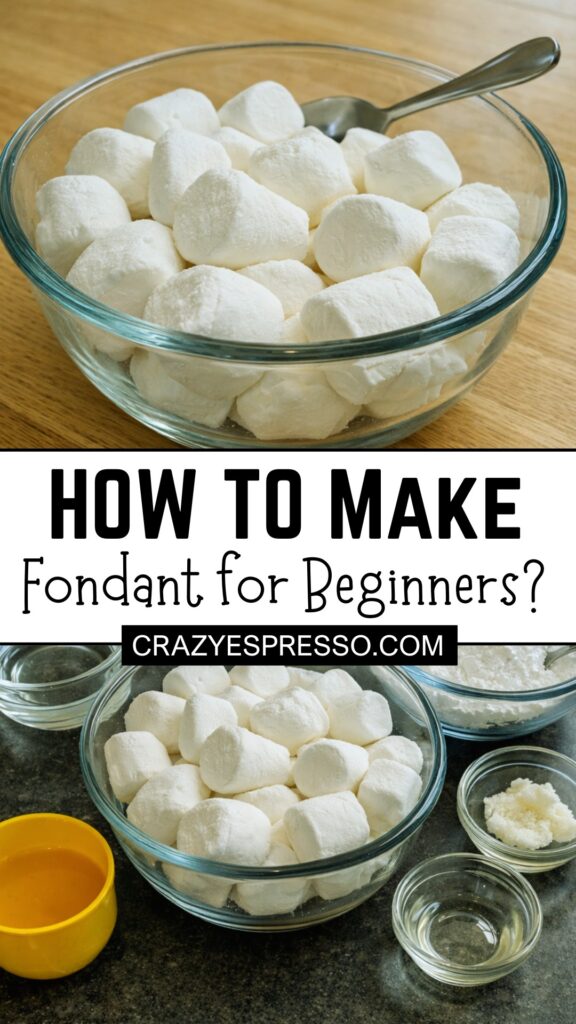
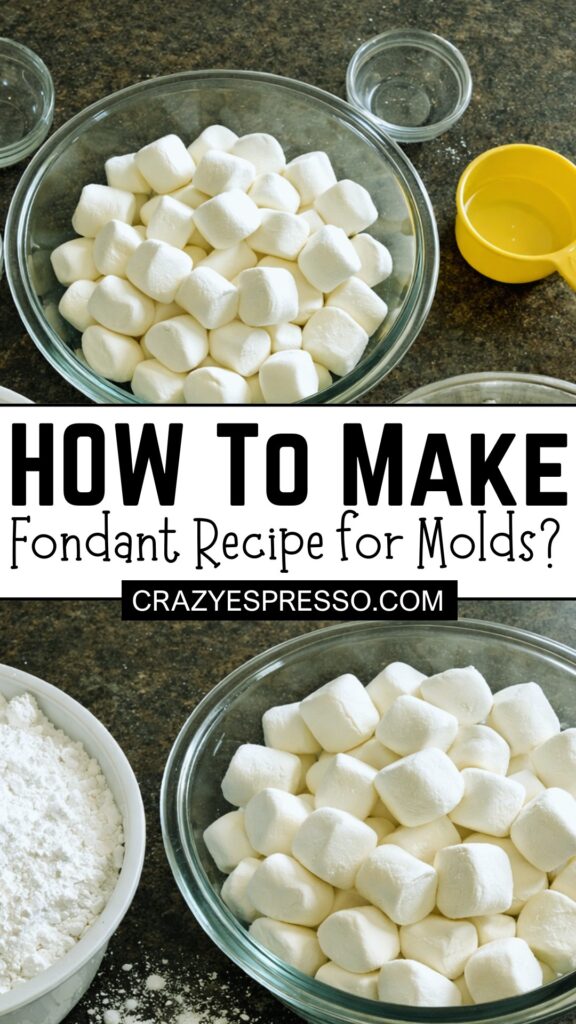
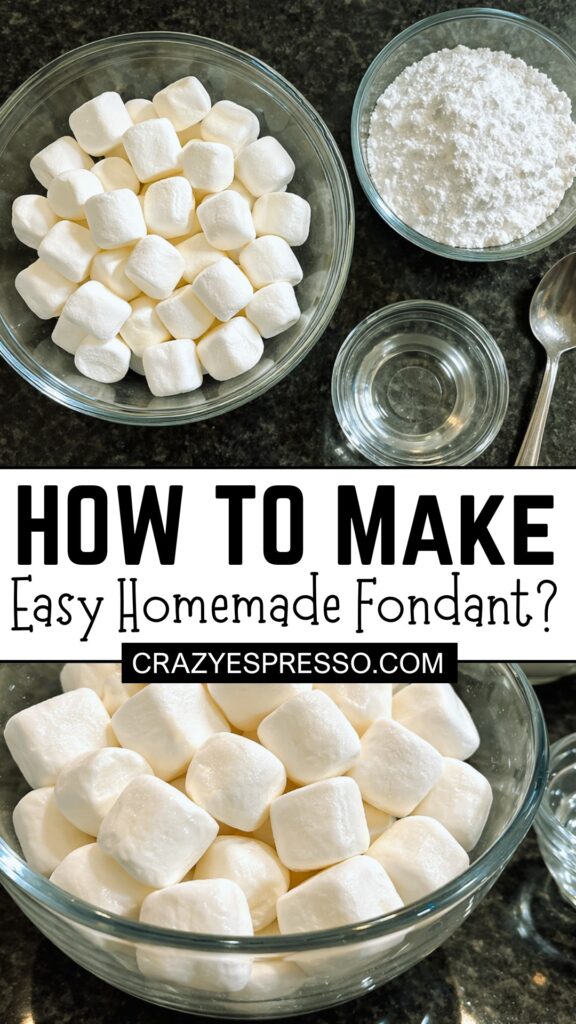
We have to admit that the arrival of fondant in our baking world surprised us. Very typical of American baking, where it’s often used to cover cupcakes and replace frosting in certain recipes, the truth is that making homemade fondant is very easy.
In addition to making it, we’re going to explain how you can use it at home and how you can change the flavor so you have different versions, like chocolate, so you don’t have to buy it ready-made, although it’s easy to find.
There are two ways to make fondant: the complicated and long way, which has several ingredients such as water, glucose, butter, or sugar, and the easy way — short and friendly — that we are going to do, which is taking advantage of the typical candy clouds marshmallows.
The only thing you’ll have to do to change the recipe is choose different types of flavorings and food colorings to alternate layers and, as we’ll tell you at the end, keep it covered when not in use so it doesn’t dry out.
Table of Contents
Benefits of Making Fondant at Home:
Making fondant at home might seem challenging, but once you master the process, it’s far more beneficial than buying it pre-made. Some of its advantages include:
- Improved texture – Homemade fondant is more flexible and easier to spread, preventing cracks and breaks.
- More balanced flavor – By controlling the ingredients, excessive sweetness can be reduced and natural aromas added.
- Natural ingredients – No preservatives or artificial additives.
- Greater adaptability – The proportions of the ingredients can be modified to adjust the consistency and elasticity according to the climate or the type of dessert.
- More economical – Making fondant at home is cheaper than buying high-quality versions in specialty stores.
Common Mistakes When Making Fondant:
Working with fondant can be tricky if you don’t follow certain basic principles. Some of the most common mistakes include:
- Fondant that’s too dry and cracked → This is usually due to too much powdered sugar or too little moisture. Solution: add a few drops of glycerin or a little melted butter to restore elasticity.
- Sticky and difficult-to-handle fondant → This can be caused by too much moisture. Solution: gradually add sifted powdered sugar until the desired texture is reached.
- Appearance of air bubbles → To avoid them, the fondant should be kneaded slowly and, if bubbles appear, they can be pricked with a fine needle before smoothing the surface.
- Fondant that cracks when covering the cake → This can happen if the mixture is too dry. Solution: add a small amount of liquid glucose or vegetable oil.
- Difficulty in coloring fondant → It is preferable to use gel colorings, as liquids can alter the consistency of the dough.
How to Make an Easy Fondant Recipe? 2 Ways
Recipe Details
| Detail | Information |
|---|---|
| Time | 40 min |
| Servings | 2 servings |
| Difficulty | Easy |
| Calories | 420 kcal |
| Dish | Desserts |
| Kitchen | Homemade |
| Keyword | easy recipe |
| Preparation time | 35 minutes |
| Cooking time | 5 minutes |
| Total time | 40 minutes |
| Portions | 2 servings |
| Author | Emilys Velásquez |
Ingredients: Marshmallow Fondant
| Ingredient | Quantity |
|---|---|
| Powdered sugar | 6 cups |
| Marshmallows | 1 bag |
| Water | 3 tbsp |
Ingredients: Traditional Fondant
| Ingredient | Quantity |
|---|---|
| Gelatin | 1 tbsp |
| Water | 1/4 cup |
| Liquid glucose | 2 tbsp |
| Glycerin | 2 tbsp |
| Vegetable shortening | 1 tbsp |
| Powdered sugar | 4 cups |
Step-by-Step Preparation
To Prepare the Marshmallow Fondant
- Start the recipe by placing the marshmallows in a bowl and pouring in the water, mixing until they are all soaked.
- Melt in the microwave for 3 minutes, but every 30 seconds, take it out and stir so it melts evenly.
- Place 4 cups of powdered sugar in a bowl. Then pour in the melted marshmallows and cover with the remaining powdered sugar.
- Using a spatula, mix both ingredients until a paste forms. Grease your hands and finish mixing with your hands.
- If you find the mixture is sticky, add a little more powdered sugar to make it firmer.
- When it is soft and manageable, make the fondant into a ball or a rectangle and set aside covered with cling film if you are not going to use it yet.
Let’s Start With Traditional Fondant
- In a small bowl, combine the water and gelatin. Mix and let it hydrate for 10 minutes. Then melt it in the microwave for 15 seconds. Mix thoroughly.
- Add glucose, glycerin, and vegetable shortening.
- Mix and microwave for another 15 seconds to melt and dissolve completely.
- In a bowl, combine 2 cups of powdered sugar and immediately pour in the mixture of glycerin, glucose, and gelatin.
- Mix thoroughly until everything is combined. Then add the remaining 2 cups of powdered sugar and finish mixing.
- Once it has thickened, transfer the fondant to the work surface and sprinkle with a little more powdered sugar.
- Knead until you obtain a manageable dough that does not stick.
- Form a rectangle and set aside covered with plastic wrap.
- Use it whenever you like.
Tips
- It’s best to use colorless essence, as this won’t color the fondant. If you don’t want to use essence, that’s fine; you can add a tablespoon of water.
- The same thing happens with marshmallows. Some places sell them in different colors, and that can give the fondant a color you might not want. It happened to me once; I bought colored marshmallows at the supermarket, and they turned my fondant a horrible gray color, so I had to throw it away.
- Sifting the powdered sugar is very important. Otherwise, we’ll end up with lumps, and it won’t do us any good; we won’t be able to fix it. Believe me, I’m speaking from experience; this was another time I had to throw away the whole batch of dough.
- To work the dough, we can use a table or a smooth surface, and we add powdered sugar so that it doesn’t stick to the surface.
- It can be kept in the refrigerator for up to three months.
How to Improve the Flavor of Fondant?
Traditional fondant is known for its extremely sweet taste, which may not appeal to everyone. Fortunately, there are ways to improve its flavor and make it more attractive:
- Vanilla or almond extract – Adds depth of flavor and reduces the feeling of excessive sweetness.
- Cocoa powder – Perfect for achieving a chocolate fondant with a sophisticated touch.
- Lemon or orange zest – Adds a fresh and aromatic touch.
- A pinch of salt – Enhances flavors and reduces the intensity of sugar.
If you want a less sweet fondant, you can replace some of the icing sugar with natural sweeteners such as erythritol or xylitol, although it is important to adjust the amount of liquid to maintain the proper texture.
Healthier Alternatives to Traditional Fondant
Fondant is a key ingredient in decorative baking, but due to its high sugar content, some people are looking for healthier alternatives. Here are some options:
- Marzipan – Made with ground almonds and honey, it is less sweet and has a more complex flavor.
- Coconut fondant – Use coconut milk and coconut sugar for a more natural and less cloying flavor.
- Sugar-free fondant – Can be prepared with erythritol or xylitol instead of icing sugar.
- Vegan fondant – Instead of gelatin, agar-agar, a gelling agent of vegetable origin, is used.
How to Store? To store homemade fondant once it’s made, wrap it twice in cling film, place it in a freezer bag making sure to remove as much air as possible, and store it in an airtight plastic or glass container. Proper packaging is important to prevent it from drying out. It will keep in the refrigerator for about 5 or 6 months; outside the refrigerator, it will last for approximately 2 months.
Nutritional Facts
Estimated Nutrition for Marshmallow Fondant
Approximate values per 1 serving, based on 2 servings total
| Nutrient | Amount per Serving |
|---|---|
| Calories | 2,050 kcal |
| Carbohydrates | 525 g |
| Sugars | 500 g |
| Protein | 2 g |
| Total Fat | 0 g |
| Saturated Fat | 0 g |
| Fiber | 0 g |
| Sodium | 85 mg |
Estimated Nutrition for Traditional Fondant
Approximate values per 1 serving, based on 2 servings total
| Nutrient | Amount per Serving |
|---|---|
| Calories | 1,130 kcal |
| Carbohydrates | 286 g |
| Sugars | 280 g |
| Protein | 2 g |
| Total Fat | 7 g |
| Saturated Fat | 2 g |
| Fiber | 0 g |
| Sodium | 10 mg |
FAQs
Can I make fondant without marshmallows?
Yes. The article includes a traditional fondant version made with gelatin, glucose, glycerin, vegetable shortening, and powdered sugar.
Why is my fondant cracking?
Fondant usually cracks when it becomes too dry. This often happens if there is too much powdered sugar or not enough moisture in the mixture.
What kind of coloring is best for fondant?
Gel colorings are best because liquid colorings can change the consistency of the dough.
How do I keep fondant from sticking?
Work on a smooth surface and add a little powdered sugar so the dough does not stick.
How long does homemade fondant last?
If stored properly, it can last about 5 to 6 months in the refrigerator and around 2 months outside the refrigerator.
Can I change the flavor of fondant?
Yes. You can use different flavorings like vanilla, almond, cocoa powder, or citrus zest to make different versions.
Conclusion
Making fondant at home is much easier than many people think, especially when you start with the marshmallow version. It gives you more control over the texture, flavor, and ingredients, and it can also save money compared to buying ready-made fondant.
Whether you choose the easy marshmallow method or the more traditional version, the key is to keep the dough covered, knead it well, and adjust the texture as needed. With a little practice, homemade fondant can become a very useful part of your baking at home.