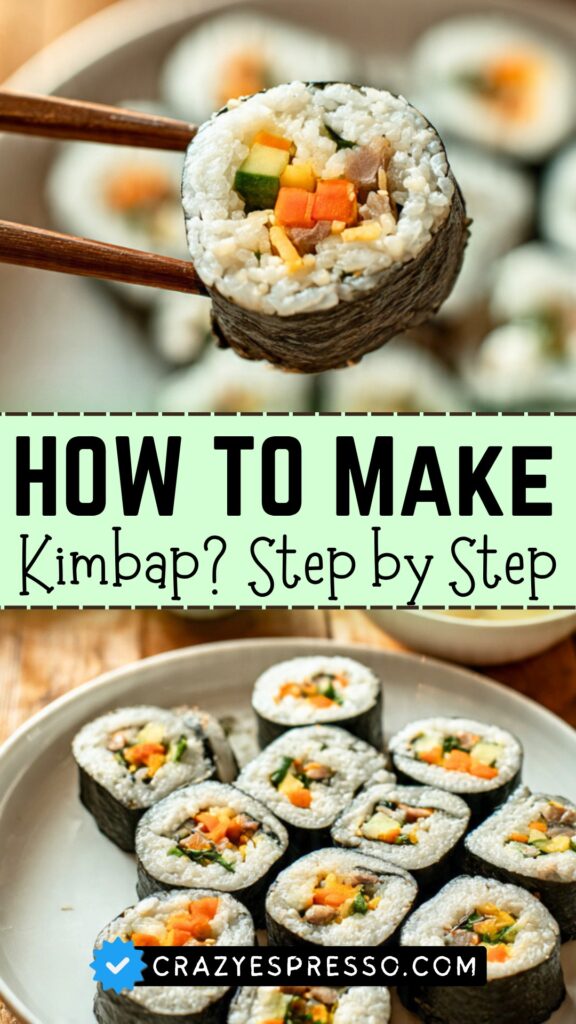
Kimbap, also called gimbap (김밥), is one of the most representative dishes of everyday Korean cuisine. It is very common to see it at picnics, on excursions, and at street stalls.
I confess that after sharing recipes with you for so long, I’ve finally dared to upload one for kimbap. Like all sushi-style dishes, it’s something I occasionally make at home, but I’ve always felt I haven’t practiced it enough to share it with you, because the final presentation and assembly are the most important things after the flavor.

And hey, I surprised myself the last time I tried it. After more than a year without making a roll, it turned out amazing! I suppose spending so much time cooking, even if it’s other things, must have subconsciously improved my skills. In fact, the day I practiced, I recorded it in a “what I eat in a day” video so you could join me and see what I came up with.
Table of Contents
What is kimbap?
Kimbap is a Korean roll made with short-grain white rice, stir-fried or marinated vegetables, other pickles, egg omelet, and often meat and/or fish, all wrapped in a sheet of gim seaweed (more commonly known by its Japanese term, nori).
Unlike Japanese sushi, Korean kimbap is characterized by its rice, lightly seasoned with sesame oil, and its varied fillings that combine crunchy, juicy, and fresh textures. Everyone has their own version, and each region has its own nuance. The great thing about making it at home is that you can play with these flavors and adapt the roll to your liking.
Forms or types of kimbap
Kimbap can be classified by both its shape and its ingredients. Visually and structurally, the three most well-known styles are:
- Traditional kimbap (classic roll)
A cylindrical roll where the rice and fillings are wrapped inside the gim seaweed, which remains on the outside. It is the most versatile type and is used for most homemade recipes and regional versions. - Samgak kimbap
A compact triangle that’s very popular in South Korean convenience stores. It’s designed to be easily carried and eaten, making it ideal as a quick snack or practical everyday meal. - Nude kimbap
Also called “French” style, it reverses the traditional structure: the seaweed is on the inside and the rice is on the outside, giving a softer texture and different look.
Some common variations include:
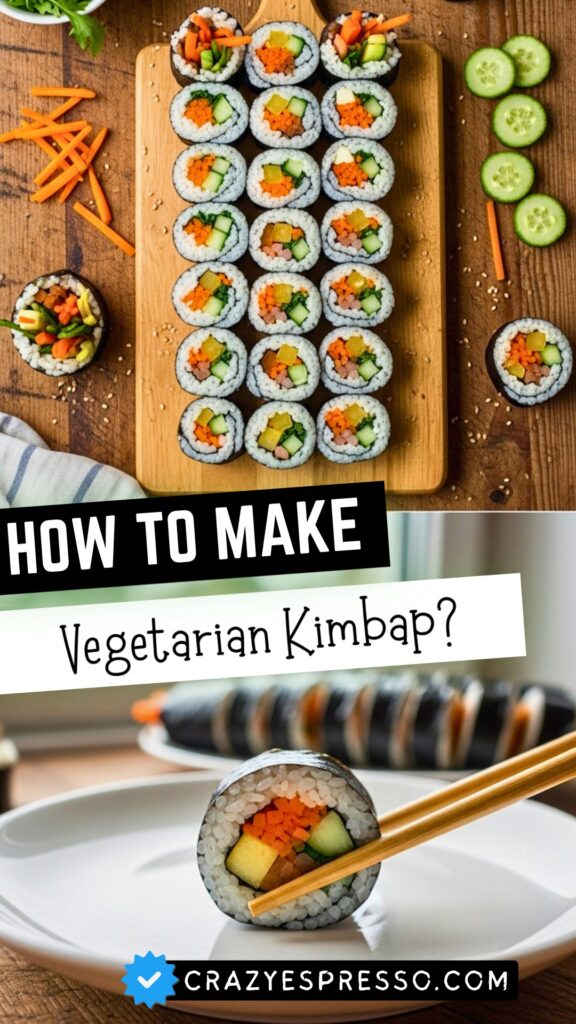
- Yachae kimbap (vegetable only)
- Tuna-mayo kimbap
- Beef kimbap
How to Make an Easy Kimbap Recipe?
As mentioned, kimbap can be prepared with many ingredients. Here we propose a simple and typical recipe: tuna kimbap (chamchi kimbap).
Ingredients
| Ingredient | Details |
|---|---|
| Rice | Short-grain rice |
| Dried seaweed | Gim (nori) sheets |
| Canned tuna | Natural |
| Spinach | Fresh |
| Carrots | Julienned |
| Korean pickled radish (danmuji) | Or substitute with cucumber/gherkins |
| Sesame oil | For flavor |
| Soy sauce | For serving |
| Salt | To taste |
How to prepare it
- Boil the rice with slightly less water than usual.
- Finely julienne the carrot and pickled radish.
- Sauté the carrot.
- Sauté the spinach with a few drops of sesame oil, keeping it separate.
- Let all ingredients cool.
- Place the seaweed on a bamboo mat, spread the rice, then add fillings.
- Roll tightly using the mat.
- Lightly moisten the edge to seal the roll if needed.
- Cut into bite-sized pieces with a sharp knife.
- Serve and dip lightly in soy sauce.
If you like Korean food, you’ll surely love kimchi. You can add it to make a delicious kimchi kimbap.
Video Guide 📺
What to serve with Korean gimbap or kimbap?
To accompany kimbap, you can serve:
- Soy sauce – classic and simple
- Gochujang sauce – for extra spiciness and flavor
Nutritional Facts (Approximate)
| Nutrient | Amount (per serving) |
|---|---|
| Calories | 250–300 kcal |
| Protein | 12–15 g |
| Carbohydrates | 35–40 g |
| Fat | 8–10 g |
| Fiber | 3–5 g |
| Sodium | Moderate |
FAQs
What is the difference between kimbap and sushi?
Kimbap uses sesame oil for flavor, while sushi uses vinegar-seasoned rice. The fillings and taste are also quite different.
Can I make kimbap without meat or fish?
Yes, you can easily make vegetarian kimbap using only vegetables.
Why is my kimbap falling apart?
This usually happens if the rice is too dry or the roll is not tight enough. Use slightly sticky rice and roll firmly.
Can I store kimbap?
Kimbap is best eaten fresh, but you can keep it for a few hours at room temperature. Refrigeration may harden the rice.
What can I use instead of danmuji?
You can substitute with cucumber or gherkins if danmuji is not available.
Conclusion
Kimbap is a simple yet versatile Korean dish that combines flavor, texture, and creativity. Whether you prefer classic rolls or modern variations, making kimbap at home allows you to experiment with ingredients and enjoy a fresh, homemade experience. With a little practice, you can master both the taste and presentation easily.