There is a reason professional chefs reach for a cast iron skillet when cooking steak. That heavy, heat‑retaining pan delivers something no non‑stick or stainless steel can match: a deep, dark, flavorful crust with a tender, juicy interior. The secret is not complicated. It is about heat, patience, and a few simple techniques.
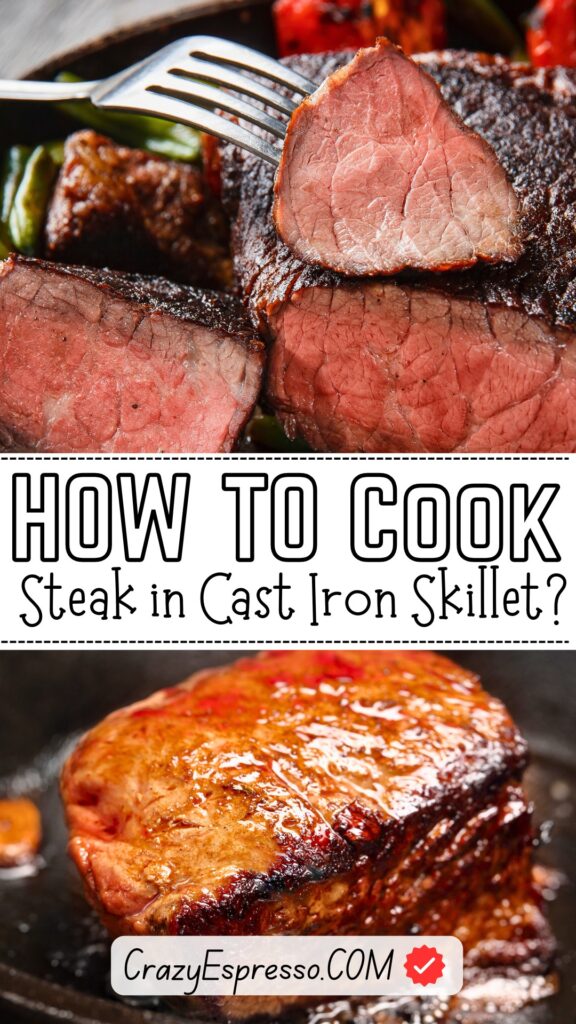
Learning how to cook steak in a cast iron skillet will transform your home cooking. You will never again settle for a pale, steamed, or unevenly cooked steak.
This guide covers everything: choosing the right cut, prepping the pan, achieving the perfect sear, and finishing with butter, garlic, and herbs. Plus, a foolproof temperature guide and common mistakes to avoid.
Ready to cook a steak that rivals your favorite steakhouse? Let’s fire up that cast iron.
Why Cast Iron Is the Best for Steak
| Feature | Benefit for Steak |
|---|---|
| High heat retention | Stays hot when the steak hits the pan, creating an immediate sear |
| Even heating | No cold spots – entire steak browns uniformly |
| Oven‑safe | Sear on stovetop, then finish in the oven (perfect for thick cuts) |
| Naturally non‑stick (when seasoned) | Steak releases easily, leaving behind browned bits for a pan sauce |
| Durable | Lasts for generations with proper care |
Pro tip: A well‑seasoned cast iron skillet is naturally non‑stick. Avoid cooking acidic foods (tomato sauce, vinegar) for long periods, as they can strip the seasoning.
Best Cuts of Steak for Cast Iron Skillet
| Cut | Thickness | Best For |
|---|---|---|
| Ribeye | 1–1.5 inches | Rich, marbled, very forgiving |
| New York Strip | 1–1.5 inches | Firm texture, beefy flavor |
| Filet Mignon | 1.5–2 inches | Tender, lean – best for special occasions |
| Sirloin | 1 inch | Budget‑friendly, lean |
| T‑bone / Porterhouse | 1.5 inches | Two steaks in one (strip + filet) |
Pro tip: Look for steaks that are at least 1 inch thick. Thinner steaks cook too quickly and are hard to sear without overcooking.
Ingredients You’ll Need
| Ingredient | Amount | Notes |
|---|---|---|
| Steak (your choice) | 1–2 (about 1 lb total) | Bring to room temperature |
| Kosher salt | 1 tsp per pound | Use generously |
| Black pepper | ½ tsp (freshly ground) | |
| High‑smoke‑point oil | 1 tbsp | Avocado, canola, or vegetable oil |
| Butter | 2 tbsp | Unsalted |
| Garlic cloves | 2–3 | Smashed, skin on |
| Fresh thyme or rosemary | 2–3 sprigs | Optional but wonderful |
Pro tip: Avocado oil has a smoke point of 520°F (270°C), making it ideal for cast iron searing. Olive oil burns at high heat.
Step‑by‑Step: How to Cook Steak in a Cast Iron Skillet
Step 1: Bring Steak to Room Temperature
Remove the steak from the refrigerator 30–60 minutes before cooking. Pat it completely dry with paper towels. A dry surface is essential for a good sear – moisture creates steam, not browning.
Step 2: Season Generously
Sprinkle kosher salt on all sides of the steak. Use about 1 teaspoon per pound. Add freshly ground black pepper. Do not be shy – most of the salt will stay on the surface. Let the seasoned steak sit at room temperature for at least 30 minutes. This allows the salt to penetrate and the steak to warm evenly.
Step 3: Preheat Your Cast Iron Skillet
Place the skillet over medium‑high heat for 5–8 minutes. The pan should be ripping hot – almost smoking. To test, flick a drop of water into the pan. It should sizzle and evaporate instantly.
Step 4: Add Oil and Swirl
Add 1 tablespoon of high‑smoke‑point oil to the hot skillet. Swirl to coat the bottom. The oil should shimmer immediately.
Step 5: Sear the Steak (Without Moving)
Carefully place the steak in the skillet, away from your body to avoid oil splatter. Press down gently with a spatula to ensure full contact. Do not move the steak for 2–4 minutes (depending on thickness). You want a deep, dark brown crust.
Step 6: Flip and Sear the Other Side
Flip the steak using tongs. Sear the second side for another 2–4 minutes. The steak should have a beautiful brown crust.
Step 7: Add Butter, Garlic, and Herbs (Optional)
Reduce heat to medium. Add 2 tablespoons of butter, smashed garlic cloves, and fresh thyme or rosemary. Tilt the skillet slightly so the butter pools, then use a spoon to baste the steak continuously for 1–2 minutes. This adds incredible flavor and helps cook the sides.
Step 8: Check Temperature (Use a Meat Thermometer)
Insert an instant‑read thermometer into the thickest part of the steak. Remove the steak when it is 5°F (3°C) below your target temperature – it will continue cooking while resting.
| Doneness | Internal Temperature (Remove at) | Final Temp after Rest |
|---|---|---|
| Rare | 115–120°F (46–49°C) | 120–125°F |
| Medium Rare | 120–125°F (49–52°C) | 130–135°F (ideal) |
| Medium | 130–135°F (54–57°C) | 140–145°F |
| Medium Well | 140–145°F (60–63°C) | 150–155°F |
| Well Done | 150–155°F (65–68°C) | 160°F+ (not recommended) |
Step 9: Rest the Steak
Transfer the steak to a cutting board or warm plate. Do not cover tightly with foil (it traps steam and softens the crust). Rest for 5–10 minutes – about half the cooking time. This allows juices to redistribute. Slice against the grain and serve.
Pro tip: While the steak rests, you can make a quick pan sauce: deglaze the skillet with a splash of beef broth, red wine (non‑alcoholic), or balsamic vinegar, scraping up the browned bits. Whisk in a pat of butter.
Tips for the Perfect Cast Iron Steak (And Mistakes to avoid)
✅ Do This for Restaurant‑Quality Results
- Pat the steak bone‑dry – Moisture is the enemy of a good sear.
- Preheat the skillet thoroughly – A hot pan is non‑negotiable. Give it 5–8 minutes.
- Do not crowd the pan – Cook one or two steaks at a time. Too many lower the pan temperature.
- Use a meat thermometer – Guessing leads to overcooked steaks.
- Rest the steak – This is as important as cooking. Do not skip.
❌ Common Mistakes
| Mistake | Why It Happens | Fix |
|---|---|---|
| Steak sticks to the pan | Pan not hot enough or steak not dry | Preheat longer; pat steak dry |
| Gray, not brown crust | Steak moved too soon or pan too cool | Leave it alone for 2–4 minutes |
| Steam instead of sear | Steak was wet | Pat dry with paper towels |
| Overcooked outside, raw inside | Heat too high or steak too thick | Finish thick steaks in oven (400°F for 5–10 min) |
| Burned butter / black garlic | Added butter too early | Add butter at the end, reduce heat |
| Tough, chewy steak | Cut with the grain instead of against | Slice across the muscle fibers |
Pro tip: For thick steaks (1.5 inches or more), sear both sides in the cast iron skillet, then transfer the skillet to a preheated 400°F (200°C) oven for 5–10 minutes to finish cooking. No flipping needed.
How to Clean Your Cast Iron Skillet After Cooking Steak?
Many people fear cleaning cast iron. It is simple.
- Let the skillet cool slightly (still warm, not hot).
- Rinse with hot water and use a stiff brush or non‑metal scrubber to remove food bits.
- For stuck‑on bits, add a little coarse salt and scrub with a paper towel.
- Do not use soap (it strips seasoning). For heavy residue, a small amount of mild soap is acceptable in modern seasoned cast iron – but rinse immediately.
- Dry thoroughly with a towel, then place on low heat for 1–2 minutes to evaporate any remaining moisture.
- Wipe a tiny amount of neutral oil (flaxseed, vegetable, or canola) over the surface.
Frequently Asked Questions
Can I cook steak in a cast iron skillet without oil?
Not recommended. Even a well‑seasoned skillet needs a thin layer of oil to conduct heat and prevent sticking. Use a high‑smoke‑point oil like avocado or canola.
How do I know when the pan is hot enough?
The water drop test: flick a drop of water into the pan. If it dances and evaporates almost instantly, it is ready. If it just sits and sizzles slowly, wait longer.
Can I cook frozen steak in a cast iron skillet?
Not ideal. Frozen steak releases excess moisture, steaming instead of searing. Thaw in the refrigerator overnight, then bring to room temperature.
What is the best oil for searing steak?
Avocado oil has the highest smoke point (520°F). Canola and vegetable oil (400–450°F) also work. Extra virgin olive oil burns at high heat – save it for finishing.
Why does my steak have a gray ring inside?
The gray band is overcooked meat next to the crust. To minimize it:
- Use a thicker steak (1.5 inches).
- Ensure the pan is very hot for a quick sear.
- Flip frequently (every 30 seconds after the initial sear) – a technique called “frequent flipping” reduces the gray band.
Can I cook multiple steaks at once?
Yes, but do not overcrowd. Leave at least ½ inch between steaks. If the pan is too crowded, the temperature drops and steams instead of sears. Cook in batches if needed.
Is this recipe halal?
Yes. Use halal‑certified beef. No alcohol or non‑halal ingredients are required. For a pan sauce, use beef broth or balsamic vinegar instead of wine.
Nutritional Information (Per 6 oz / 170g Ribeye Steak, No Added Butter)
| Nutrient | Amount |
|---|---|
| Calories | 450 kcal |
| Protein | 38 g |
| Fat | 32 g |
| Saturated Fat | 12 g |
| Iron | 15% DV |
| Zinc | 30% DV |
| Vitamin B12 | 70% DV |
Adding butter and oil increases fat and calories.
Conclusion
Learning how to cook steak in a cast iron skillet is a skill that keeps giving. Once you master the hot pan, the dry surface, the patient sear, and the essential rest, you will produce steak that rivals any high‑end restaurant. The crust will be dark and crackling. The interior will be exactly as you like it – juicy, tender, and full of beefy flavor.
Keep your cast iron seasoned. Keep your steak at room temperature. And when that sizzle fills the kitchen, you will know you have done it right.
Now go heat that skillet.
— Fatima