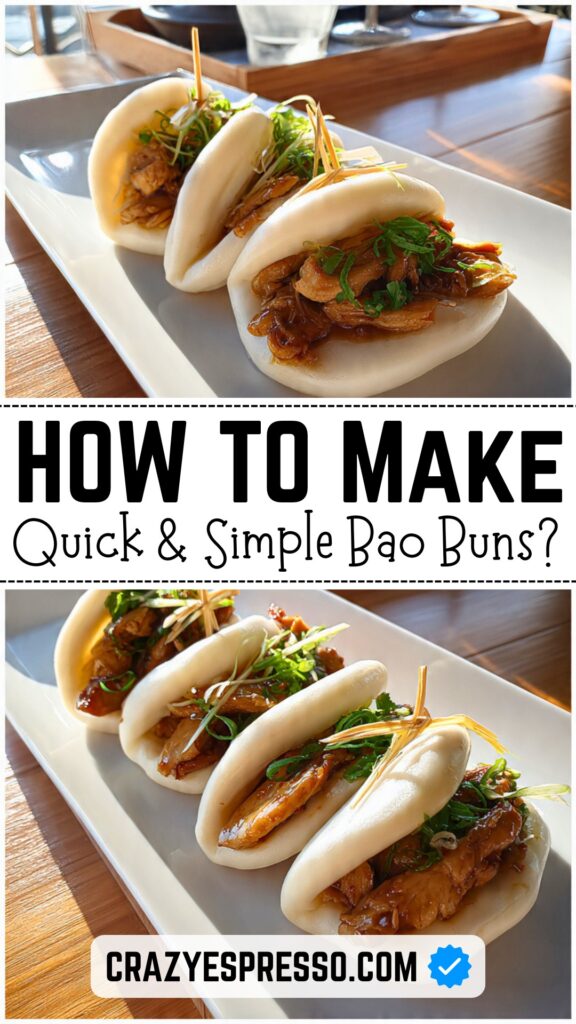
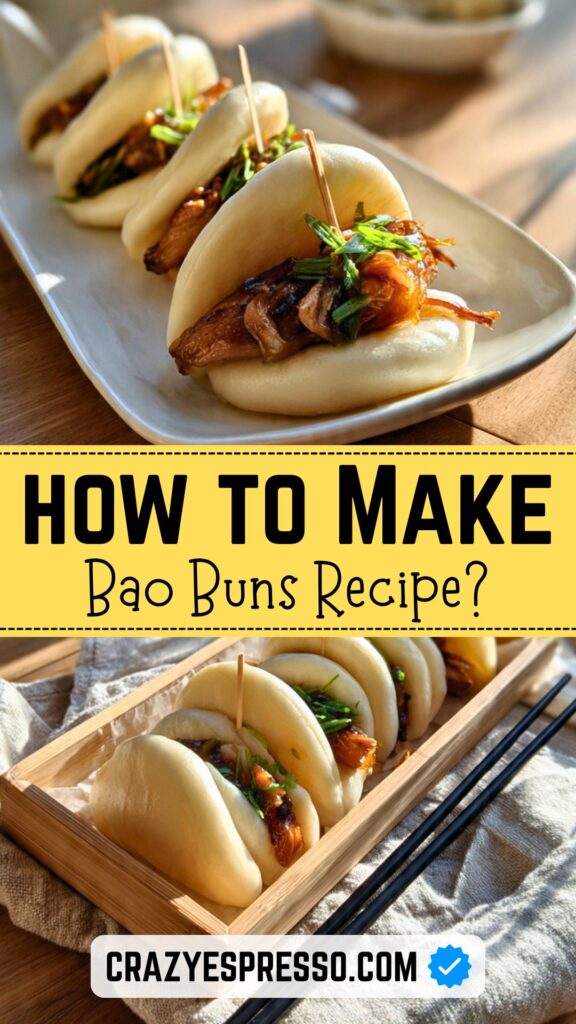
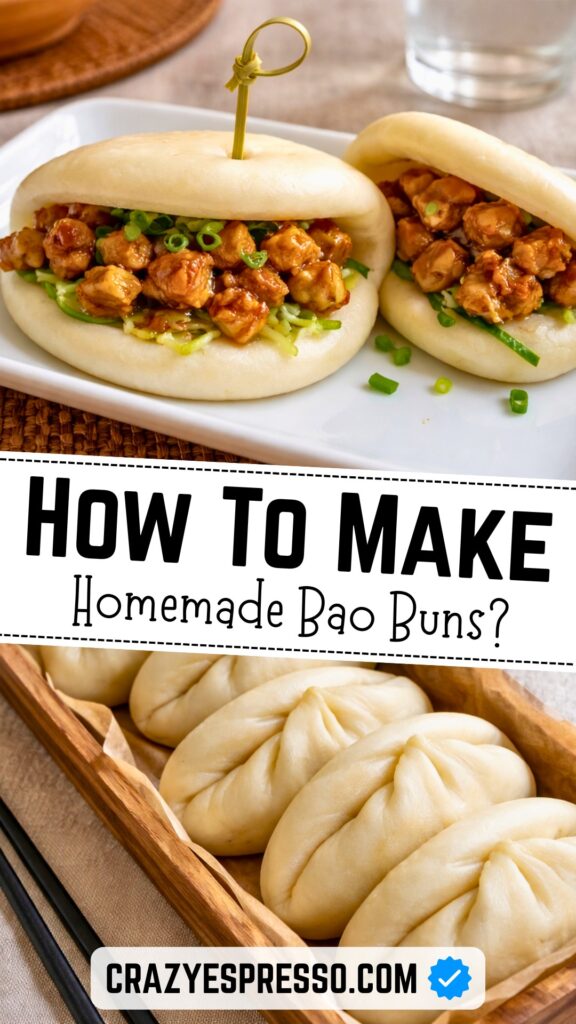
We can find countless recipes for steamed buns, bao buns, or gua bao with a wide variety of ingredients, from the simplest bao buns—like the ones we’ll make in this recipe—to versions with added ingredients such as milk, butter, and even squid ink for a darker color, or with different flours to make whole wheat bao buns. The kneading and rising process is similar to that of any other bread, with the main difference being the cooking method, which, in the case of bao buns, is done by steaming instead of baking.
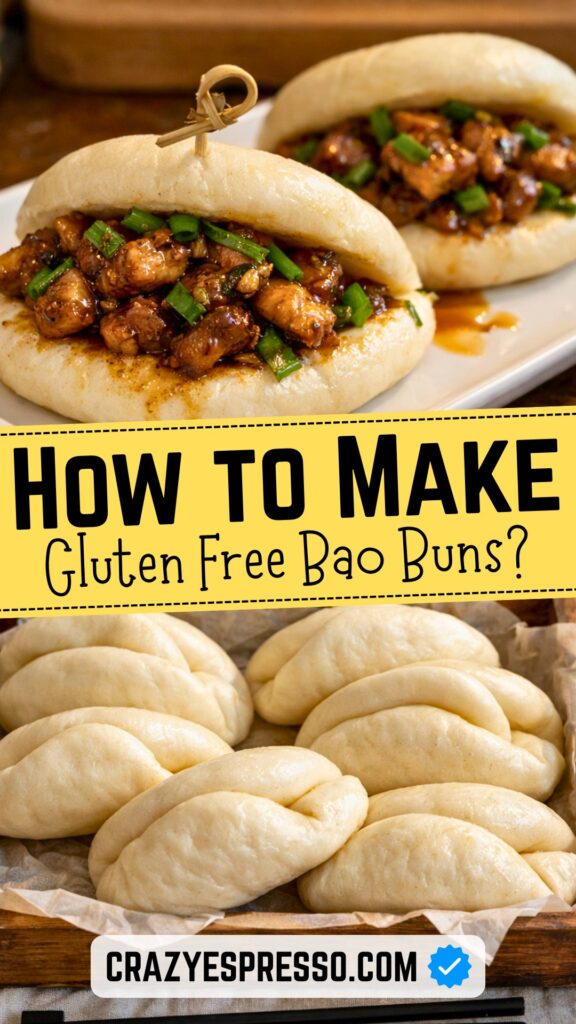
To ensure our bao buns are as uniform as possible, we’ll weigh the dough, roll it out to a thickness of about 4 mm, and shape it into an oval. When folding them, we’ll make sure the top edge is slightly further back. This will give us perfectly shaped and attractive buns.
With the quantities indicated in this recipe, you’ll get 9 bao buns of 50 grams each, although you can divide the dough into smaller portions to make more, smaller buns.
If you make them smaller, they’re ideal for canapés, a buffet, or a tapas dinner. If you haven’t tried them yet, take note of this basic and simple homemade bao bun recipe and get started—you’ll love them.
How to Make Bao Buns at Home?
Recipe Information
| Detail | Value |
|---|---|
| Preparation time | 30 minutes |
| Cooking time | 15 minutes |
| Total time | 2 hours and 45 minutes |
| Servings | 9 units |
| Category | Breads |
| Type of cuisine | Asian |
| Calories per serving | 125 kcal |
Ingredients for 12 Bao Buns
| Ingredient | Quantity |
|---|---|
| Warm water | 120 mL |
| Sugar | 20 g |
| Baker’s yeast | 4 g |
| Sunflower oil | 10 mL |
| Wheat flour | 250 g |
| Wheat flour for dusting | As needed |
| Sunflower oil for shaping | As needed |
Useful Equipment for Making Easy Bao Buns at Home
Here is a list of recommended accessories, ingredients, or kitchen utensils for making this recipe:
- Bamboo steamer
- Kitchen scale
- Kitchen brush
- Rolling pin for stretching dough
Tips and Tricks for Making Bao Buns
- The second fermentation, which you do after shaping the bao buns, is very important for them to come out nice and fluffy with a good texture. Don’t skip it.
- If you want to freeze this bao bun, it’s important to cook it first and then freeze it. This helps prevent over-fermentation.
How to Make This Original Homemade Bao Bun Recipe?
1. Prepare and Ferment the Dough for the Bao Buns
To prepare this bao bun recipe, follow these steps:
- Mix in a bowl 120 mL of warm water, 20 g of sugar, 4 g of baker’s yeast, and 10 mL of sunflower oil until the sugar dissolves.
- Gradually pour this mixture into a bowl containing 250 g of flour. While adding the liquid, stir constantly to make sure it mixes properly.
- Once all the liquid has been added, begin kneading with your hands. Start kneading in the bowl, and once it has a good consistency, continue kneading on the table or countertop.
- Knead for 3 to 4 minutes until the dough is smooth and even.
- Let the dough ferment for 1 hour inside the bowl, covering it with a plate or cloth, for example. If it is hot, leave it for less time, about 45 minutes.
- After this first fermentation, knead the dough again for about 5 minutes.
- Next, divide the dough into 12 pieces. A good way to do this is to split the ball of dough in half, roll it into two logs about 20 cm long, and then divide each log into 6 pieces. This will give you 12 pieces of dough of a fairly similar size.
2. Shape the Chinese Bao Buns and Cook Them
For each piece, do the following:
- Flatten the piece of dough.
- Bring the edges together toward the center.
- Turn it over.
- Drag the piece and keep rotating it until it has a circular shape.
After repeating this with each piece, prepare wheat flour in one bowl, sunflower oil in another, and 12 pieces of baking paper cut into rectangles of about 8 x 7 cm.
For each ball of dough, do the following:
- Put some flour on the work surface and on top of each ball of dough.
- Flatten the ball slightly with your hands.
- Gradually roll out the dough with the rolling pin without applying too much pressure.
- You should end up with oval-shaped dough, about 10 cm long and 7 cm wide.
- If the dough is an even thickness, brush it with a thin layer of sunflower oil using a kitchen brush and fold the dough in half.
- Place the folded dough on one piece of the baking paper you prepared earlier.
Repeat this process with the 12 balls of dough.
After that:
- Place the 12 bao buns on a tray.
- Cover them with a kitchen towel.
- Let them rest and ferment for about 20 minutes.
After these 20 minutes, it’s time to steam the bao buns:
- Place them in the steamer without completely covering the racks. In my case, due to the size of my steamer, I can cook 3 bao buns at the same time, no more.
- In a pot, heat about two or three fingers’ worth of water until it boils.
- Once boiling, reduce the heat to medium-low.
- Place the steamer basket over the pot and steam the bao buns for about 10 minutes.
- Then turn off the heat and leave the steamer basket on the pot for another 5 minutes so the bao buns can rest.
Your bao buns are ready. You can fill and enjoy them in a thousand different ways.
3. Bao Bun Filling Ideas
Here is a great idea for filling bao buns:
- Crispy Korean fried chicken with spicy sauce
It’s a super crispy fried chicken with gochujang sauce, which gives it a very rich sweet-spicy flavor.
Note: If the bread gets cold while preparing the filling, you can reheat it in a steamer for 30 seconds or in the microwave for 30 seconds, adding a few drops of water to each bao bun.
Video Guide 📺
How to Store and Reheat Bao Buns?
Once prepared, bao buns are quite easy to store and reheat.
- You can keep them in an airtight container at room temperature for up to 2 days.
- You can refrigerate them for up to 5 days.
- You can also freeze them for up to 3 months.
- When you want to eat them, it’s best to reheat them by steaming.
- If they were frozen, it’s best to let them thaw at room temperature first.
- To reheat them, place them so they are all ready at the same time. They should only need about 10 minutes.
Nutritional Facts
| Nutrient | Amount per Serving |
|---|---|
| Calories | 125 kcal |
| Carbohydrates | 24 g |
| Protein | 3 g |
| Fat | 2 g |
| Saturated Fat | 0.3 g |
| Sugar | 2 g |
| Fiber | 1 g |
| Sodium | 40 mg |
FAQs
Can I make bao buns without a bamboo steamer?
Yes, you can. A bamboo steamer is helpful, but any steamer setup that fits over a pot with simmering water can work as long as the buns are steamed gently and evenly.
Why is the second fermentation so important?
The second rise helps the bao buns become softer, fluffier, and lighter in texture. If you skip it, the buns may turn out denser and less airy.
Can I make smaller bao buns?
Yes. You can divide the dough into smaller portions to make mini bao buns. They work especially well for canapés, buffets, or small bites.
Can I freeze homemade bao buns?
Yes, but it’s best to cook them first and then freeze them. This helps avoid over-fermentation and keeps the texture better when reheated.
What is the best way to reheat bao buns?
The best way is to reheat them by steaming. This helps them stay soft. You can also use the microwave for a quick reheating, but adding a few drops of water helps keep them from drying out.
What can I fill bao buns with?
Bao buns are very versatile. One great option is crispy Korean fried chicken with gochujang sauce, but you can also fill them with vegetables, meat, or other savory mixtures.
Conclusion
This homemade bao bun recipe is simple, basic, and a great starting point if you want to make soft steamed buns at home. The dough is easy to work with, the shaping method helps create neat and attractive buns, and the steaming gives them their classic light texture.
Once you make them, you can enjoy them with all kinds of fillings and use them for casual dinners, buffets, or small bites. If you haven’t made bao buns before, this recipe is a great one to start with.