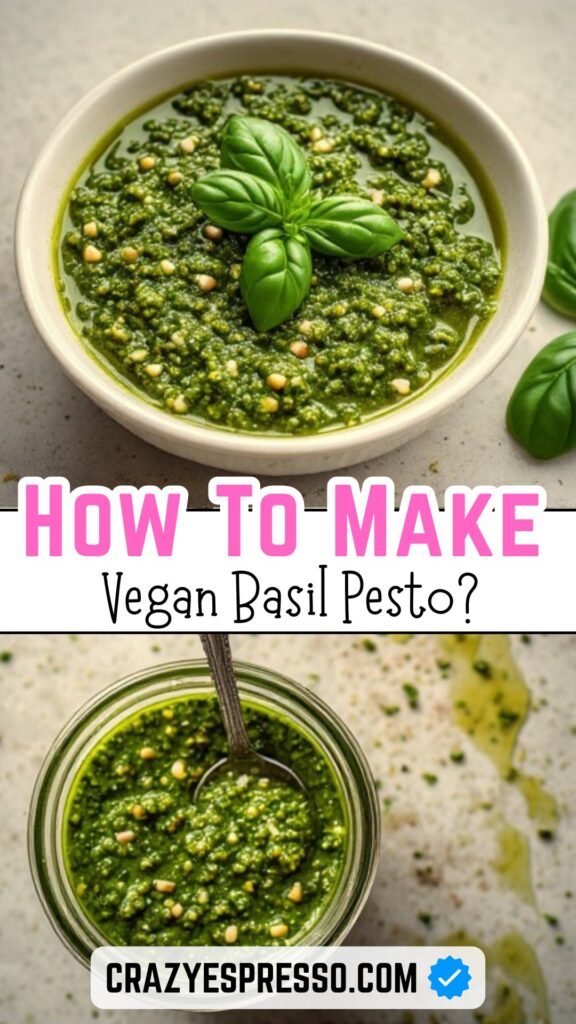
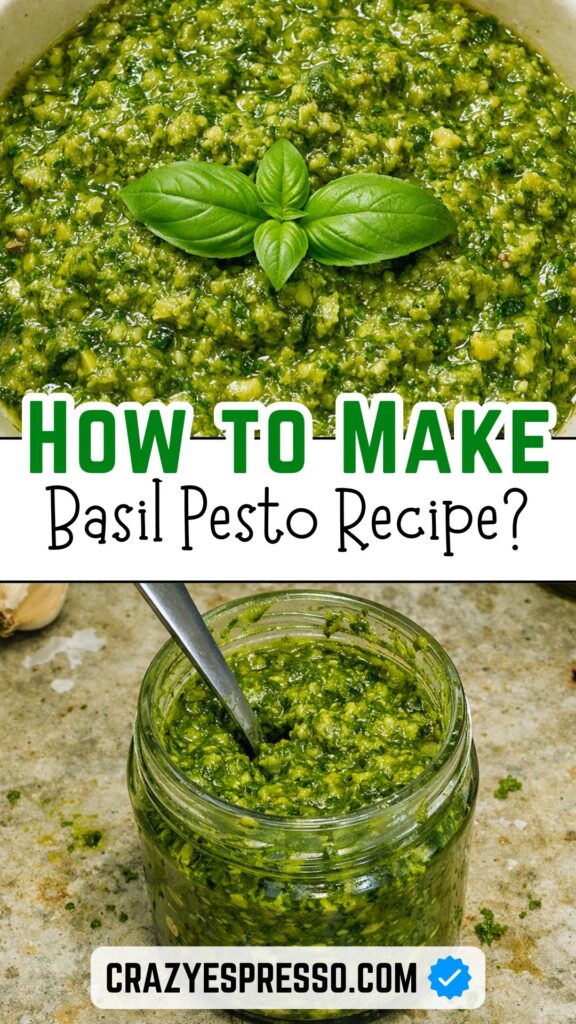
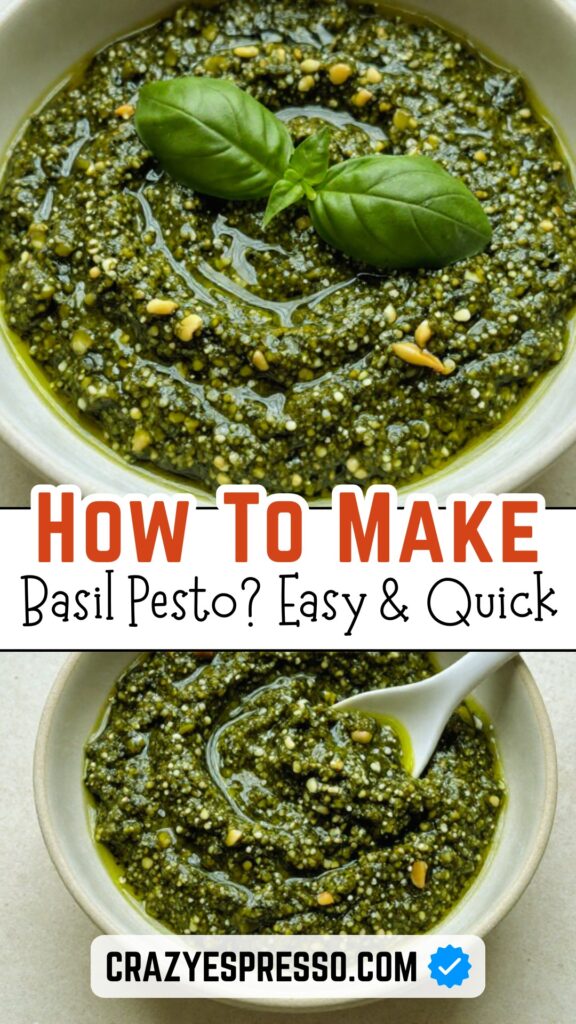
The Italian recipe I’m going to prepare for you today is basil pesto, a cold sauce that’s a symbol of an entire Italian region, Liguria. If you haven’t been there yet, it’s definitely a place you should visit. This region is full of unforgettable spots like the Cinque Terre, which I personally loved.
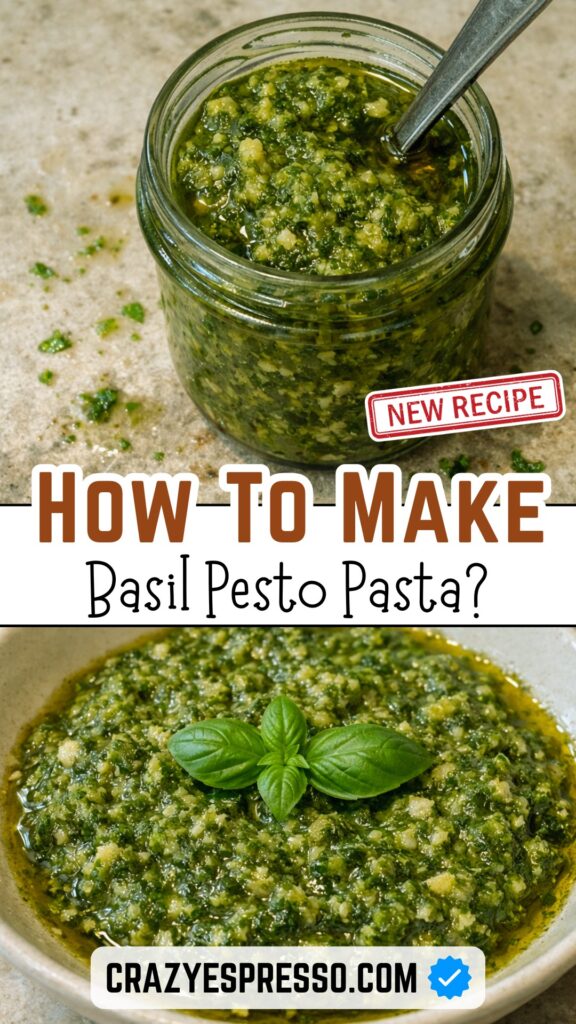
This cold sauce is ideal for:
- Pasta
- Pizza
- Focaccia
- Adding a special touch to your tapas
I recommend using it especially with short pasta; traditionally, it’s served with a type of pasta called trofie.
Table of Contents
What Is Pesto Sauce?
Pesto sauce is a delicious culinary preparation originating from Italy, specifically the Liguria region. It is a versatile and aromatic sauce primarily used as a pasta dressing, although it can also be used in:
- Salads
- Meats
- Fish
- As a spread for bread
It is characterized by its vibrant green color due to the presence of fresh basil, which is its main ingredient. The basil is blended with olive oil, pine nuts, Parmesan or Pecorino cheese, and garlic to create a smooth, aromatic, and flavorful sauce.
The invention of pesto is attributed to the Liguria region of Italy, specifically the city of Genoa. Its origins date back to at least the 19th century, although older versions may have used different ingredients.
What Is the Original Recipe?
The traditional recipe, as we know it today, with fresh basil, pine nuts, olive oil, garlic, and Parmesan or Pecorino cheese, became popular during the 20th century. Since then, pesto has become one of the most beloved Italian sauces worldwide.
Although the most well-known pesto is Pesto alla Genovese from the Liguria region, there are regional variations in Italy and other parts of the world. Some of these may include ingredients such as:
- Spinach
- Arugula
- Walnuts or almonds instead of pine nuts
- Other types of cheese, such as goat cheese
How to Make Pesto Last Longer?
To help homemade pesto stay fresh longer, follow these storage tips:
- Proper storage: Store pesto in a glass jar with an airtight lid to prevent contact with air and oxidation. Make sure the jar is clean and dry before adding the pesto.
- Olive oil layer: After preparing the homemade pesto and filling the jar, add a thin layer of olive oil on top before sealing the jar tightly. This helps protect the surface of the pesto and prevents it from oxidizing and darkening.
- Refrigeration: Store the jar of pesto in the refrigerator. The cold helps prolong its shelf life and keep it fresh longer.
- Freezing: If you have leftover pesto and don’t plan to use it soon, freeze it in small portions. Place the pesto in ice cube trays and, once frozen, transfer the cubes to a freezer bag or airtight container. Use only the amount needed for future preparations.
It’s important to keep in mind that while these methods help the pesto last longer, its freshness and quality will decrease over time. Ideally, it should be consumed within 1 week if stored in the refrigerator and within a few months if frozen.
How to Make Homemade Basil Pesto!?
Homemade basil pesto is easy to prepare and is a versatile sauce for pasta, meat, or vegetables. You only need a handful of fresh ingredients.
Recipe Information
- Dish: dressing, dip
- Cuisine: American, Italian
- Keywords: basil, pesto recipe, pesto sauce
Recipe Details
- Preparation time: 10 min
- Cooking time: 5 min
- Total time: 15 min
- Servings: 12 tablespoons
- Calories: 143 kcal
- Author: Natta Diaz
Ingredients
| Ingredient | Amount |
|---|---|
| Fresh basil | 1 1/2 cups |
| Cashews | ⅓ cup (45g) |
| Spinach | 1 cup |
| Garlic | 2 cloves |
| Parmesan cheese | ¾ cup (60g) |
| Olive oil | 150 ml |
| Salt | ½ tsp |
| Pepper | ¼ tsp |
Instructions
- Place the basil leaves, spinach, and cashews in the bowl of a food processor and pulse several times.
- Add the Parmesan cheese, garlic, salt, and pepper. Process again until all the ingredients are combined.
- Use a spatula to scrape the food processor bowl.
- While the food processor is running, slowly add the olive oil in a small, steady stream. You can stop to scrape down the sides of the processor.
- Transfer to a glass jar with a lid and refrigerate for up to 2 weeks, or freeze for 1–2 months.
- Add a thin layer of olive oil to help prevent the pesto from browning.
Video Guide 🎥
Notes
Ingredient Substitutions and Variations
- Pine nuts are the traditional ingredient for this recipe, but almonds, cashews (which are what I use), any type of nut, or even sunflower seeds can be used as a substitute.
- You can also make pesto without nuts. The texture will be different, but it will still have a fresh and delicious flavor.
- You can add different herbs, such as a handful of parsley or mint leaves.
- If you want the pesto to be vegan, substitute the cheese with a lactose-free cheese or add 2–3 tablespoons of nutritional yeast.
- Adding spinach is my favorite option; we really like spinach, and I think it gives it a greener color.
Ways to Use Pesto?
Pesto is a perfect accompaniment to:
- Pasta
- Pizza
- Sandwiches
- Wraps
- Vegetables
How to Store Pesto?
- In the refrigerator: Add a thin layer of extra virgin olive oil on top; this prevents air from getting in and the pesto from turning brown. Cover with a lid or plastic wrap and refrigerate for up to 2 weeks.
- In the freezer: Fill an ice cube tray with pesto and freeze until solid. Then store the frozen cubes in zip-top bags. Freeze for 1–2 months.
Nutritional Information
| Nutritional Fact | Amount |
|---|---|
| Serving size | 2 tablespoons |
| Calories | 143 |
| Calories from fat | 132 |
| Fat | 14.7g |
| Cholesterol | 3.6mg |
| Sodium | 184.3mg |
| Carbohydrates | 1.6g |
| Fiber | 0.2g |
| Sugar | 0.3g |
| Protein | 2.8g |
Percent Daily Values are based on a 2000 calorie diet.
Suggestions, Tricks, and Tips
- To prepare pesto sauce in a blender or food processor, simply put all the ingredients, including the cheese and oil, in and blend.
- You can substitute half of the Parmesan cheese with Pecorino cheese. This is often done in the traditional recipe.
- Be careful with the garlic. You only need to add a small clove, or half a clove.
- If you don’t have pine nuts, you can substitute them with walnuts or almonds, as they do in Argentina. Or simply make the basil pesto without pine nuts. But remember, it won’t be the original pesto alla genovese recipe.
- To learn how to make pesto pasta, check out my pesto spaghetti recipe.
- It can also be stored in the freezer.
- If you enjoyed this pesto sauce, you should also try spaghetti with red pesto or sun-dried tomato pesto.
FAQs
Can I freeze pesto?
Yes. Pesto freezes very well. A simple way is to freeze it in ice cube trays, then move the cubes to a freezer bag or airtight container for 1–2 months.
What pasta goes best with pesto?
Pesto is especially good with short pasta. Traditionally, it is served with trofie, but it also works well with many other pasta shapes.
Can I make pesto vegan?
Yes. You can replace the cheese with a suitable dairy-free option or use nutritional yeast for a similar savory flavor.
Conclusion
Basil pesto is one of those simple recipes that delivers a lot of flavor with very little effort. With fresh basil, good olive oil, and a few basic ingredients, you can make a sauce that works beautifully with pasta, pizza, sandwiches, and more. It’s easy to adapt, easy to store, and always a great recipe to keep on hand.