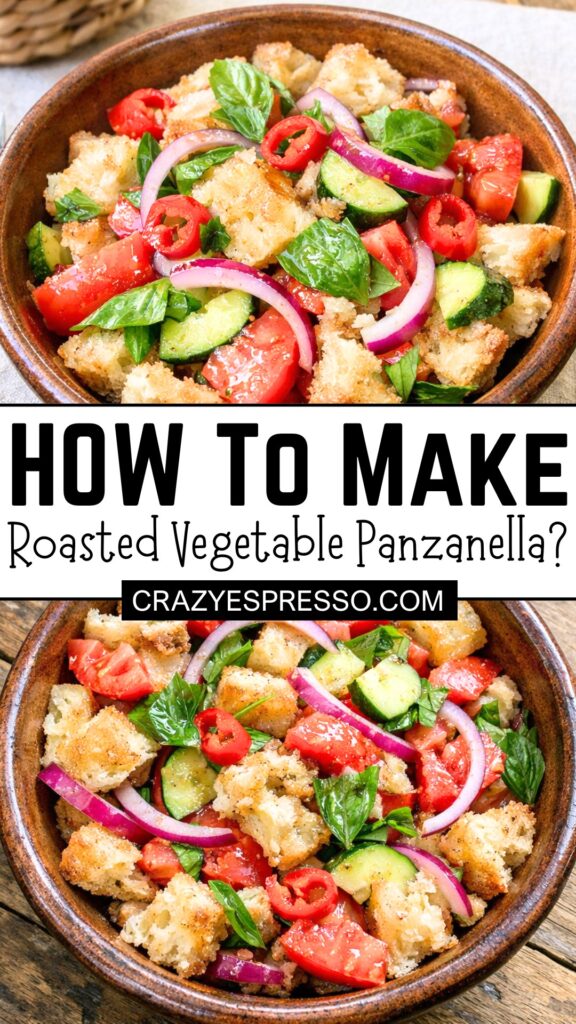
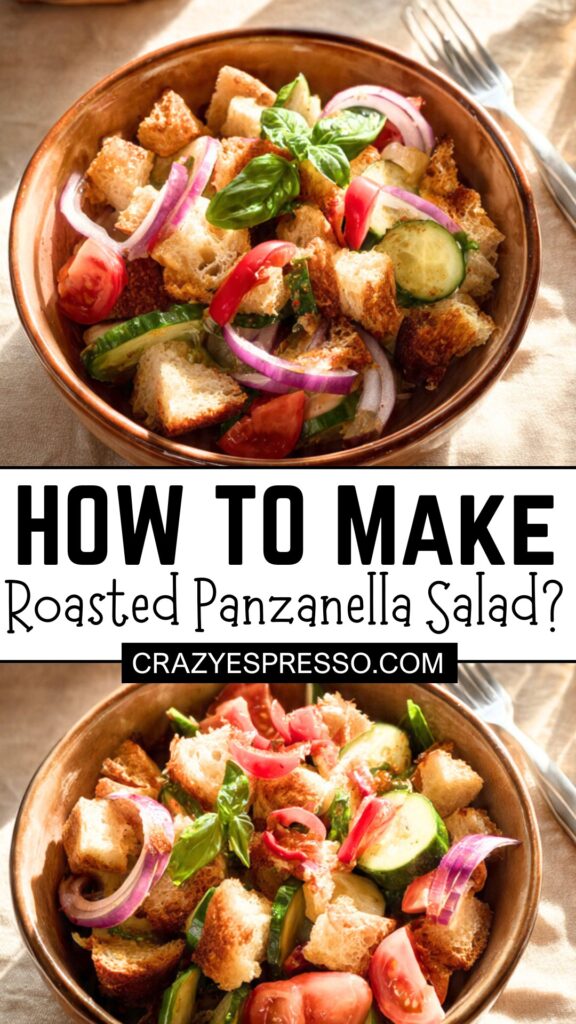
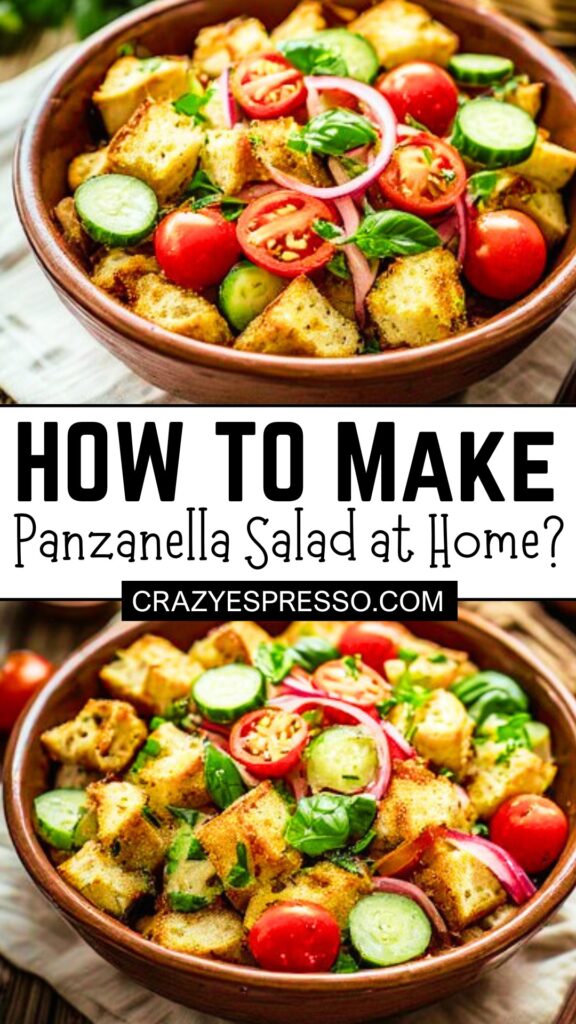
Panzanella is a traditional Italian salad typical of the Tuscany region, whose main ingredients are bread and seasonal vegetables such as tomatoes and cucumbers. It is a very refreshing salad, ideal for summer, and requires no cooking, which makes it very easy to prepare.

The base of panzanella is bread, preferably a compact bread with plenty of crumb, and ideally one that is a couple of days old, since it needs to be soaked in water and vinegar.
As for the vegetables that accompany panzanella, the most classic version of this salad is made with ripe tomatoes, cucumber, and red onion, all dressed with fresh basil and a good extra virgin olive oil. Ideally, panzanella should be prepared a little in advance, as it needs some time to rest in the refrigerator so that all the flavors can meld together, making it even more delicious.
Table of Contents
How to Make Panzanella?
Ingredients
| Ingredient | Quantity |
|---|---|
| Stale bread from the previous day | 300 grams |
| Wine vinegar | 60 grams |
| Water | 200–250 ml, as needed |
| Cucumber | 1 |
| Tomatoes | 4 |
| Red onion | 1 |
| Fresh basil | To taste |
| Salt | To taste |
| Olive oil | To taste |
Procedure
- Dice the stale bread from the previous day into even pieces so that it absorbs the vinegar and water evenly.
- Mix the water and vinegar in a glass and soak the pieces of bread. The inside should be moist, but not soaking wet. It is best to reach the right consistency gradually.
- Cover the bread with a damp cloth and let it rest for about 15 to 20 minutes so it softens properly.
- Wash and chop all the vegetables, then place them in a bowl.
- Add the soaked bread to the vegetables and mix well. Finish with a good drizzle of olive oil and hand-torn basil, which gives it a better aroma.
Video Guide 📺
Tips for a Perfect Panzanella
There are many variations of this salad, and it often depends on each household. A few ideas can make it even more special:
- Add a touch of spice or some black olives. They are a fantastic addition.
- Soften the onion before adding it to the salad. You can do this by soaking it in water with a little white wine vinegar.
- In some regions, cucumber is replaced with celery.
- Other versions may include peppers, mozzarella cheese, anchovies, capers, or even fried green asparagus.
- The riper the tomato, the sweeter and more flavorful the dish will be. You can use plum tomatoes or even cherry tomatoes.
More About Panzanella and Its Origin
This rustic salad originated from the need of Tuscan farmers to use up leftover stale bread. To complete this humble dish, they used onion, vinegar, and oil. Today, the recipe has evolved by incorporating local seasonal produce, adding tomato, basil, and cucumber to the traditional Panzanella recipe.
As with many salads, over time both new and old recipes have emerged, each specific to a particular region and family. Every version has its own variation in the choice of ingredients used to accompany the bread.
In this recipe, we suggest preparing authentic Tuscan Panzanella, the most well-known and traditional variety. In the tips section above, you can also find some interesting variations to try at home.
This salad is usually eaten during the summer months, especially on the hottest days.
Besides Panzanella, you can also try other summer salads. If you want something with an Italian touch, a pasta salad is another good option.
If you enjoy international cuisine and want to try a different salad at home every day, you can alternate Panzanella with a German salad, an American salad, and a Russian salad.
If you feel adventurous and making a salad is not enough, you can even try baking your own bread. A rustic sourdough bread works especially well for this recipe.
Estimated Nutritional Facts Per Serving
| Nutrient | Approximate Amount |
|---|---|
| Calories | 220–260 kcal |
| Carbohydrates | 32–38 g |
| Protein | 5–7 g |
| Fat | 8–11 g |
| Saturated Fat | 1–2 g |
| Fiber | 3–5 g |
| Sugar | 4–6 g |
| Sodium | 180–280 mg |
These values are approximate and may vary depending on the type of bread, amount of olive oil, and size of the vegetables used.
FAQs
What kind of bread is best for panzanella?
The best bread for panzanella is stale, firm bread with plenty of crumb. Bread that is one or two days old works especially well because it can absorb the dressing without falling apart too quickly.
Can I make panzanella ahead of time?
Yes, panzanella is actually better when made a little ahead of time. Letting it rest in the refrigerator helps the bread absorb the flavors of the vegetables, vinegar, and olive oil.
Should the bread be completely soaked?
No, the bread should be moist but not overly wet. The goal is to soften it enough so it blends well with the salad while still keeping some texture.
Can I add other ingredients to panzanella?
Yes, there are many variations. You can add ingredients such as black olives, mozzarella, capers, peppers, or even anchovies depending on your taste.
How long does panzanella last in the fridge?
Panzanella is best enjoyed the same day, but it can be kept in the refrigerator for up to 1 day. After that, the bread may become too soft.
Is panzanella served cold?
Yes, it is usually served cold or slightly chilled, which makes it especially refreshing during hot summer days.
Conclusion
Panzanella is one of those simple dishes that proves how delicious humble ingredients can be when combined the right way. With its mix of stale bread, ripe tomatoes, cucumber, red onion, fresh basil, and olive oil, this classic Tuscan salad is full of fresh flavor and rustic charm.
It is easy to prepare, requires no cooking, and is perfect for warm weather. Whether you stick to the traditional version or try one of the many tasty variations, panzanella is a wonderful way to enjoy a light and satisfying summer meal.