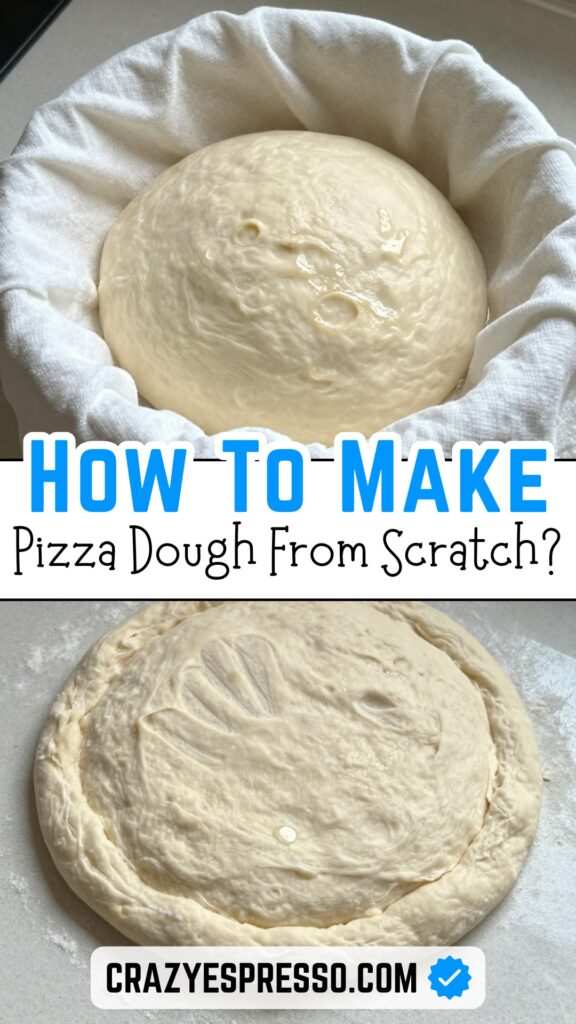
Want to make pizza with homemade dough? Then try my Italian pizza dough recipe, just like Luca Arrigoni taught me. Honestly, it’s nothing like the dough I’ve used all these years. Since I started making this pizza dough with Luca, it’s been a real game-changer.
Making pizza dough is easy and quite fun, so I’m sharing this very elastic, thin dough with you, reminiscent of Neapolitan pizzas. This recipe doesn’t have milk, eggs, or sugar—almost a sin for an Italian! It’s more like a bread-style dough made with strong flour and rolled quite thin.

Baked, it reaches the perfect thickness, just like the pizzas you’d find in a pizzeria in Rome or Venice. You can experiment with other white flours or add aromatic herbs to this dough base. As the Italians say: Italian pizza, where gluttony isn’t a sin.
I also want to remind you that besides the dough, the baking process and the surface where you place the pizza are equally important. I bought a baking stone a while ago and I’m still thrilled with it. The difference when baking pizza, bread, or empanadas is obvious. It’s incomparable to a baking sheet—it feels like going back to a wood-fired oven. The bottom doesn’t end up soggy or undercooked.
How to Make Pizza Dough? Complete Recipe
Information
- Serves: 2 units
- Total time: 60 min
- Cuisine: Italian
- Category: Doughs
- Vegetarian: Yes
- Vegan: Yes
Ingredients
For 1 rectangular pizza (baking tray size) or 2 round pizzas:
| Ingredient | Quantity | Notes |
|---|---|---|
| Strong flour | 300 g | Must contain more than 11 g protein per 100 g |
| Fresh yeast | 7 g | Or 2.5 g dry yeast |
| Salt | 1 teaspoon | — |
| Oil | 15 g | Olive oil preferred |
| Water | 200 ml | Around 37°C, lukewarm |
I absolutely love making my own dough. I’m hooked on pizza dough, because there are so many undeniable advantages to preparing it at home with your own ingredients. Besides being incredibly easy, you can control your preferred thickness and fluffiness. You can also get creative by adding spices (oregano, thyme, rosemary) or even grated cheese to the flour, creating a truly original dough.
One of the best things about homemade pizza is that you can make a large batch and save some for the next day. Unlike pre-made pizzas, it stays moist, and with a quick blast in the oven (or even the microwave), you can enjoy how the ingredients have infused the dough with flavor. Simply divine!
Preparation: How to Make Fluffy Homemade Pizza Dough
- Sift the flour (300 g) into a bowl. This prevents lumps and aerates it for easier mixing.
- Add the teaspoon of salt and stir. Make a well in the center.
- Heat 200 ml of water for 10–15 seconds until it reaches about 37°C. It should feel neutral—not hot. If it’s too hot, it can damage the yeast.
- Dissolve the 7 g of fresh yeast in the water and pour it into the center.
Stir briefly with a spoon, then add the 15 g of oil. Stir until the flour absorbs the liquid and the texture is no longer runny.
- Flour a work surface and begin kneading.
- If it sticks to your hands, let it rest 5–10 minutes, then knead again.
- Repeat if necessary.
- Stretch the dough lengthwise and roll it into a spiral.
- Gather and repeat several times to achieve elasticity.
- Form a ball and place it in a bowl.
- Lightly brush with oil.
- Cover with a damp cloth or plastic wrap.
- Let it rest 30–60 minutes until it doubles in volume.
- Divide the dough:
- In half for two round pizzas.
- Leave whole for one rectangular pizza.
Stretch each portion by hand on parchment paper. Adjust the thickness as you prefer, ideally shaping it by hand. Let it rise again for 15–30 minutes if needed. Add toppings and bake.
Baking
- Preheat oven for 10 minutes.
- Bake at 200°C for 10–11 minutes.
- Result: moist, fluffy base with perfectly melted toppings.
With this dough, you can make a delicious carbonara pizza—absolutely amazing.
Video Guide 📽️
Variations:
- For thin pizza dough, roll it out very thin and add toppings quickly so it doesn’t rise again.
- Use slightly more yeast if desired.
- Add spices like oregano or grated cheese to the flour for extra flavor.
5 Tips for Making Perfect Pizza Dough:
Is it easy to make pizza dough? Yes! But these tips make a huge difference:
- Combine flour and salt with yeast water gradually. Knead gently and add water little by little for a smooth dough.
- Don’t rush kneading. If it sticks, add flour gradually.
- Add oil slowly after achieving a smooth texture, then knead again.
- Pre-bake the dough for 5–6 minutes before adding toppings. This removes moisture and makes it crispier.
- Use fresh tomatoes with low water content to avoid a soggy base.
- Less is more with toppings. Too many ingredients prevent even cooking.
- Bake at the highest oven temperature possible. For a wood-fired effect:
- Place pizza directly on oven floor (with parchment).
- Cook until base browns.
- Move to top rack to finish.
Nutritional Facts (Per Serving – Approximate)
| Nutrient | Amount |
|---|---|
| Calories | 420 kcal |
| Carbohydrates | 75 g |
| Protein | 11 g |
| Fat | 8 g |
| Fiber | 3 g |
| Sodium | 480 mg |
Values may vary depending on flour type and toppings used.
FAQs – Frequently Asked Questions
1. Can I use all-purpose flour instead of strong flour?
Yes, but strong flour gives better elasticity and structure. The texture may be slightly softer with all-purpose flour.
2. Can I freeze the dough?
Absolutely. After the first rise, wrap tightly and freeze. Thaw in the refrigerator before use.
3. Why didn’t my dough rise?
Most common reasons:
- Water was too hot.
- Yeast was expired.
- Room temperature was too cold.
4. Can I make it without oil?
Yes, but oil helps improve softness and elasticity.
Conclusion
This Italian homemade pizza dough proves that simplicity is everything. With just a few basic ingredients and proper technique, you can achieve a bakery-quality base at home.
Focus on good flour, gentle kneading, proper resting time, and high heat. Once you master this dough, you’ll never go back to store-bought pizza again.