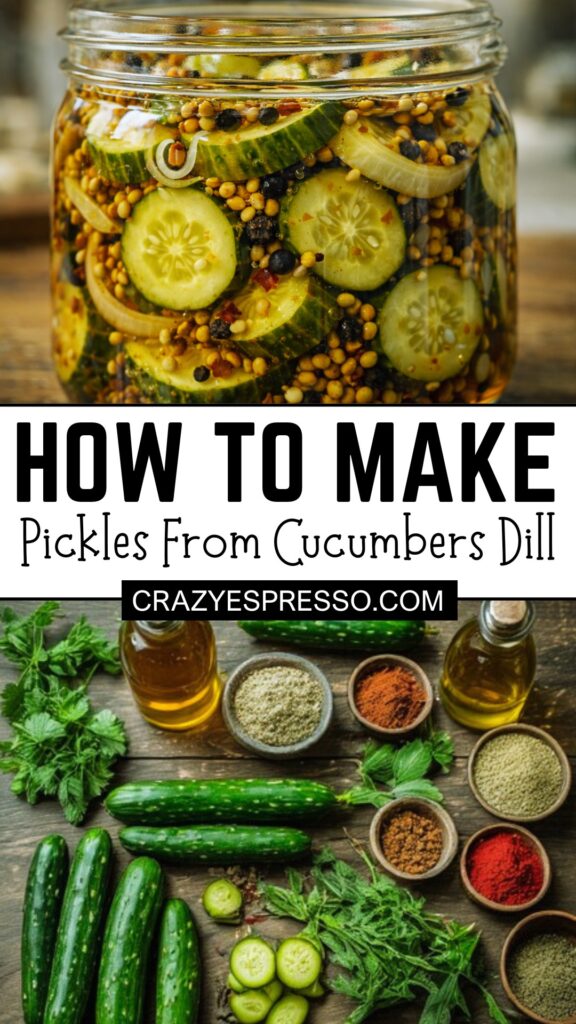
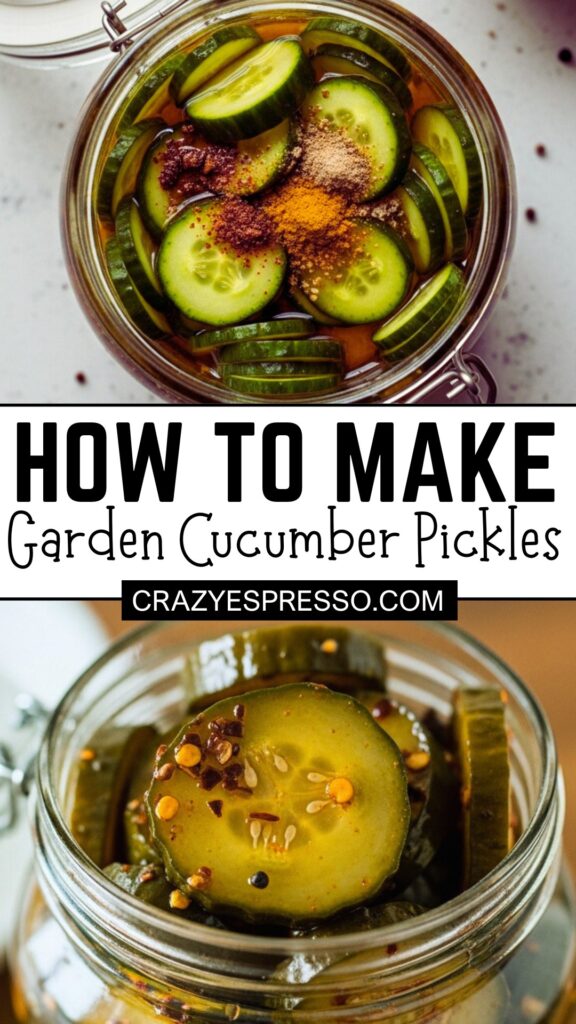
These pickled cucumbers have been a revelation because, until I tried them, I hated cucumbers. Yes, in my opinion, fresh cucumbers should be banished from the face of the earth. We all have our phobias.

What Is a Pickle?
The Royal Academy defines the term “encurtir” as follows:
pickle
From pickle and pickle.
- To make certain fruits or vegetables take on the flavor of vinegar and preserve them for a long time by keeping them in this liquid.
In short, pickling is:
- A method of preserving food in vinegar, more or less diluted with water.
- The food itself is preserved in vinegar.
Vinegar lowers the pH of the solution because it contains acetic acid, which prevents the development of pathogenic organisms that do not tolerate acidic environments.
The vinegar is usually diluted with a little water to soften the flavor, and herbs and spices can be added. The result is fantastic.
Table of Contents
Pickled or Fermented?
There is often confusion between pickled and fermented preserves (specifically lacto-fermented), because their final flavors are similar: salty and acidic, and both are stored in jars with the goal of preserving food.
Although, according to the Royal Spanish Academy, pickles are preserves made only with vinegar, the word pickle is commonly used to refer to all acidic preserves, including fermented ones.
An Acidic Environment
An acidic environment:
- Allows the development of microorganisms beneficial to humans.
- Prevents the growth of harmful microorganisms.
This acidity can be achieved either with vinegar or with lactic acid produced during fermentation.
- Pickles made with salt and vinegar do not ferment and are preserved from the very beginning.
- Fermented foods preserved in brine acidify the liquid after hours or days and do not require vinegar.
- To add to the confusion, almost all vegetables can be preserved by fermentation, including cucumbers or gherkins.
How Long Do Pickled Gherkins Last and How Should They Be Stored?
Keep them in the refrigerator to maintain freshness for as long as possible. I’ve kept mine for 3–4 weeks, and they stayed perfectly fine.
Their shelf life depends largely on storage. To maximize freshness:
- Airtight container: Store the pickled cucumbers in a container with a tight lid to prevent air and moisture from entering.
- Constant refrigeration: Ensure your refrigerator maintains a stable temperature. Fluctuations affect quality.
- Complete immersion: The cucumbers must be fully submerged in the pickling liquid to prevent oxidation.
How to Eat Pickled Cucumbers?
Here are 3 easy ways to enjoy them as a topping that adds color, flavor, and texture:
- Salads: They add crunch and a pleasant tangy flavor that makes salads more exciting.
- Tacos: Perfect either inside the taco or as part of a salsa.
- Hamburgers: A classic choice that enhances any burger or sandwich.
For the best pickled flavor, let the cucumbers rest in the liquid for about 24 hours in the refrigerator. The longer they sit, the more intense the flavor becomes.
If you enjoy pickled gherkins, I also recommend trying pickled onions—I like them even more than pickled cucumbers.
Which Vinegar Is Best for Pickling?
Almost any vinegar works, except balsamic or malt vinegar, which are too intense for this recipe.
White wine vinegar is ideal because it’s light, doesn’t alter the color, and has balanced acidity. You can also use apple cider vinegar or rice vinegar for different flavor nuances.
How to Make Pickles From Cucumbers?
Recipe Overview
- Preparation time: 20 minutes
- Cooking time: 10 minutes
- Total time: 30 minutes
- Author: Raquel Carmona Romero
- Recipe type: Preserves
Ingredients Table
| Ingredient | Quantity |
|---|---|
| Small cucumbers | 2–3 |
| White wine vinegar | 250 ml |
| Water | 250 ml |
| Mustard seeds | 1 tablespoon |
| Bay leaf | 1 |
| Salt | 4 tablespoons (+ extra for cucumbers) |
| Turmeric | ½ teaspoon |
| Red & black peppercorns | 2 tablespoons |
| Thyme | To taste |
Instructions
- Wash the cucumbers thoroughly, using a brush to remove any remaining dirt.
- Cut them into strips or slices and place them in a colander with a handful of salt. Stir and let them rest so they release excess water.
- In a saucepan, combine vinegar, water, mustard seeds, turmeric, bay leaf, salt, and peppercorns. Bring to a boil for a few minutes, then set aside.
- Place the cucumbers neatly into sterilized jars, filling them completely and leaving at least 2 cm below the lid.
- Pour in the hot liquid and add the thyme.
- Close the jars and place them in a water bath for long-term preservation.
- If you plan to eat them soon, this final step can be skipped. For large batches, it ensures preservation all year round.
Video Guide 📽️
Nutritional Facts (Approximate per 100g)
| Nutrient | Amount |
|---|---|
| Calories | 12 kcal |
| Carbohydrates | 2.3 g |
| Sugars | 1.1 g |
| Fiber | 0.5 g |
| Protein | 0.4 g |
| Fat | 0.1 g |
| Sodium | High (due to salt) |
FAQs – Frequently Asked Questions
Are pickled cucumbers healthy?
Yes, they are low in calories and can support digestion. However, they are high in sodium, so moderation is key.
Can I reuse the pickling liquid?
You can reuse it once if it remains clean and properly refrigerated, but flavor and acidity may weaken.
Do pickled cucumbers need sugar?
No. This recipe relies on salt, vinegar, and spices for flavor.
Can I make them without a water bath?
Yes, if you plan to consume them within a few weeks and keep them refrigerated.
Conclusion
These pickled cucumbers are simple to make, full of flavor, and a great way to transform a vegetable you might not usually enjoy.
With the right balance of vinegar, salt, and spices, they become crunchy, tangy, and incredibly versatile. Whether added to salads, tacos, or burgers, they’re a small addition that makes a big difference.