Ciabatta is one of the more recent breads on the market. Its invention is attributed to Arnaldo Cavallari, an Italian race car driver. In 1982, in the town of Adria, Italy, Cavallari decided to create an Italian bread to replace the growing popularity of the French baguette, which seemed to be monopolizing the market.
For several months, he experimented with new doughs, adapting existing regional bread recipes and using his own whole-grain flour, rich in minerals and gluten, known as Italian Type 1 flour. He registered the resulting bread as Ciabatta Polesana. The first name refers to the bread’s shape, which is similar to a sandal, or ciabatta in Italian, and the second refers to the region where he worked, Polesine di Rovigo.
In 1989, he changed the name to Ciabatta Italia. From then on, Cavallari began an intensive promotional campaign for the bread and the flour he used in its production, organizing specialized courses on Italian ciabatta for bakers in Italy and events abroad. Today, ciabatta is very popular worldwide.
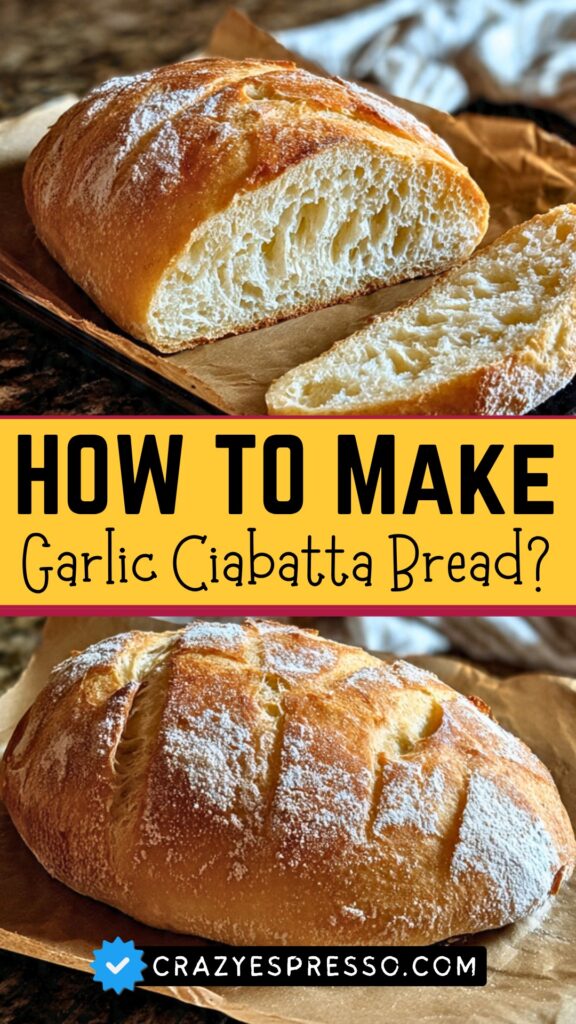
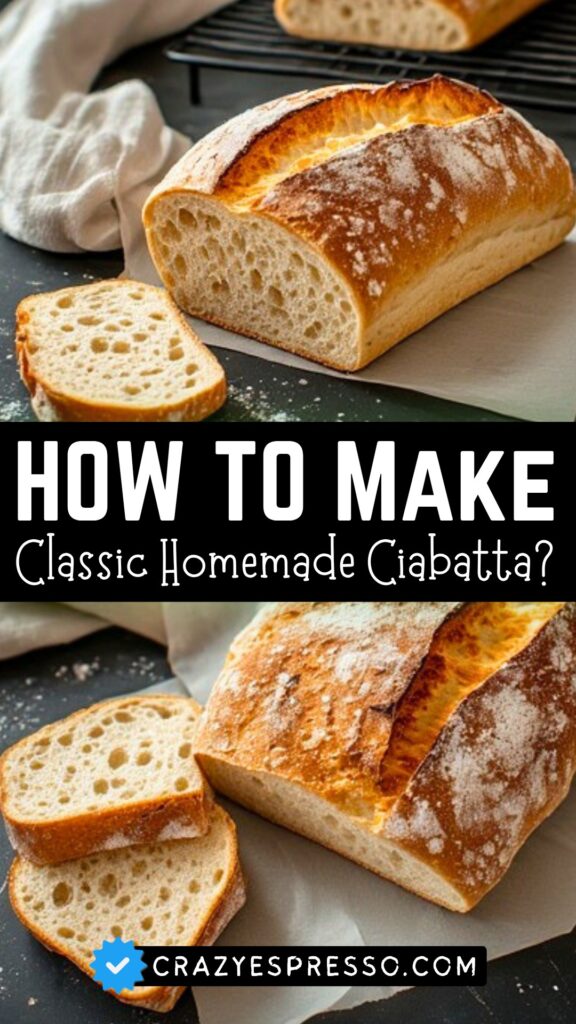
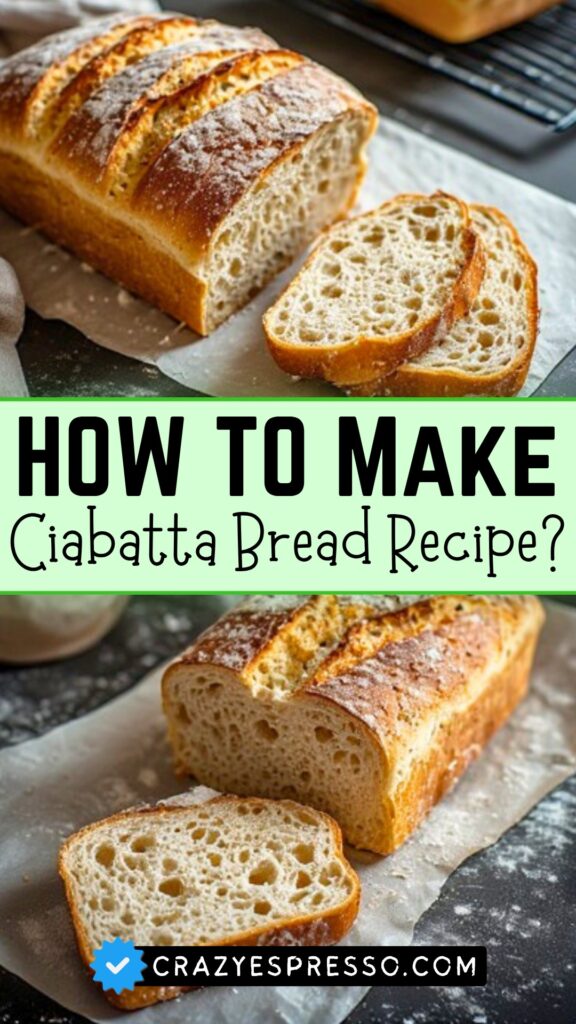
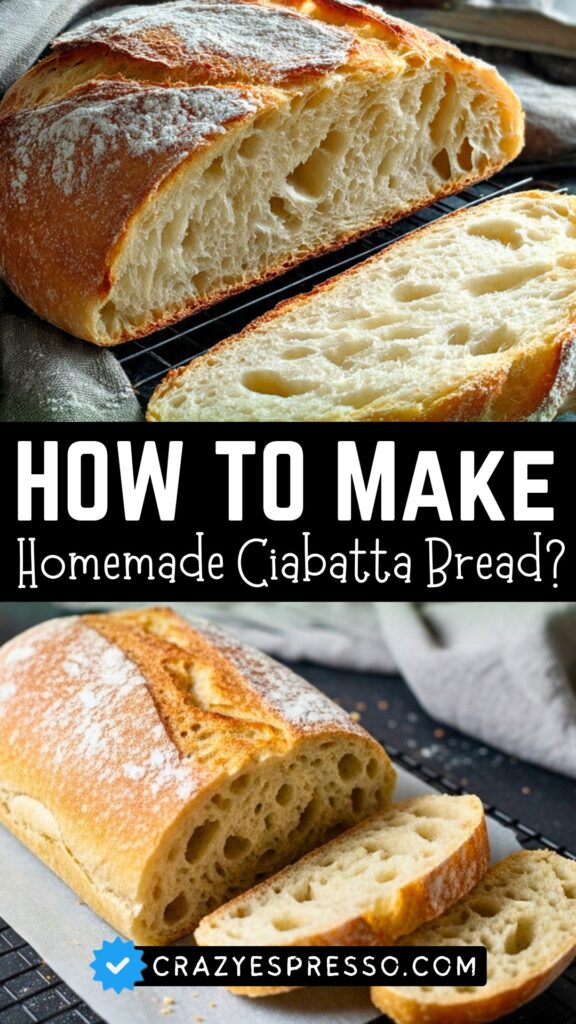
Ciabatta is a bread with a thin, smooth, crispy crust and a hazelnut-gold color. Its crumb is soft and very airy. The dough is very moist and is made using a biga, the Italian term for a starter with little yeast and a long fermentation process. The end result is a bread with a deep, aromatic flavor.
Ciabatta is used in toasted slices to prepare bruschetta or spread with pâté and creamy cheeses such as gorgonzola and goat cheese. It is also suitable for accompanying juicy meat and fish dishes or sauces, and it is ideal for making sandwiches.
How to Make Ciabatta Bread?
Ingredients
| Ingredient | Amount |
|---|---|
| Strong flour | 500 g |
| Fresh baker’s yeast | 10 g |
| Salt | 10 g |
| Very cold water | 400 ml |
| Olive oil | For greasing |
Recipe Details
| Detail | Time |
|---|---|
| Difficulty | Medium |
| Total time | 27 h 20 min |
| Preparation | 20 min |
| Cooking | 45 min |
| Resting time | 26 h 15 min |
Method:
- In a large, deep bowl, combine the flour and salt. Mix well and make a well in the center.
- In another bowl, mix the water and yeast. Stir and work the mixture with your fingers until the yeast is dissolved, then pour it into the well in the first bowl.
- Stir and gradually incorporate the flour until you obtain a smooth, very sticky, and highly hydrated dough.
- Transfer the dough to a large container, cover it, and refrigerate for 24 hours. Let it ferment slowly until it has doubled or tripled in volume.
After 24 hours, turn the dough out onto a baking tray well greased with olive oil. This is important because it prevents sticking and allows for easier folding. To keep the dough from sticking to your hands, wet them before handling it.
Folding the Dough
- Place your wet hands under the top of the dough, the part furthest from you.
- Lift it slightly and pull it toward you, letting it fall onto the half of the dough you have not lifted.
- Rotate the tray 45º and repeat the process three more times, rotating the tray after each fold.
- Cover the dough with a clean, dry cloth and let it rest for 45 minutes.
This allows the dough to relax before folding again.
Repeat this process two more times. After the third fold and the final 45-minute rest, preheat the oven to 250°C (480°F) with top and bottom heat. Place a baking tray in the center of the oven so it becomes very hot. This is the tray on which the shaped ciabatta will bake.
Shaping and Baking
- Sprinkle the work surface generously with flour and turn the dough out onto it, shaping it into a rectangle without overworking it.
- Sprinkle the dough with more flour and cut it in half lengthwise.
- Use a moistened or floured scraper to prevent the dough from sticking.
- Transfer the ciabatta pieces to a baking tray lined with parchment paper.
- Slide the parchment paper with the ciabatta onto the hot tray in the oven.
- Place a container of water on the bottom rack of the oven and bake for 15 minutes.
After this time, remove the container of water and lower the oven temperature to 200°C. Bake for another 30 minutes, or until the ciabatta is cooked through. Remove from the oven and let it cool before serving.
Video Guide 📺
Tips and Advice
- The long fermentation time and high moisture content produce a very light bread with a unique open and porous texture.
- An authentic ciabatta requires a very moist dough, which can be difficult to handle and should be started a day in advance.
- Do not try to add more flour to make the dough easier to manage.
- Avoid overworking the dough.
- Once the dough has fermented for a long time, handle it very gently so the air bubbles do not deflate.
Nutritional Facts
Estimated Nutrition Per Loaf
| Nutrient | Approximate Amount |
|---|---|
| Calories | 970 kcal |
| Carbohydrates | 201 g |
| Protein | 28 g |
| Fat | 2.5 g |
| Fiber | 7 g |
| Sodium | 1965 mg |
Estimated Nutrition Per Slice
| Nutrient | Approximate Amount |
|---|---|
| Calories | 121 kcal |
| Carbohydrates | 25 g |
| Protein | 3.5 g |
| Fat | 0.3 g |
| Fiber | 0.9 g |
| Sodium | 246 mg |
These values are estimated and may vary depending on the flour used, loaf size, and final yield.
FAQs
Why is ciabatta dough so sticky?
Ciabatta dough has a high hydration level, which is what gives the bread its open, airy crumb. It may feel difficult to handle, but that wet dough is essential for proper texture.
Can I add more flour if the dough feels too wet?
It is better not to. Adding extra flour can make the bread denser and reduce the classic open hole structure that ciabatta is known for.
Why does ciabatta need such a long resting time?
The long resting and fermentation time helps build flavor, improves the dough structure, and creates the light, porous crumb.
Do I really need to fold the dough several times?
Yes. Folding strengthens the dough gently without kneading too much. It also helps trap air and improve the final shape and texture.
Why is water placed in the oven during baking?
The water creates steam, which helps the ciabatta develop a crisp crust while still allowing the bread to expand properly during the first stage of baking.
How do I know when ciabatta is fully baked?
The crust should be golden and crisp, and the loaf should feel light but firm. If tapped on the bottom, it should sound slightly hollow.
Conclusion
Ciabatta is a simple but impressive bread with a rich story, a crispy crust, and a beautifully airy crumb. Although the dough is wet and the process takes time, the result is worth the effort. With gentle handling, proper folding, and long fermentation, you can make authentic homemade ciabatta that is perfect for sandwiches, bruschetta, or serving alongside your favorite meals.