If you experience heartburn, regurgitation, a sour taste in your mouth, or notice that the discomfort worsens after dinner or when lying down, diet can be very helpful.
But with gastroesophageal reflux disease (GERD) , it’s not just what you eat that matters: portion sizes, the time of day you eat dinner, excess fat, alcohol, caffeine, body weight, and posture after eating or while sleeping also play a role.
Furthermore, it’s important to distinguish between two concepts. Gastroesophageal reflux can occur occasionally. When this reflux is recurrent, causes frequent symptoms, or leads to complications, it’s called GERD (gastroesophageal reflux disease).
What Does the “GERD Diet” Mean?
Gastroesophageal reflux occurs when stomach contents flow back up into the esophagus. It can happen from time to time and, in some people, cause few or no symptoms. GERD, on the other hand, is a more persistent or problematic form of reflux, in which recurring symptoms—such as heartburn, regurgitation, or pain—or complications appear over time.
The most common symptoms are heartburn or burning, regurgitation, and a sour taste in the mouth, but coughing, hoarseness, or discomfort that worsens after eating and lying down can also occur.
Table of Contents
Associated Complications: Esophagitis and Barrett’s Esophagus
If acid repeatedly bathes the esophagus, complications arise that require close monitoring:
- Esophagitis: Inflammation of the esophageal lining that can cause sores or bleeding.
- Barrett’s Esophagus: An adaptation of the esophageal tissue that changes to resemble intestinal tissue due to the constant acid attack. In this case, a reflux diet ceases to be optional and becomes a preventive medical necessity.
Hiatal Hernia or Reflux? Understanding the Causes
It’s very common for patients to confuse these two terms in consultations. Although closely related, they are not the same:
- GERD (Gastroesophageal Reflux Disease): This is the passage of stomach contents into the esophagus. It is a symptom or a functional disorder.
- Hiatal Hernia: This is an anatomical cause. It occurs when part of the stomach slides into the chest cavity through the diaphragm. This bypasses the natural valve (the cardiac sphincter) and makes reflux much more difficult to control with medication alone, making diet and posture vital.
Key Differences: Reflux vs. Gastritis vs. Dyspepsia
It is vital to differentiate these conditions to apply the correct dietary therapy:
- Reflux: The pain rises toward the throat (retrosternal burning).
- Gastritis: The pain is in the “pit of the stomach” (internal burning), often improving or worsening immediately after eating.
- Dyspepsia: A feeling of excessive fullness, bloating, and very slow digestion (heaviness), but without necessarily heartburn.
What Does a Gastroesophageal Reflux Disease (Gerd) Diet Really Aim for?
A GERD diet isn’t about living on “tasteless” foods. Its goal is to reduce irritation of the esophagus, decrease the likelihood of stomach contents rising, and help you identify which foods or situations worsen your symptoms. In practice, it usually works best when you combine smaller meals, fewer irritants, and well-adjusted habits.
It’s also important to understand that there isn’t a universal list of forbidden foods that makes everyone feel bad. Guidelines emphasize avoiding or reducing what clearly worsens your symptoms, but they acknowledge that individual tolerance varies.
The Pillars of a Diet for Gastroesophageal Reflux Disease (GERD)
Not all foods affect the stomach in the same way. In clinical nutrition, we divide the strategy into three fronts of attack to protect your esophagus:
A. Controlling Lower Esophageal Sphincter (LES) Pressure
Certain chemical compounds relax the “valve” that closes off the stomach. If this valve opens when it shouldn’t, acid rises.
- Volatile substances: Mint and chocolate contain methylxanthines that relax the smooth muscle of the lower esophageal sphincter (LES).
- Fats: High-fat foods stimulate the release of a hormone called cholecystokinin (CCK), which also relaxes the sphincter and slows gastric emptying.
B. Managing Gastric Volume
An overly full stomach exerts upward mechanical pressure. The key is:
- Eating smaller, more frequent meals: It’s better to have five small meals than three large ones.
- Appropriate textures: Very dry or sticky foods can hinder esophageal clearance. We prioritize foods with soft textures that are well chewed.
C. Mucoprotective foods
We look for foods that help soothe the irritation of esophagitis:
- Mucilage: Oats or hydrated chia seeds create a gel-like substance that protects the esophageal wall.
- Natural alkalinity: Ripe bananas or potatoes help to slightly buffer excess acidity.
Diet for Gastroesophageal Reflux: What to Eat and What to Avoid
When reflux or GERD is active, it is usually easier to tolerate bland, low-fat, mildly spiced foods in moderate portions. MedlinePlus, for example, includes cooked vegetables, potatoes, soft fruits such as bananas or melons, refined or warm breads and cereals, and low-fat dairy products (if well tolerated) among the best-tolerated foods.
However, among the frequent triggers mentioned in several guidelines are fatty or fried foods, alcohol, coffee, carbonated drinks, spicy foods, citrus fruits, tomatoes, mint, and, in some people, onions, garlic, or vinegar.
Guideline Food Table for Gastroesophageal Reflux Disease (GERD)
This table should be understood as an initial guide, not a rigid rule. It is based on bland foods suggested in soft diets and on frequent triggers described in clinical guidelines on reflux and GERD, with the caveat that individual tolerance may vary.
| ✅ Usually feels better | ⚠️ Depends on tolerance | ❌ Usually makes it worse |
|---|---|---|
| Oatmeal or mild warm cereals | Low-fat plain yogurt | Coffee |
| Rice or plain pasta | Milk or dairy products, depending on tolerance | Alcohol |
| Boiled potato | Small amounts of cooked tomato | Fried foods |
| Toast | Decaffeinated | Chocolate |
| Zucchini, carrot, pumpkin | Raw apple | Spicy foods |
| Banana, melon, ripe pear | Cooked onion or garlic | Carbonated soft drinks |
| Compote or baked apple | Vinegar or strong dressings | Citrus fruits |
| Chicken, turkey, white fish | Fresh cheese | Mint |
| Soft soups or creams | Legumes depending on texture and quantity | High-fat foods |
| Steamed, baked, or boiled preparations | Small amounts of tomato or coffee during stable phases | Large dinners |
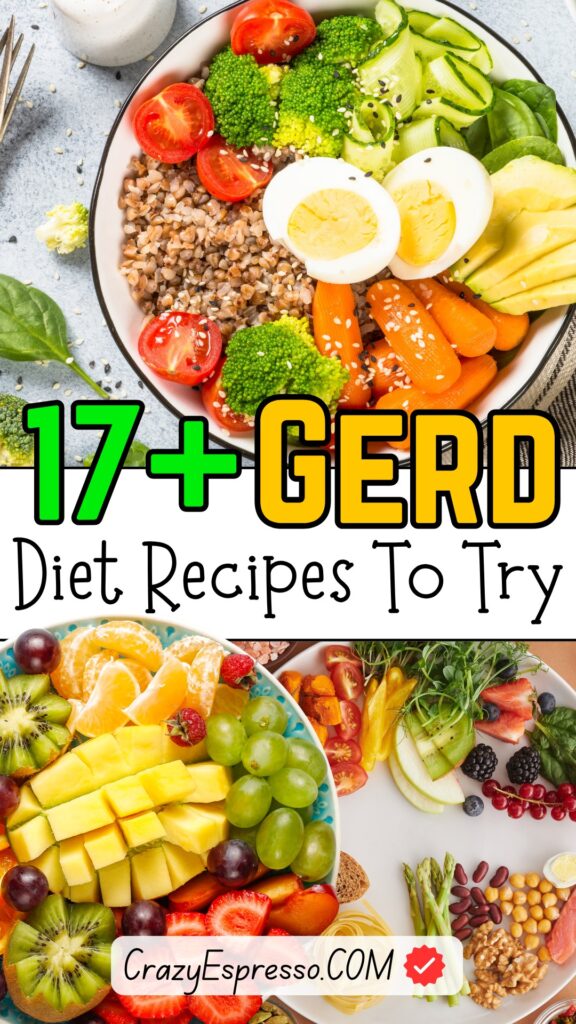
17+ GERD Diet Recipes
Here is a numbered list of 17+ recipe names suitable for a GERD‑friendly diet (low‑fat, non‑acidic, non‑spicy, small portion, easy to digest).
- Oatmeal with Sliced Banana (No Milk, Water or Low‑Fat Milk)
- Baked Chicken Breast with Steamed Zucchini and Boiled Potato
- White Rice with Grilled Turkey and Cooked Carrots
- Mashed Potatoes (No Butter) with Poached Egg
- Baked Cod with Pumpkin Puree
- Toast with Avocado (Small Amount) and Sliced Pear
- Chicken and Rice Soup (Homemade, Low‑Fat)
- Steamed Salmon with Green Beans and Boiled Quinoa
- Banana and Oat Smoothie (Water or Low‑Fat Yogurt)
- Baked Sweet Potato with Cottage Cheese (Low‑Fat)
- Turkey and Spinach Meatballs (Baked, No Onion/Garlic)
- Melon and Low‑Fat Cottage Cheese Salad
- Rice Noodles with Cooked Zucchini and Shredded Chicken
- Baked Apple with Cinnamon (No Sugar)
- Scrambled Eggs (1 Yolk + 2 Whites) with Chard
- Oat and Pear Compote (Cooked)
- Baked Hake with Boiled Broccoli and Mashed Cauliflower
- Low‑Fat Yogurt with Melon Cubes and Ground Flaxseed
- Turkey and Zucchini Lettuce Wraps
- Whole‑Wheat Pasta with Light Pesto (Small Amount, No Garlic)
- Chia Pudding (Made with Water or Low‑Fat Milk, Sweetened with Mashed Banana)
- Baked Eggplant Slices with Low‑Fat Mozzarella and Basil (Small Portion)
- Herbal Tea (Chamomile or Licorice) with Rice Cakes
Conclusion
The diet for gastroesophageal reflux disease (GERD) is not about living on “tasteless” foods. Its goal is to reduce esophageal irritation, decrease the likelihood of stomach contents refluxing, and help you identify which foods or situations worsen your symptoms. In practice, it usually works best when combined with smaller meals, fewer irritants, and well-adjusted habits.
It’s also important to understand that there isn’t a universal list of forbidden foods that upsets everyone. Guidelines emphasize avoiding or reducing what clearly worsens your symptoms, but they acknowledge that individual tolerance varies.