“I just don’t know how to pose.” “I’m embarrassed.” “I’ve never had a photoshoot before, and I know I won’t look good.” If you’re reading this, you’ve almost certainly said one of these things.
Don’t worry: 95% of my clients say them the first time they walk into the studio. And that 95% leave with editorial photos. So, how to pose for professional photos isn’t your problem: it’s the photographer’s job to guide you.
Even so, there are things you can know before the session that will make you feel much more comfortable and will be immediately noticeable in the results. In this article, I’ll tell you the 7 tricks I repeat in every session.
1. Forget about “doing well”: trust the person leading you
The first mistake is walking into the studio thinking, “I have to look good.” That phrase, inside your head, tenses your face, shoulders, and hands without you even realizing it. Knowing how to pose for professional photos starts with letting go of control. Your job isn’t to know how to pose; your job is to be present. My job is to guide you.
When a client trusts and lets go, the photos change instantly. The camera notices.
2. Start with the breathing (not the pose)
Before thinking about where to position your body, breathe. In the first few takes, I always ask for the same thing: a deep breath in and a slow exhalation. It sounds obvious, but it does two things at once: it lowers your shoulders (which tend to rise due to nerves) and softens your gaze.
If you have to choose just one trick for posing in professional photos, let it be this one. Breathing solves more problems than any angle.
3. The gaze commands: where to look and how to look
A good portrait starts with the eyes. There are three options I use consistently:
- Direct eye contact with the camera : ideal for personal branding portraits and professional communication. It conveys both approachability and authority.
- Looking at a nearby fixed point : brings naturalness and a sense of spontaneity.
- Downcast gaze with relaxed eyelids : very editorial. Perfect for personal or fashion portraits.
The important thing: never stare blankly into space. Empty gazes are noticeable. Look with intention, even if only for half a second.
4. What to do with your hands: the detail that gives it away
The hands are the first thing to tense up when someone doesn’t know what to do. And they’re very visible. My three basic rules:
- Never straight and rigid: a fully extended hand with the fingers together reads as tense.
- Touch something: your hair, your face, your shirt collar, a table, a chair. Your hands need a purpose.
- Fingers slightly separated and curved: provides effortless naturalness.
5. How to pose for professional photos with your body: the 30-degree rule
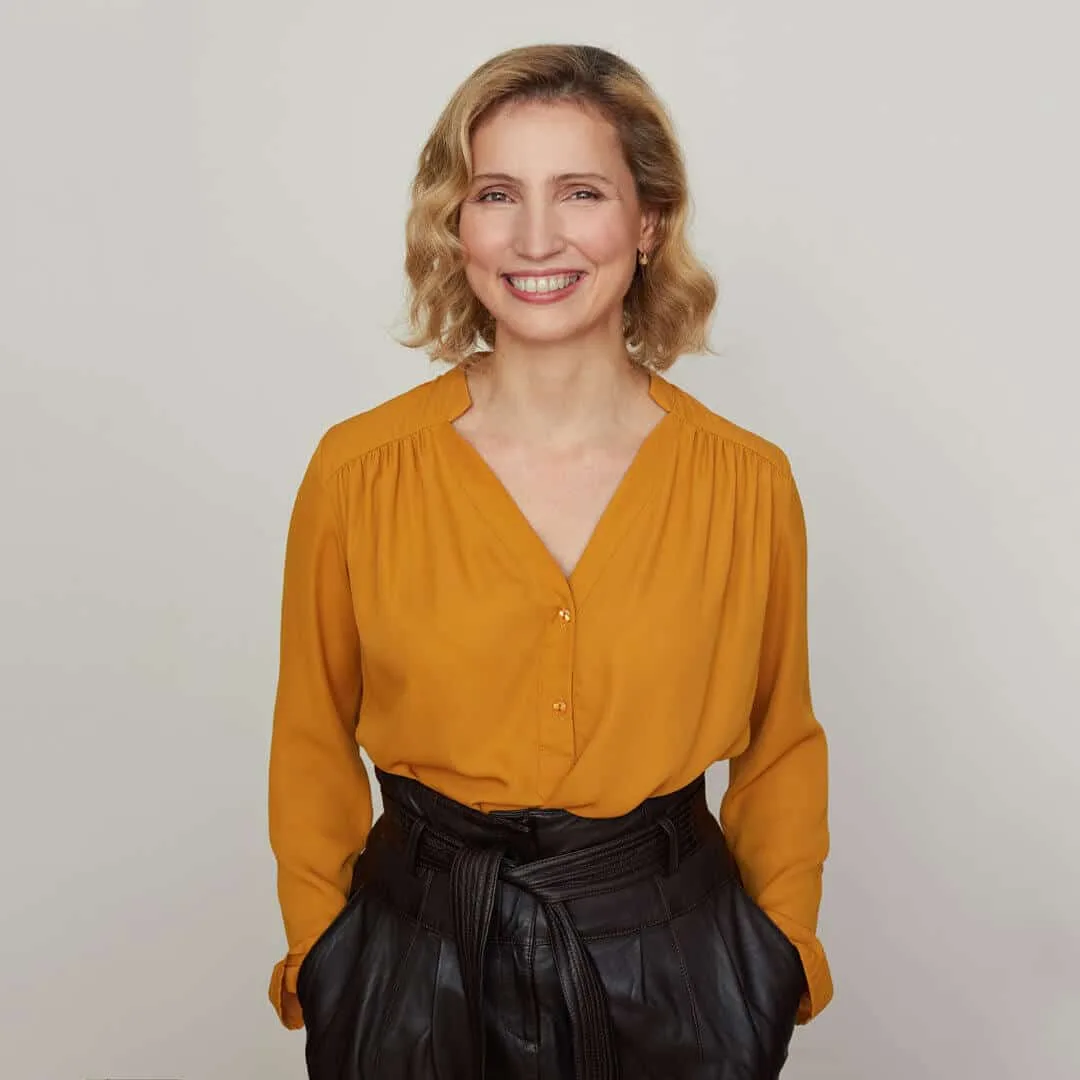
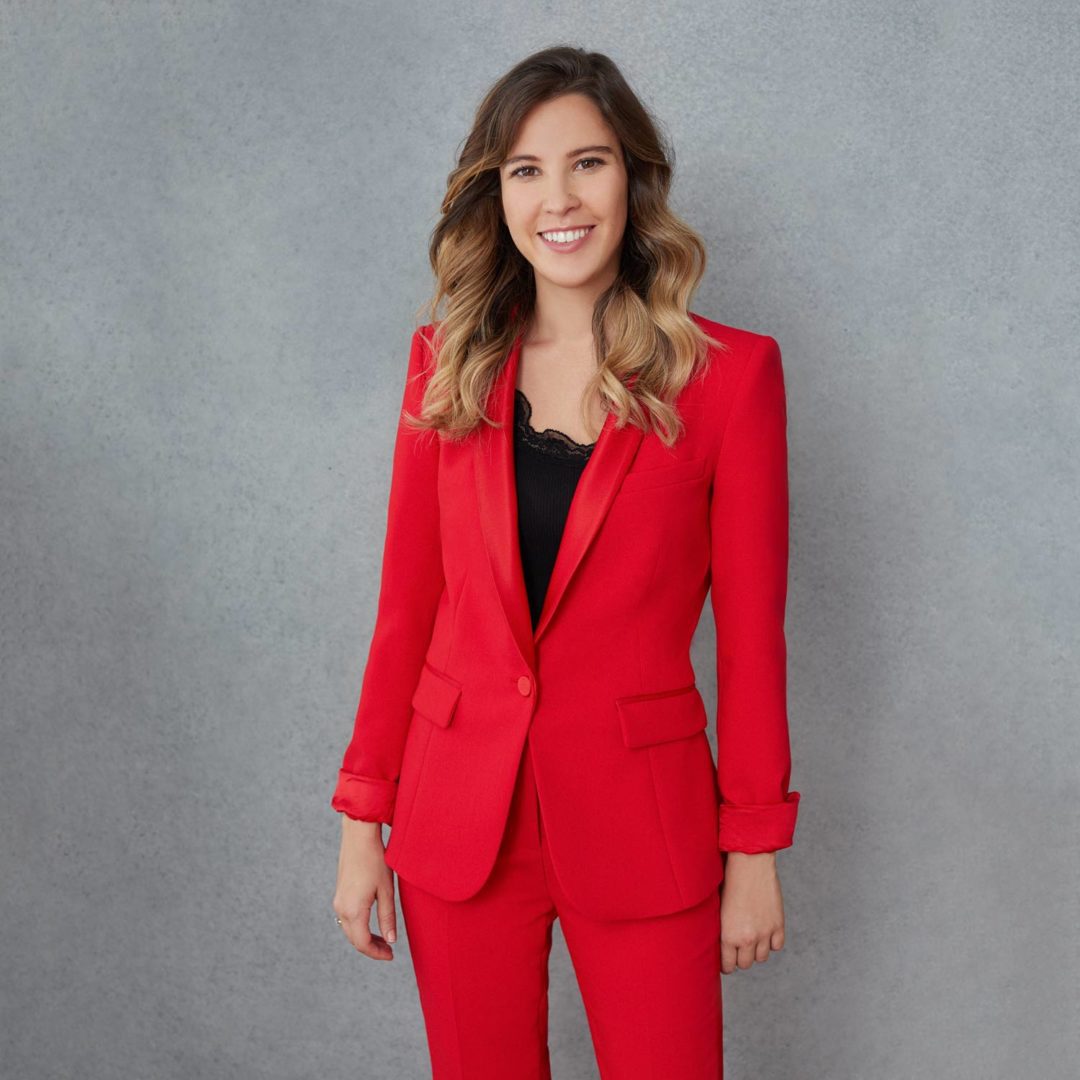
I’ll almost never photograph you head-on. The camera flattens the image, and a straight frontal shot makes the body look smaller. The rule I repeat all day is: turn your body about 30 degrees relative to the camera . Shoulders slightly open, weight on your back leg, front leg slightly bent.
That little twist slims, lengthens, and adds grace. It’s one of the most universal tricks for posing in professional photos and works with almost any person, outfit, and lighting.


6. The chin and neck: the trick that changes the whole face
Another classic from my studio: “Stick your forehead forward slightly, as if you want to touch the camera with your nose.” It sounds strange until you do it. What we achieve with that: a more slender neck, a defined jawline, and the elimination of a double chin.
It’s a minimal movement, almost imperceptible in person, but through the camera it completely changes the way the face is perceived. If you understand this, you’ve already got half of the professional portrait sorted.
7. Practice with a video, not with a mirror
Last trick, and possibly the most useful if you’ve never posed before: record a short video on your phone before the shoot. No photos, video. Move your head slowly, vary your gaze, try different angles.
The mirror lies to you: you only see a fixed point. Video shows you how your face moves and helps you discover your best angles in five minutes. It’s the fastest way to learn how to pose for professional photos, even without prior experience.
Frequently asked questions about posing for professional photos
Do you need experience to do a photo shoot?
No. Most of my clients have never posed before. I guide you throughout the entire session—posture, gaze, hands, breathing—so that you look natural. That part is my job, not yours.
What should I do if I get nervous on the day of the session?
It’s normal and it passes quickly. The first 10-15 photos are always a “warm-up” to help you relax. After that, it flows naturally. My job is to ease your tension from the very first minute, not wait for it to go away on its own.
How many changes of clothes can I bring?
You’ll have the whole morning at the studio. The average is 7 looks, but some clients bring up to 10. The number will depend on how the session goes.
Can I combine professional and personal looks in the same session?
Yes, and it’s a great idea. Many clients divide the session into a personal branding section (LinkedIn, website) and a magazine-style portrait section. It makes much better use of the morning.
How many photos are submitted?
There’s no purchase obligation. You buy the portraits individually or in packs of 5, 10, or 20. You have a year to buy as many as you need, as you use them.
When do I hand in the photographs?
Approximately two weeks after the session, I’ll invite you to the studio and show you a selection of the best photos. You can choose which ones to take, with no obligation. Each portrait is delivered in high-quality JPG format, web profile, square format for LinkedIn, and, as a gift, a printed copy with a passe-partout.