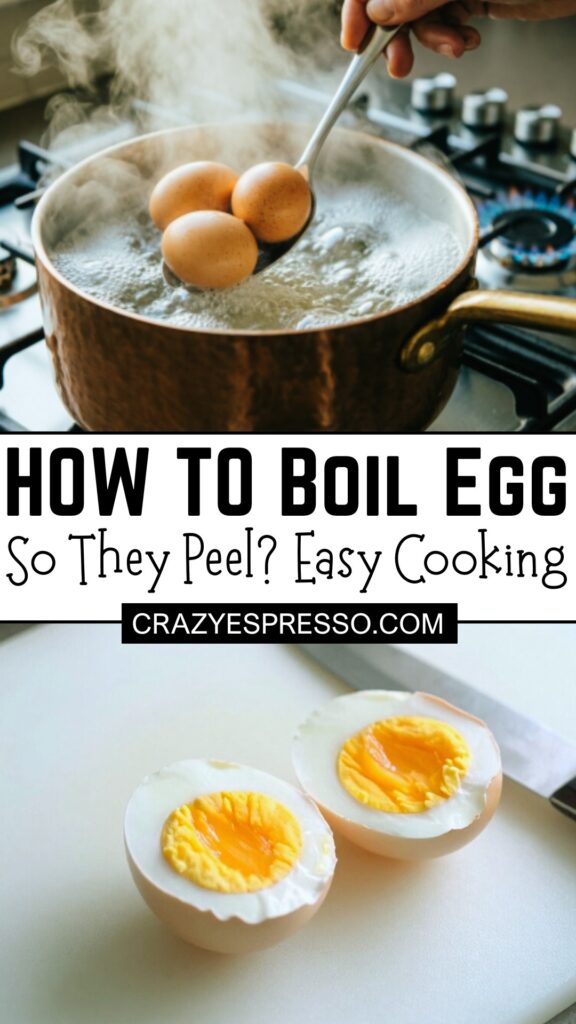
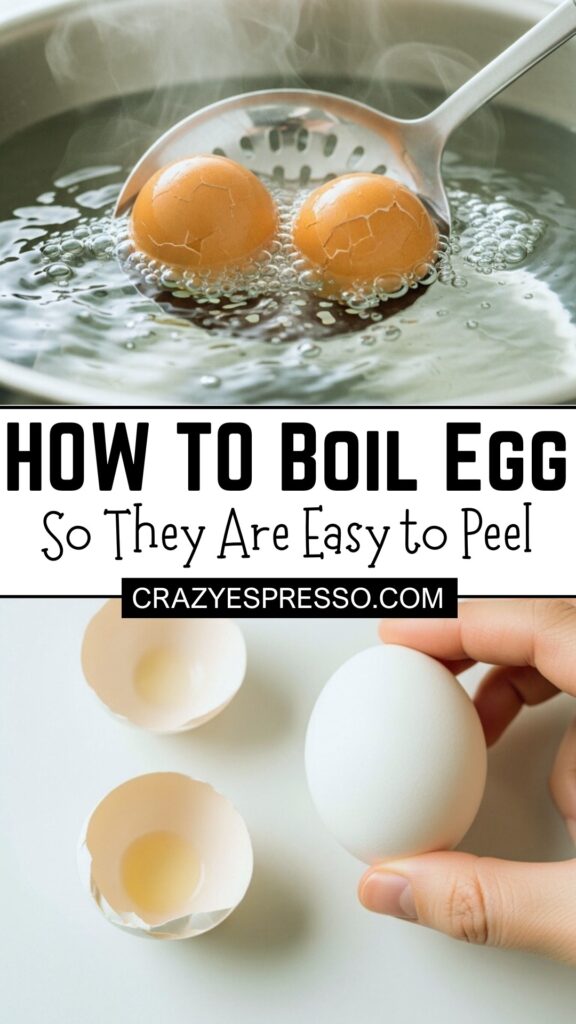
I don’t know about you, but I’ve had trouble peeling hard-boiled eggs countless times, sometimes peeling off part of the white. It’s inconvenient because if the eggs don’t peel properly, we end up spending more time on it than we’d like. And poorly peeled eggs look so unsightly, like craters on the moon.
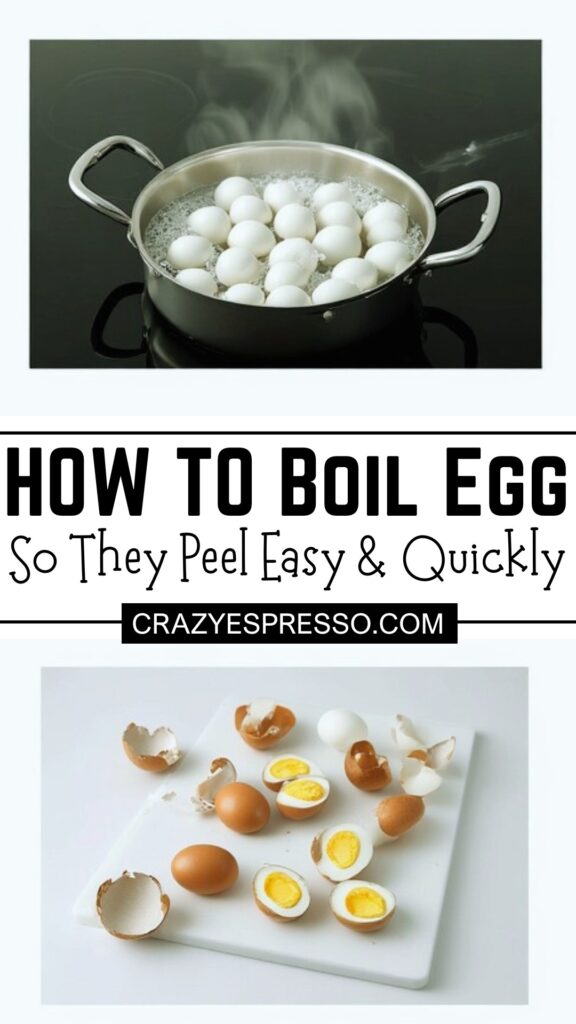
Until my friend Graci told me the trick to make hard-boiled eggs peel easily, I spent years peeling them as if it were Russian roulette, hoping the chosen egg wouldn’t be difficult. You can’t tell if a hard-boiled egg will peel well until you start cracking it.
When a hard-boiled egg peels properly, it takes no more than 10 seconds to remove the shell cleanly, leaving a smooth and perfect egg. This is especially important when making deviled eggs or any recipe where the egg plays a key role.
So, how do you peel hard-boiled eggs easily? It’s much simpler than you think.
Table of Contents
Why Do Boiled Eggs Not Peel Well?
Before learning the trick to peeling hard-boiled eggs easily, I looked for reasons in:
- Egg freshness
- Type of egg
- Size
- Shell color
- Hen’s diet or environment
But none of these made a real difference.
A hard-boiled egg can be fresh or slightly older, white or brown, large or small. The truth is, I can’t tell you exactly why some boiled eggs don’t peel well — but I can tell you how to avoid the problem.
Preparation Time
- Preparation: 5 minutes
- Cooking: 10 minutes
Ingredients for 4 People
| Ingredient | Quantity |
|---|---|
| Eggs | 2 |
| Water | Enough to cover |
| Salt | A pinch |
| Vinegar | A little splash |
Recipe Steps
Step 1
There are a few simple rules to ensure perfect hard-boiled eggs:
- Prevent the yolk from being off-center
- Avoid the grayish-green ring
- Stop the shell from sticking to the white
Use fresh eggs. To check freshness:
- Place the egg in a glass of water.
- If it sinks, it’s good.
- If it floats, discard it.
Take the eggs out of the refrigerator 1 hour before cooking so they reach room temperature.
Place a pot over medium-high heat and add enough water to cover the eggs. Once the water is warm:
- Add salt (this helps with peeling).
- Carefully place the eggs in the pot to avoid cracks.
Step 2
Once the water reaches a boil:
- Cook medium eggs for 10 minutes.
- Cook large eggs for 11–12 minutes.
You may add a splash of vinegar to prevent the white from leaking if the shell cracks.
Be careful:
- Undercooked egg: Runny yolk
- Overcooked egg: Greenish yolk
Step 3
After 10 minutes:
- Remove the eggs.
- Transfer them to a bowl of cold water.
- Let them cool for 3–4 minutes.
This stops the cooking process and makes peeling much easier.
Step 4
Tap the egg gently to crack the shell, peel carefully, and cut as desired.
Step 5
You now have perfectly cooked hard-boiled eggs.
Depending on cooking time, there are three types:
- Soft-boiled egg
- Runny white and runny yolk
- 3–4 minutes
- Medium-boiled egg
- Set white, slightly runny yolk
- 5 minutes
- Hard-boiled egg
- Firm white and fully set yolk
- 10–12 minutes
Characteristics of the Perfect Hard-Boiled Egg:
A perfect egg should have:
- An intact shell
- Easy peeling
- Firm white
- Moist, set yolk
- No greenish-gray ring
How to Prevent Eggs from Breaking While Boiling?
Here’s another simple tip to prevent eggs from cracking:
- Add a splash of vinegar to the water.
- Add two tablespoons of salt.
- Place eggs in cold water first, then heat gradually.
This prevents thermal shock and helps seal minor cracks. With these two simple tricks — salt and vinegar — you’ll consistently get smooth, easy-to-peel eggs.
Notes and Recommendations
- Water boils at 100°C (212°F).
- A hard-boiled egg cooks in about 10 minutes.
- Cooking in cold or hot water may affect yolk positioning.
- A greenish-gray yolk means overcooking.
- When the water boils, reduce heat slightly and gently place the eggs in using a spoon.
Nutritional Facts (Per 1 Large Hard-Boiled Egg)
| Nutrient | Amount |
|---|---|
| Calories | 78 kcal |
| Protein | 6 g |
| Fat | 5 g |
| Saturated Fat | 1.6 g |
| Carbohydrates | 0.6 g |
| Cholesterol | 186 mg |
| Sodium | 62 mg |
| Vitamin B12 | 0.6 mcg |
| Vitamin D | 1 mcg |
FAQs – Frequently Asked Questions
Why are my eggs hard to peel even if they are fresh?
Freshness isn’t always the problem. Cooling the eggs quickly in cold water and adding salt during boiling usually makes the biggest difference.
Should I start eggs in cold or boiling water?
Starting in cold water reduces cracking and allows more even cooking.
Why does the yolk turn green?
The greenish-gray ring appears when eggs are overcooked. Cooling them quickly prevents this.
Is vinegar necessary?
It’s optional but helpful. Vinegar prevents the egg white from spreading if the shell cracks.
Conclusion
Making hard-boiled eggs that peel easily isn’t complicated. With a few small adjustments — adding salt, a splash of vinegar, controlling the cooking time, and cooling them properly — you can avoid frustration and get smooth, beautiful eggs every time.
Once you try these simple tricks, peeling eggs will finally take seconds instead of minutes — and your eggs will look as good as they taste.