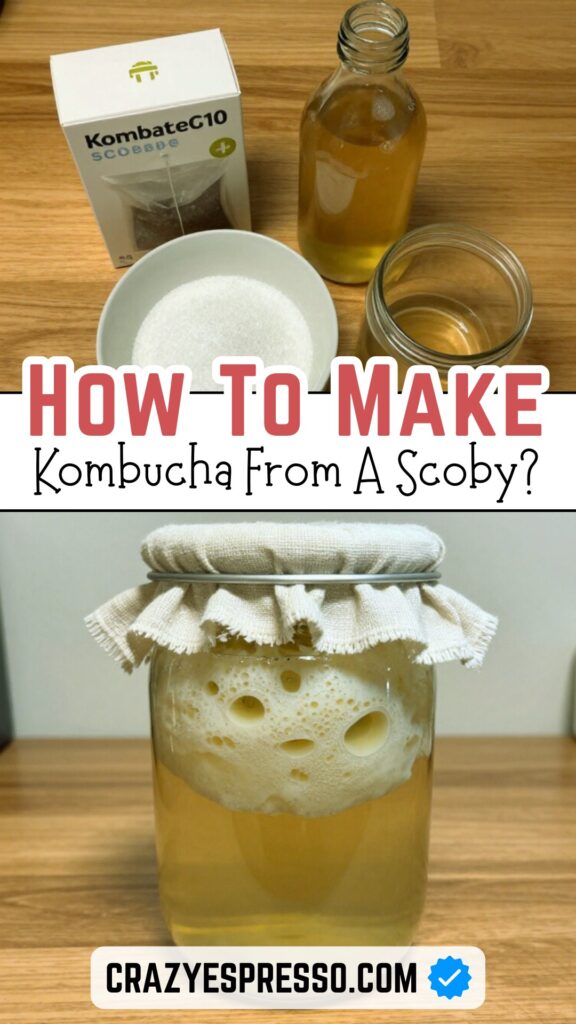
To make kombucha, you need a quality SCOBY. If you don’t already have one, in this post, I’ll explain how to create a SCOBY from scratch—it’s easy.

At first, you might think it’s difficult to get a good SCOBY. There are several ways, for example, asking for one in Facebook groups. Lots of people share.
As mentioned, making a SCOBY from scratch is also possible. All you need is a couple of cups of unpasteurized, unflavored kombucha. To make it easier, I recommend using sweet tea as well.
Table of Contents
Main Functions of the SCOBY in Kombucha
During fermentation, the kombucha SCOBY functions as a small micro-ecosystem that transforms the tea into a living beverage with natural bubbles and that acidic touch we love.
Functions and Impact
| Function | Impact on the Drink |
|---|---|
| Fermentation of sugars | Generates natural bubbles and a very low residual alcohol content. |
| Production of organic acids | Provides the characteristic acidic touch, antimicrobial effect, and digestive support. |
| Probiotic generation | Promotes a balanced gut microbiota and intestinal health. |
| Cellulose formation | Protects the microbial community and stabilizes the process. |
If you take care of the temperature, hygiene, and starter, the SCOBY works at its own pace and you’ll notice a more stable and richer homemade batch after batch.
SCOBY Versus Other Ferments
Not all ferments are created equal. This comparison helps you understand the key differences and why the SCOBY is unique in kombucha.
| Ferment | Base | Product | Key Difference |
|---|---|---|---|
| SCOBY | Tea and sugar | Kombucha | Reusable cellulose disc; acid and probiotic fermentation. |
| Kefir (milk/water) | Milk or sugar water | Milk or water kefir | Gelatinous granules; more lactic and effervescent fermentation. |
| Sourdough | Flour and water | Bread and pastries | Ferments flours and provides structure; does not produce a beverage. |
| Baker’s yeast | Flour or must | Bread or beer | Almost pure yeast; lower bacterial diversity. |
If you want a live beverage with natural bubbles, the kombucha SCOBY is your best option.
What Do I Need to Make Kombucha at Home?
These are the ingredients for making kombucha.
Sugar
Sugar is essential for making kombucha. I recommend using organic cane sugar or white sugar.
It’s best not to use sugar substitutes. The SCOBY needs sugar; it’s its food source. If you give it something other than sugar, you could weaken it.
Avoid:
- Stevia
- Honey
- Agave syrup
- Coconut sugar
- Molasses
Even if you want to reduce sugar intake, you still need to use some for kombucha. Most of it feeds the SCOBY, so in the end only a trace amount remains.
Water
You can use any water you prefer. Many people use:
- Filtered water
- Bottled water
- Tap water
Try it and draw your own conclusions.
Tea (Black or Green)
In my opinion, the best tea for making kombucha is loose-leaf black tea. It’s strong and gives great flavor.
You can also use green tea. Its flavor is milder. You can mix it with a little black tea if you like.
The tea should not have any added flavor, as this could endanger the SCOBY.
SCOBY
A SCOBY is a symbiotic colony of bacteria and yeast. Its function is to convert tea into kombucha.
It has a gelatinous appearance and is usually beige or cream-colored. It may float at the top of the container or sink—both are normal. A new SCOBY usually forms with each batch.
You can keep using the same SCOBY until it turns dark over time. New SCOBYs can be stored in a SCOBY hotel.
It is also possible to grow a SCOBY from scratch.
Before We Begin
To make kombucha, you need to ferment tea. There are two stages:
- First Fermentation: Usually lasts between 7 and 12 days. During this time, sweet tea ferments thanks to the starter tea and the SCOBY. The result is slightly carbonated kombucha that is ready to drink.
- Second Fermentation: Optional. It adds flavor, such as fruit. Bottle tightly and leave at room temperature for 2 to 4 days. This process creates extra bubbles.
Hygiene
When making homemade kombucha, hygiene is essential.
- Wash your hands and utensils thoroughly.
- Clean the container with soap and water.
- Do not use bleach.
- Do not use metal utensils with the SCOBY. Use wooden or BPA-free plastic instead.
First Fermentation
This is the recipe I usually make.
Ingredients
| Ingredient | Quantity |
|---|---|
| Water | 1 liter |
| Black or green tea | 2–3 tea bags or 2 tsp loose tea |
| Sugar | 70–100 g |
| Starter tea | 100–200 ml |
| SCOBY | 1 |
Regardless of the quantity, you must use 1 SCOBY.
The starter culture is unflavored kombucha that has undergone its first fermentation. If you buy a SCOBY, it usually includes some starter liquid. You can also use unpasteurized kombucha purchased from a store.
Never use vinegar instead of starter tea.
Utensils
- Pot and strainer
- Glass jar
- Cotton cloth or coffee filter
- Elastic band
Preparation
- Heat the water. When it boils, turn off the heat and add the tea. Let it steep for 10–15 minutes.
- Add the sugar to the hot tea and stir until dissolved.
- Strain and pour into the glass jar. Wait until it cools to 20–30°C (lukewarm).
- Add the starter tea and the SCOBY.
- Cover the jar with a clean cloth and secure it with a rubber band.
- Let it rest at room temperature, away from direct sunlight, for about a week.
- Do not stir or open the jar during this time.
- Taste from the 5th day onward. The longer it ferments, the more acidic it becomes.
- When it tastes balanced, it is ready to drink. You can proceed with the second fermentation if desired.
How to Make Kombucha with Your New SCOBY?
Depending on the amount of starter tea, measurements may vary. For example, if you have about 250 ml:
Ingredients
| Ingredient | Quantity |
|---|---|
| Starter tea | 250 ml |
| Water | 1.5 L |
| Green or black tea bags | 4 |
| Sugar | 125 g |
| SCOBY | 1 |
Preparation
- Bring the water to a boil. Turn off the heat and add tea and sugar.
- Let the mixture cool.
- Pour into a glass jar and add the starter tea and your new SCOBY.
- Cover with a cotton cloth and secure it.
- Leave in a dark place with good airflow. Do not move it.
- Taste from the 5th day onward and adjust fermentation time to your preference.
After brewing, set aside a couple of glasses to use as starter tea for the next batch.
It is common for a new SCOBY to grow on the surface with each batch. If it does not, you can continue using the one you created.
The best way to store extra SCOBYs is in a SCOBY hotel.
Video Guide 🎥
Disadvantages of Making Your Own SCOBY
Creating a SCOBY from scratch is not always the fastest option. You can buy one or receive one from someone, which is usually quicker.
If you use store-bought kombucha to grow one, make sure it is:
- Unflavored
- Unpasteurized
Otherwise, the SCOBY will not grow.
Pasteurized Kombucha
Many brands pasteurize their kombucha, dilute it, or use yeast inhibitors. This extends shelf life but kills bacteria.
In these cases, kombucha does not contain live cultures, so you cannot benefit from its properties.
Choose carefully when selecting kombucha to create your SCOBY.
Nutritional Facts (Approximate per 240 ml)
| Nutrient | Amount |
|---|---|
| Calories | 25–40 kcal |
| Carbohydrates | 6–8 g |
| Sugars | 2–6 g |
| Protein | 0 g |
| Fat | 0 g |
| Alcohol | <0.5% |
| Probiotics | Present |
| Organic acids | Present |
Values vary depending on fermentation time.
FAQs
- How long does kombucha ferment?
Usually 7–12 days for the first fermentation. - Why did my SCOBY sink?
It is normal. It may float or sink. - Can I reduce sugar?
You must use sugar for fermentation. Most of it is consumed. - What temperature is ideal?
Around 20–26°C. - Is kombucha alcoholic?
It contains a very small natural alcohol content (less than 0.5%).
Conclusion
Making kombucha at home is simple once you understand the process. The SCOBY converts sweet tea into a lightly fizzy, probiotic drink.
You can grow your own SCOBY or obtain one more quickly. Focus on proper ingredients, hygiene, and temperature. With time, each batch becomes more consistent and flavorful.