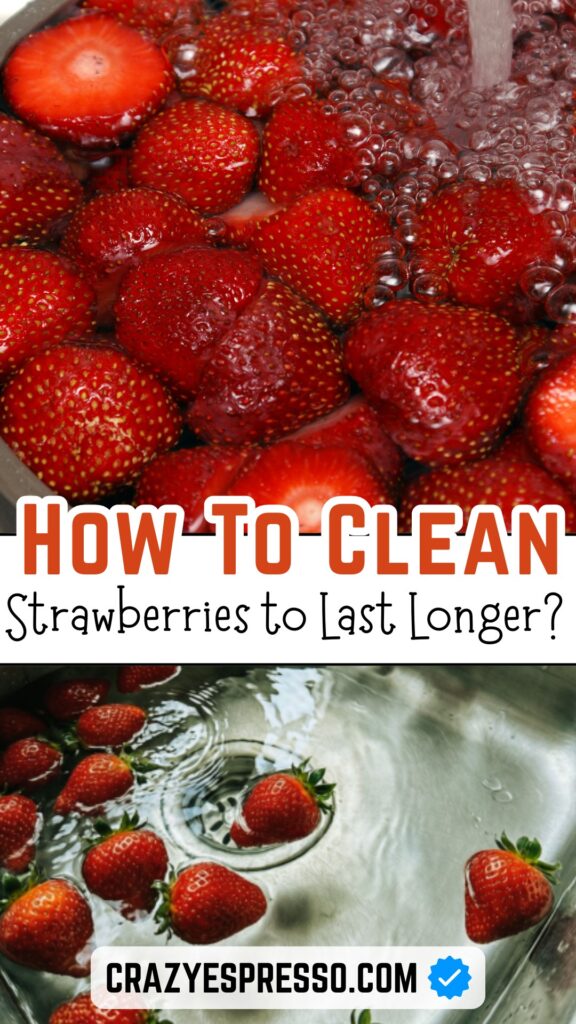
In the heart of strawberry season, it’s not only important to know how to choose the best ones to enjoy their delicious flavor.
In the case of strawberries, washing them correctly is also key. This is because this fruit, along with other commonly consumed fruits and vegetables, is greatly affected by the use of pesticides in agriculture.

In fact, strawberries have been the subject of numerous health alerts. To avoid risks, it is essential to thoroughly remove pesticides and viruses.
Researchers from the Korea Institute of Toxicology published a study in the scientific journal Foods detailing the best method for washing this spring fruit, which tops the list of most contaminated fruits.
Here we’ll see how to properly wash strawberries to reduce pesticide residue and contribute to disinfection, preventing contamination from viruses or bacteria that may be present on the surface. Let’s first look at what the most recent studies say about which substances are most effective for this purpose.
Table of Contents
The Best Scientific Formula for Washing Strawberries?
The goal of the Korean researchers who focused on how to effectively wash strawberries was to reduce contamination of this fruit with pesticides such as chlorfenapyr, celenopyrafen, indoxacarb, and spirotetramate. Of all these chemicals, chlorfenapyr is the most resistant to washing.
Scientists concluded that the best method for washing strawberries involves a 3% dilution of water and vinegar (for example, 90 ml of vinegar in 3 liters of water). This method achieves a 48.7% removal of pesticide residues.
The Korean team tested two other methods:
- A 3% salt dilution achieved a 45.7% removal rate.
- A 3% green tea dilution achieved a 38.9% reduction.
The three methods—using vinegar, salt, or green tea—were much more effective than simply washing with water, which only achieves a 24.6% reduction.
Comparison of Washing Solutions
| Washing Method | Concentration | Pesticide Reduction |
|---|---|---|
| Vinegar | 3% | 48.7% |
| Salt | 3% | 45.7% |
| Green tea | 3% | 38.9% |
| Water only | — | 24.6% |
The Importance of Proper Cleaning:
Washing strawberries thoroughly before eating them not only helps remove pesticide residue, but also reduces the presence of microorganisms that could pose a health risk.
Changmou Xu, an adjunct professor at the University of Illinois Urbana-Champaign and a member of the Institute of Food Technologists, recommends using a baking soda and water solution as the most effective method for reducing pesticide and dirt residue on strawberries.
This procedure facilitates the removal of chemical residues and helps break down pesticides adhering to the fruit’s skin.
1) How to Disinfect Strawberries With Vinegar?
White vinegar has well-known antimicrobial properties, excellent for disinfecting fruit, and it is also non-toxic. Most of its antiseptic action comes from its versatile pH, which is acidic but can shift to alkaline. In this way, it eliminates or neutralizes many types of microorganisms.
However, it’s important to know that its effectiveness is around 80%, as there are some microbes it cannot eliminate or inhibit. To disinfect strawberries with vinegar, follow these steps:
- Wash your hands thoroughly for 20 seconds.
- Thoroughly sanitize the work area (table, knife, cutting board).
- Select the strawberries. Separate the damaged ones from the whole ones and wash them separately. Do not remove the leaves, as this can contaminate the fruit.
- Prepare a large container with half water and half vinegar.
- Let the strawberries soak for 15–20 minutes.
- Rub the liquid onto the surface using a special brush, gently to avoid damage.
- Rinse very well under running water.
- Pass the strawberries through a sieve and dry them thoroughly with paper towels.
Tip: Strawberries should be washed whole, without removing the stem and leaves.
2) How to Disinfect Strawberries With Salt?
Sea salt is a natural antiseptic that was already used in ancient times. It’s very effective, but its application can slightly alter the original flavor. However, it’s an excellent alternative since it’s usually available.
To disinfect strawberries using salt:
- Wash your hands thoroughly.
- Clean the work area well.
- Sort the strawberries and disinfect damaged ones separately. Leave the stem and leaves on.
- Pour 1 liter of warm water and 1 teaspoon of salt into a large bowl.
- Let them sit for 5–10 minutes.
- Scrub gently with a soft brush or your hands.
- Rinse thoroughly under running tap water.
- Drain and dry carefully using absorbent kitchen paper.
Tip: If you combine salt with lemon, you’ll have another effective food germicide.
3) How to Disinfect Strawberries With Baking Soda?
Baking soda is a water-soluble compound with a slightly alkaline taste. When exposed to a strong acid, it decomposes into carbon dioxide and water. This reaction makes it an effective, non-toxic, and tasteless natural disinfectant.
- Clean your hands and all necessary items.
- Choose the strawberries carefully and disinfect damaged ones separately. Do not remove stems or leaves.
- Pour 1 liter of warm water and 2 teaspoons of baking soda into a large bowl.
- Wait 15–20 minutes.
- Rub the strawberries gently using your fingers or a brush.
- Rinse thoroughly with plenty of water.
- Dry very well using absorbent paper.
4) How to Disinfect Strawberries With Lemon?
Lemon is a superb natural germicide due to its high acidity, which alters the pH inside bacterial cells. Its effectiveness is widely praised, even surpassing vinegar.
- Wash your hands and utensils.
- Select strawberries and separate damaged ones. Leave stem and leaves on.
- Wash the lemons thoroughly, scrubbing the peel.
- Place strawberries in 1 liter of water and ½ liter of lemon juice.
- Let soak for 15–20 minutes.
- Scrub gently with a soft brush.
- Rinse with plenty of water.
- Dry thoroughly but gently using paper towels.
5) How to Disinfect Strawberries Without Chlorine?
If chlorine is not preferred, there are healthier alternatives, although slightly less effective. Hydrogen peroxide sold in pharmacies is suitable because it is non-toxic and kills microbes.
Hydrogen peroxide has antiseptic properties and eliminates microorganisms through oxidation.
- Wash your hands thoroughly for 20 seconds.
- Sanitize the work surface and tools.
- Sort strawberries and disinfect damaged ones separately. Do not remove stems or leaves.
- Place strawberries in 1 liter of water with ½ cup of hydrogen peroxide (10 volume).
- Wait 15–20 minutes.
- Rinse with plenty of tap water.
- Drain and dry completely using paper towels.
Note: Only chlorine labeled as safe for food and water should be used. Common chlorine is toxic.
Benefits and Properties of Eating Strawberries:
- Composed primarily of water (almost 90%), strawberries contain carbohydrates (7%), mainly fructose, xylitol, and glucose, and provide 2.2% fiber, which helps regulate intestinal transit and aids digestion, making them suitable for weight-loss diets.
- Strawberries contain more vitamin C than an orange. A 150 g serving provides approximately 86 mg of vitamin C, exceeding the recommended daily intake for adults.
- Thanks to this vitamin C content, strawberries have strong antioxidant properties that block the harmful effects of free radicals involved in aging and cell death.
- Strawberries also contain organic acids such as citric, malic, oxalic, and salicylic acids. The flavonoids responsible for their color give them a very high antioxidant capacity, helping protect cells from oxidative stress.
Nutritional facts of strawberries (per 150 g)
| Nutrient | Amount |
|---|---|
| Water | ~90% |
| Carbohydrates | ~7% |
| Fiber | 2.2% |
| Vitamin C | 86 mg |
| Organic acids | Citric, malic, oxalic, salicylic |
| Antioxidants | High (flavonoids) |