Poses you can practice in your next professional studio photoshoot.
If you’re thinking about having a professional photoshoot, there’s something you’ve probably already said (or are about to say): “I don’t know how to pose.” And that’s completely normal.
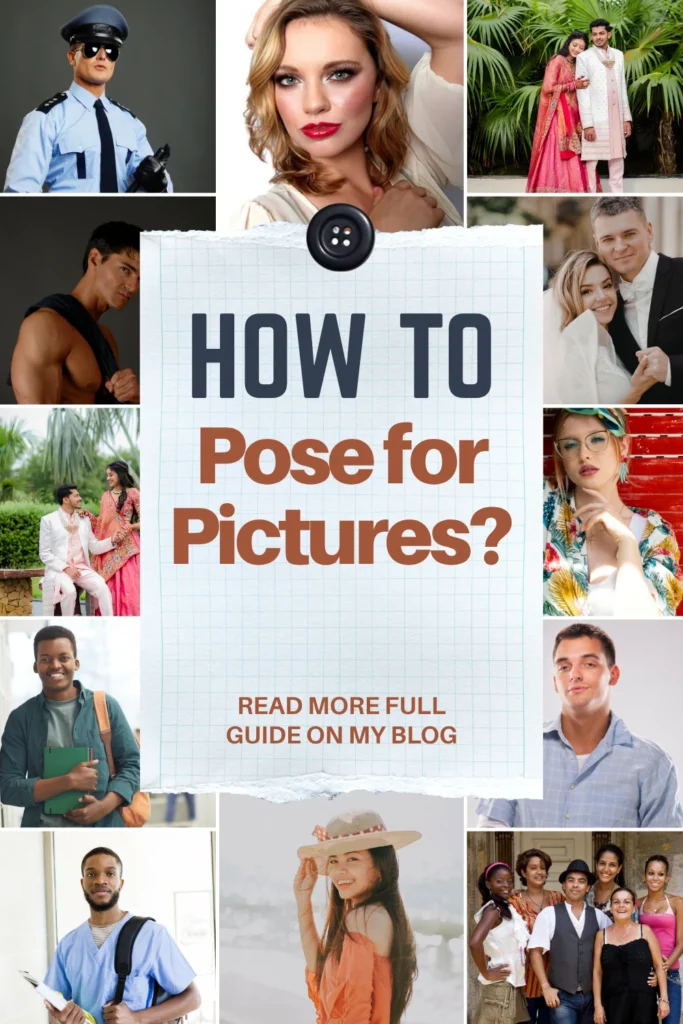
95% of the women who come to my studio and appear in my gallery aren’t models, nor do they have any prior experience in front of the camera. But I want you to know something important: you don’t need to know how to pose to have amazing photos.
What does help (a lot) is understanding some basic principles and arriving with at least a basic idea of how a professional photoshoot works. That makes all the difference between feeling uncomfortable… or truly enjoying it.
In this guide, I’ll explain the most common poses clearly and practically, so you can arrive more relaxed and with better results.
If you’d like to delve deeper than this guide, I’ve written a comprehensive 325‑page book on posing for fashion portraits. I wrote it for photographers, but many clients read it before their shoot.
Before posing: what really changes your photos
Before discussing specific poses, there are three key ideas to keep in mind before your professional photoshoot:
- Triangles create a slimming effect.
Slightly separating your arms and legs creates space that elongates your silhouette. An elbow raised, a hand on your hip, or a leg forward can completely transform how you look in a photo. - Asymmetry is more natural.
When everything is the same (two identical arms, two visible hands, perfectly straight posture), the image appears rigid. Conversely, when one part of the body is more prominent than another, the pose flows more naturally. - The gaze/expression is more important than the pose.
You can have a perfect pose, but if your expression doesn’t match… the photo won’t work. Attitude, the intention in your eyes, is what truly conveys meaning.
Below, I’ll analyze the most common poses used in professional studio photoshoots:
Standing poses that always work
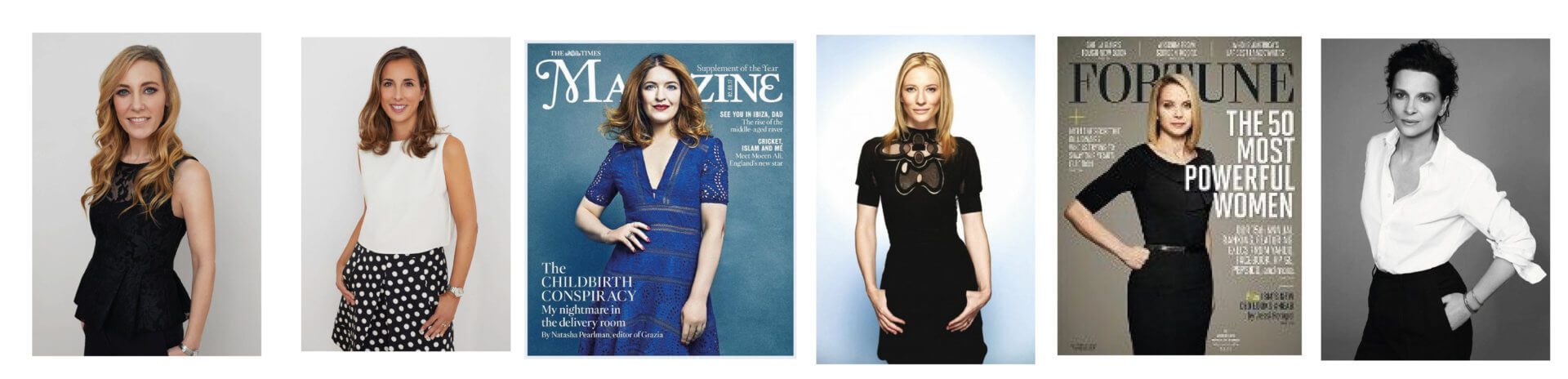
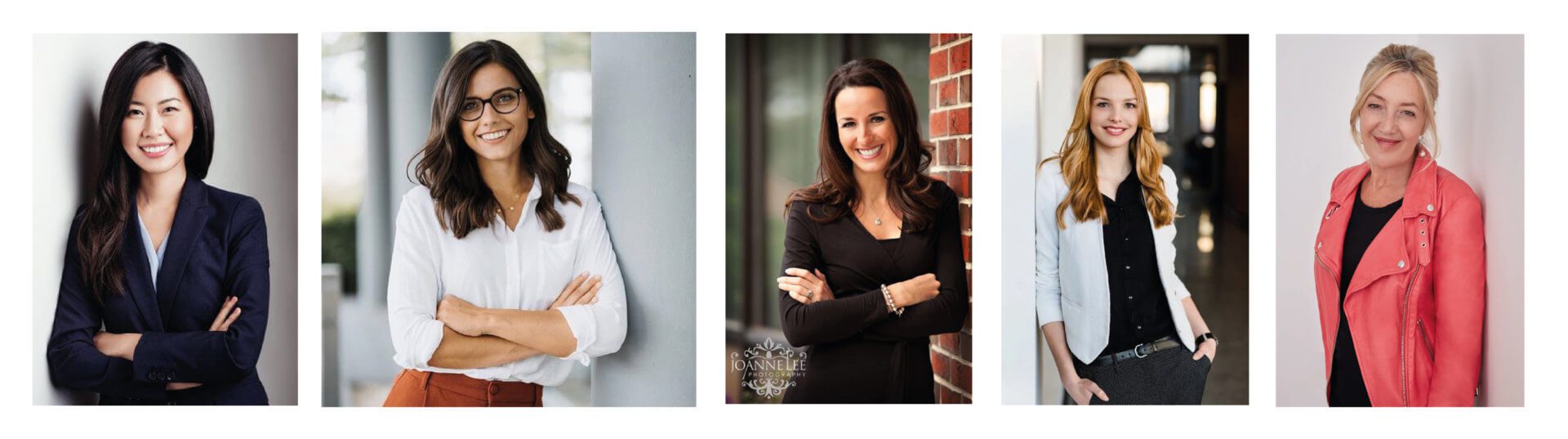
#1) Cover‑style portrait (half‑length)
It’s the classic magazine portrait that makes an impact at first glance: framed from the waist up, facing forward or at a 45‑degree angle.
A simple trick: it simulates an hourglass shape. Asymmetrical arms, one hand resting on the thigh and the arm hanging down, leaving space between the body and the arm. The other arm is bent at the elbow, framing your figure. Another option is the arm akimbo with the elbow pointing back instead of to the side.
What it conveys: confidence, presence, professionalism.
Ideal for: personal branding, professional profiles.
Common mistake: both arms close to the body with no space between the torso and arm, which visually widens the figure.
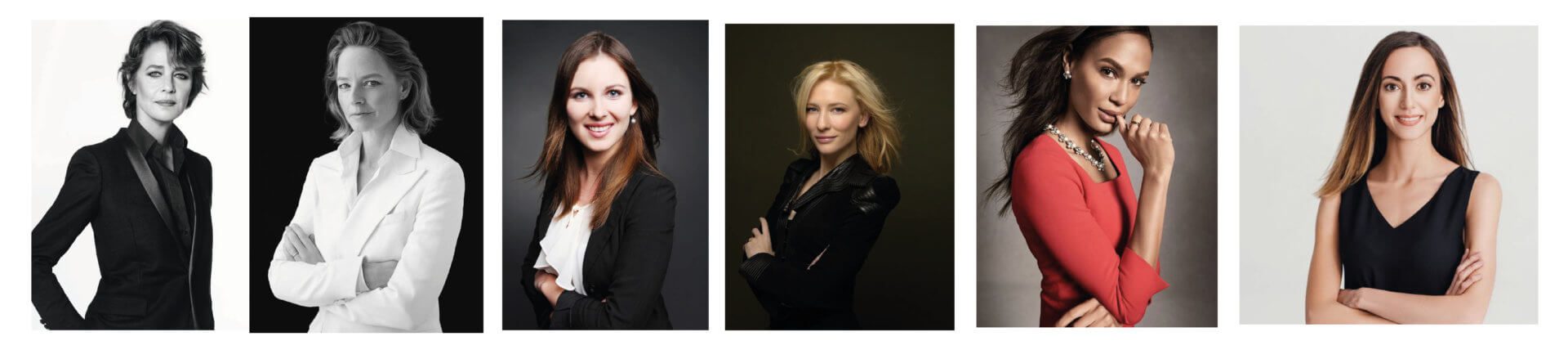
#2) Crossed arms
It’s a strong and direct pose. The key here isn’t in the arms… but in the expression and the angle of the body. It works best if the pose isn’t completely facing the camera.
If you want to soften it, leave one hand visible. It’s a small detail that greatly changes the feeling it conveys.
What it conveys: confidence, character.
Tip: Avoid completely hiding both hands to prevent giving the impression of being closed off.
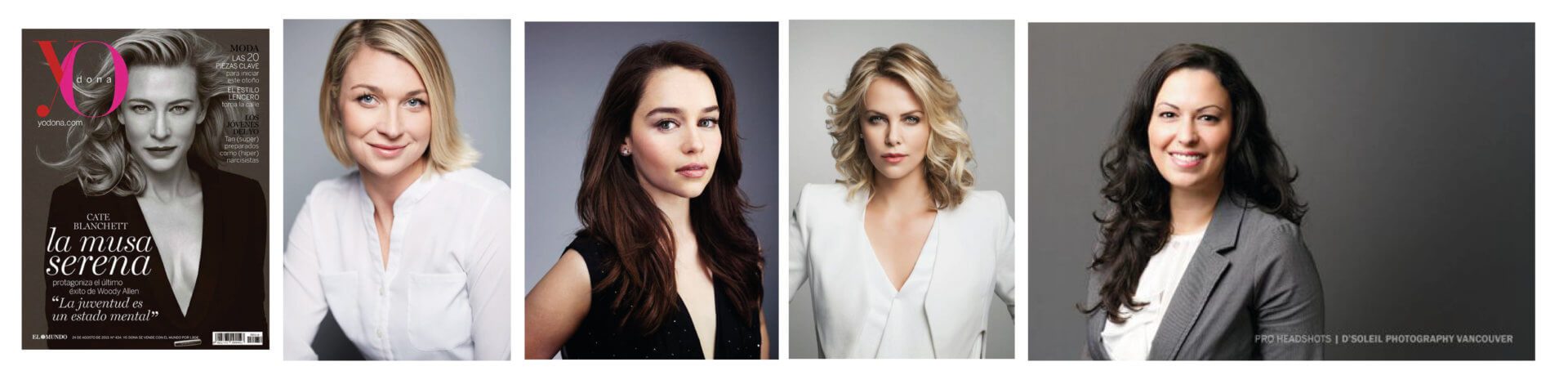
#3) Close‑up (headshot)
Here, everything focuses on the face. It’s one of the most requested framing techniques in a professional photoshoot because it works for LinkedIn, websites, and social media.
A small gesture, like slightly tilting the head or raising or lowering a shoulder, transforms the image from stiff to natural.
What it conveys: approachability, authenticity.
Perfect for: LinkedIn, personal website, social media.
#4) Leaning against the wall
One of the most natural poses of the entire session.
Simply having a point of support allows the body to relax automatically. You can play with the angle, the shoulder, or even rest one foot against the wall.
What it conveys: freshness, naturalness.
Tip: fitted garments that accentuate the figure work especially well in half‑body shots with this pose.
Seated poses (more flattering than you think)
#1) 45‑degree position
Seated poses are probably the most classic in a professional personal branding photoshoot. A seated photo reveals more about you: there are more elements, more context, more personality.
A slightly turned body, one leg raised, and soft support with the arms create an effortlessly elegant posture. It’s the perfect time to create triangles with your arms and legs.
What it conveys: elegance, confidence.
Important detail: hands look better in profile than facing the camera directly.
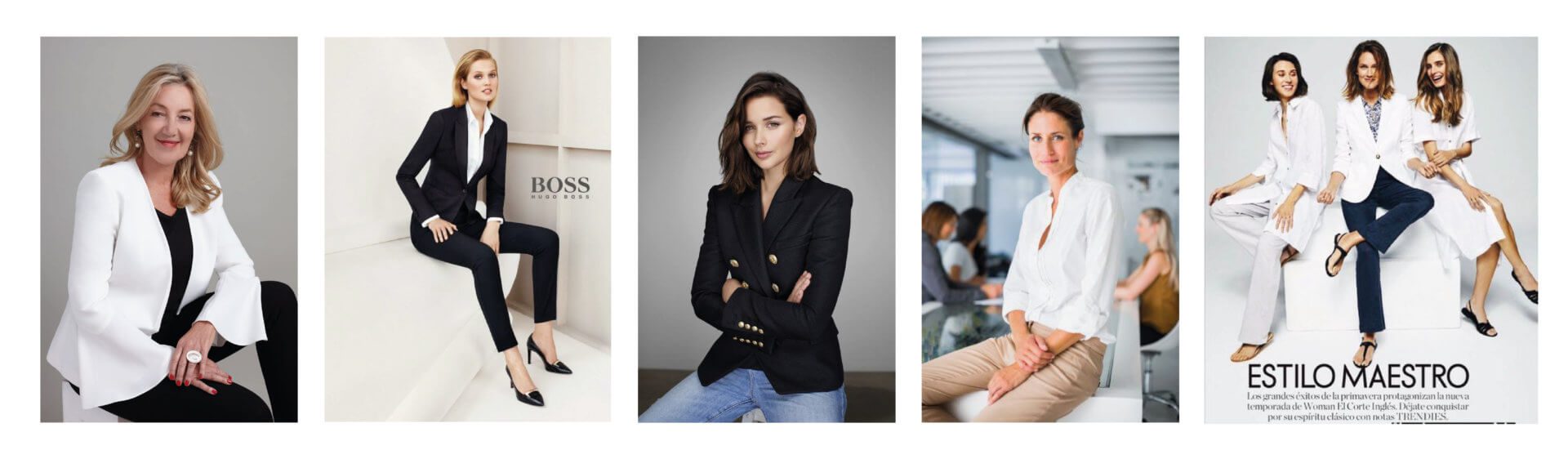
#2) Front pose (knees together)
Simpler, but very effective. If you’re wearing dresses or skirts in your professional photoshoot, this pose is ideal.
There’s no need to cross your legs: simply bring them together and slightly raise one to create a small difference in height between your knees. This difference prevents stiffness and is also more flattering because it doesn’t flatten your thighs against the seat.
What it conveys: approachability with authority.
Often used by: formal professional profiles, executives, lawyers.
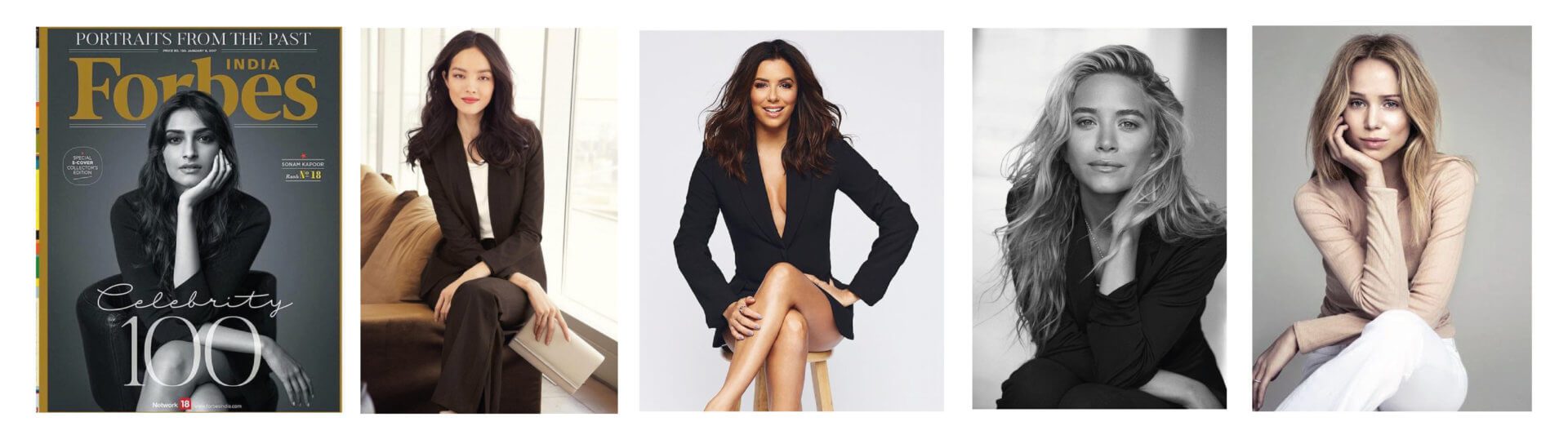
Table poses (the most underrated resource)
The table is not just a decorative element: it is a key tool in any professional photo shoot to achieve more personal and even emotional portraits.
#1) Elbows supported
Classic executive pose. It conveys focus and control.
The key is to keep your back straight but relaxed. If your back slumps, the pose loses its impact.
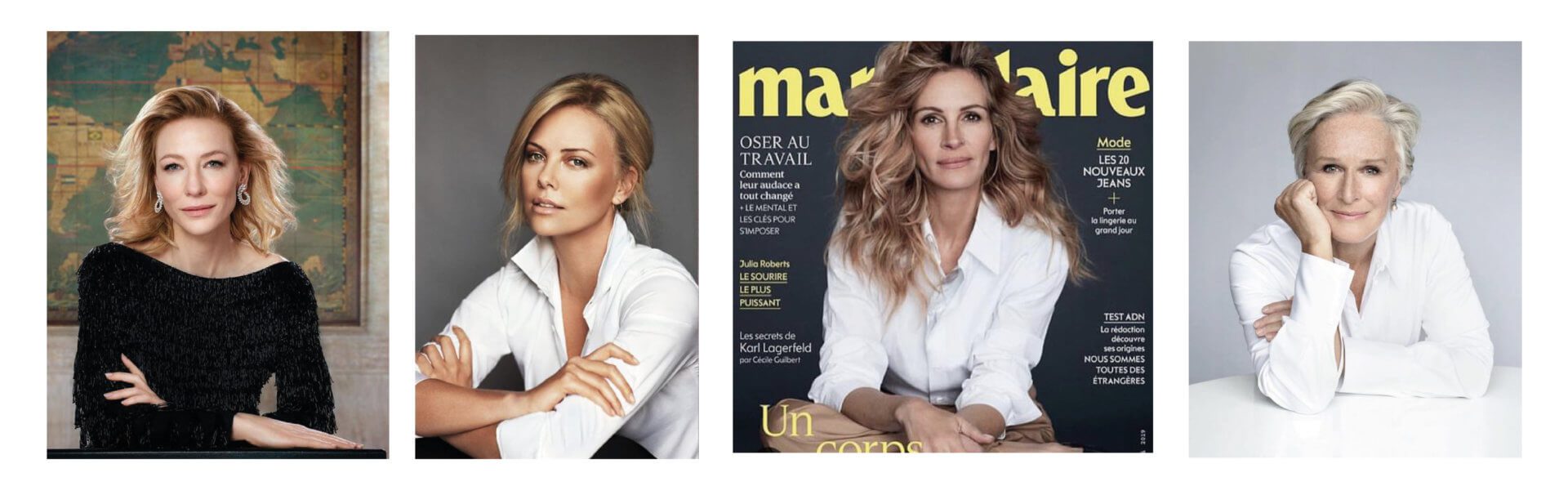
#2) A leading hand
Here’s a basic rule: both hands should never do the same thing at the same time.
One can be resting on the ground, the other touching the face or gently relaxing. This difference is what makes the pose look natural instead of forced.
If you want to get the highest grade on the exam, take note of this: at the end of the session, exaggerate all the poses and add a smile to make your portrait more emotional.
Remember that creating triangles with the arms and legs is the most flattering technique. The freestyle shots in the last few minutes are where the most authentic photos usually come from.
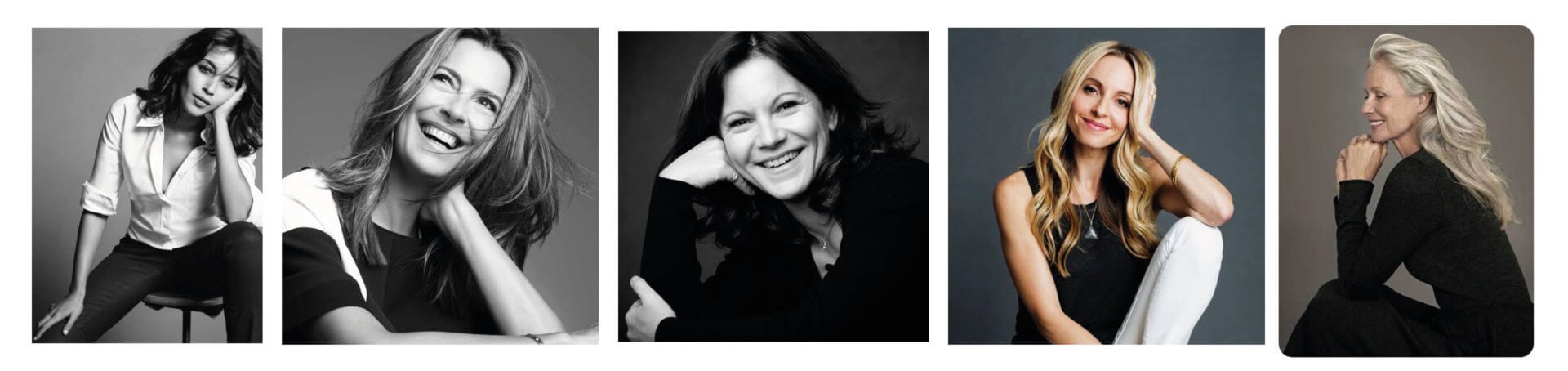
The moment when the best photos are taken
Interestingly, the best photos don’t usually come out at the beginning.
They come out at the end.
When you’ve loosened up, when you stop thinking about “posing” and simply move, smile, experiment.
That’s where the magic happens.
My recommendation: at that moment, exaggerate. Move around. Play. The most natural photos almost always come out then.
Poses for personal branding: not all of them work for everything
Not all photos communicate the same message, and this is especially important in a professional personal branding photoshoot.
A lawyer’s portrait doesn’t convey the same message as a psychologist’s or a creative entrepreneur’s. And that needs to be reflected in the poses, the attitude, and the energy.
- A company executive needs poses that project authority without being cold: a half‑body shot, direct eye contact, and confident arm movements.
- A coach or consultant needs the exact opposite: approachability, openness, and an inviting smile.
- An entrepreneur in the healthcare sector seeks intentional naturalness, nothing that seems contrived.
That’s why, before every professional photoshoot, there’s always a preliminary conversation: what you want to convey, where you’ll use the photos, and how you want to be perceived. That’s where the real work begins.