You’ve probably heard of a well-known makeup technique called “Chiaroscuro” or Visagism, right? And do you know what it’s for? Okay, don’t worry!
In this new blog post, we’ll talk about how wonderful it is to use it to give our face a more symmetrical shape and achieve the contour we always strive for when applying makeup.
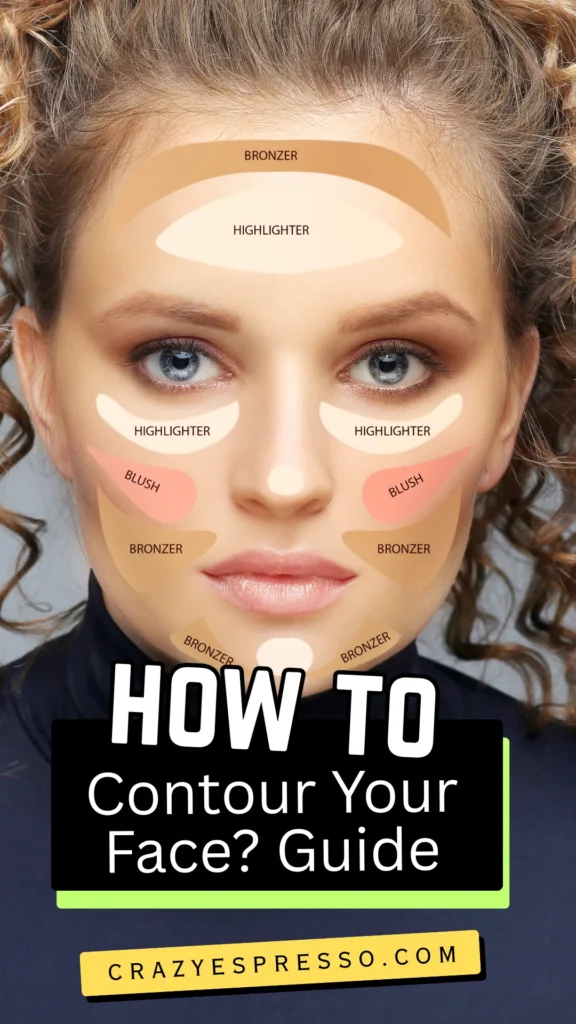
And this face shape is oval, which is free to use any type of accessories and makeup because it tends to be the most flattering, no matter what we use, as its angles and proportions give our face a more symmetrical appearance.
Next, I’ll talk about the most common face shapes and the specific corrections you should make for each one to enhance them with this wonderful makeup technique.
DON’T FORGET! Light colors increase the volume of recessed areas, enlarge spaces, bring them closer, and brighten them. Dark colors make spaces appear recessed, reduce volume, and recede.
Square Face
This face shape has such strong features that they can appear harsh. People with this face shape have a forehead and jaw of the same width, giving the face a square appearance.

The goal when applying makeup to this face shape is to soften the angles of the jaw, cheeks, and temples, minimizing the sharp, angular lines that characterize it. We will highlight the bridge of the nose, the chin, and the tops of the cheekbones.
Inverted Triangle Face
This face shape is characterized by a wide forehead, a narrow chin, and a lack of a defined jawline. It also features prominent cheekbones and a defined chin.

Therefore, to correct this face shape, the hairline should be darkened, extending to the temples and the chin. The bridge of the nose and the jawline should be emphasized.
Round Face
This face shape is characterized primarily by full cheeks and a wide forehead. It requires the most contouring to create volume and shape.

Contouring should be applied from the sideburns to the corners of the mouth, along the jawline, and at the temples. Highlighting should be added to the bridge of the nose, the chin, and above the cheekbones.
Long face
This face shape is characterized by its elongated form and its narrow appearance when viewed from the front. Horizontal lines are used to shorten its length as much as possible.

The hairline at the top of the forehead and the chin should be darkened. The upper part of the cheekbones and the bridge of the nose should be highlighted.
GENERAL CONSIDERATIONS
Whatever our face shape, we must not forget that what we are looking for is to give it an oval shape.
So it’s time to imagine how to create an oval shape on your face so you can correct any features that extend beyond that oval!
If you feel very lost and haven’t been able to identify your face shape, I’ll mention in a very general way the points you should highlight and darken when applying makeup to achieve the perfect face using the wonderful technique of Visagism:
Points to darken:
- The upper part of the forehead, close to the hairline. This is only necessary if your forehead is wide; if it is small, skip this step.
- Side parts of the temple close to the hairline.
- Lower part of your cheekbones.
- Lateral areas of the jaw. Only if your jaw is not very narrow.
Points to illuminate:
– Central part of the forehead. Only if your forehead is small; if it is wide, skip this step.
– Side parts of the contour of your eyes starting from the top of your cheekbones, this will open up your gaze.
– Central part of the chin. Only if your chin is not very long.
What products can I use to contour my face?
For daytime makeup, I highly recommend using powder products for corrections, such as vanilla or cream eyeshadows in matte or pearlescent shades (for light corrections) and matte brown eyeshadow (for dark corrections).
You can also use matte bronzer for darker corrections. Alternatively, you can use a foundation one or two shades darker or lighter than your natural skin tone, depending on your needs.
For evening makeup, you can use cream products like color correctors (yellow) or foundations one or two shades lighter or darker than your natural skin tone, as needed. To further enhance these corrections, you can set them with vanilla or brown powder eyeshadow (or bronzer).
I hope you find this useful, practice a lot, and don’t forget to always blend…talk to you very soon.
By following these guidelines, you can emphasize your most beautiful features and soften any harsh angles. Use the right products sparingly and avoid applying too much makeup, as this can make you look like you have blemishes or have a completely different appearance. Don’t forget to blend your makeup thoroughly!
I invite you to analyze your facial structure from now on and practice the corrections that can best enhance it. It’s your turn!