Sourdough (also called levain) is a technique by which we can, through the controlled feeding of a mixture of flour and water, obtain a lactic ferment that can be used to leaven breads, pizzas, and other products, replacing commercial yeast.
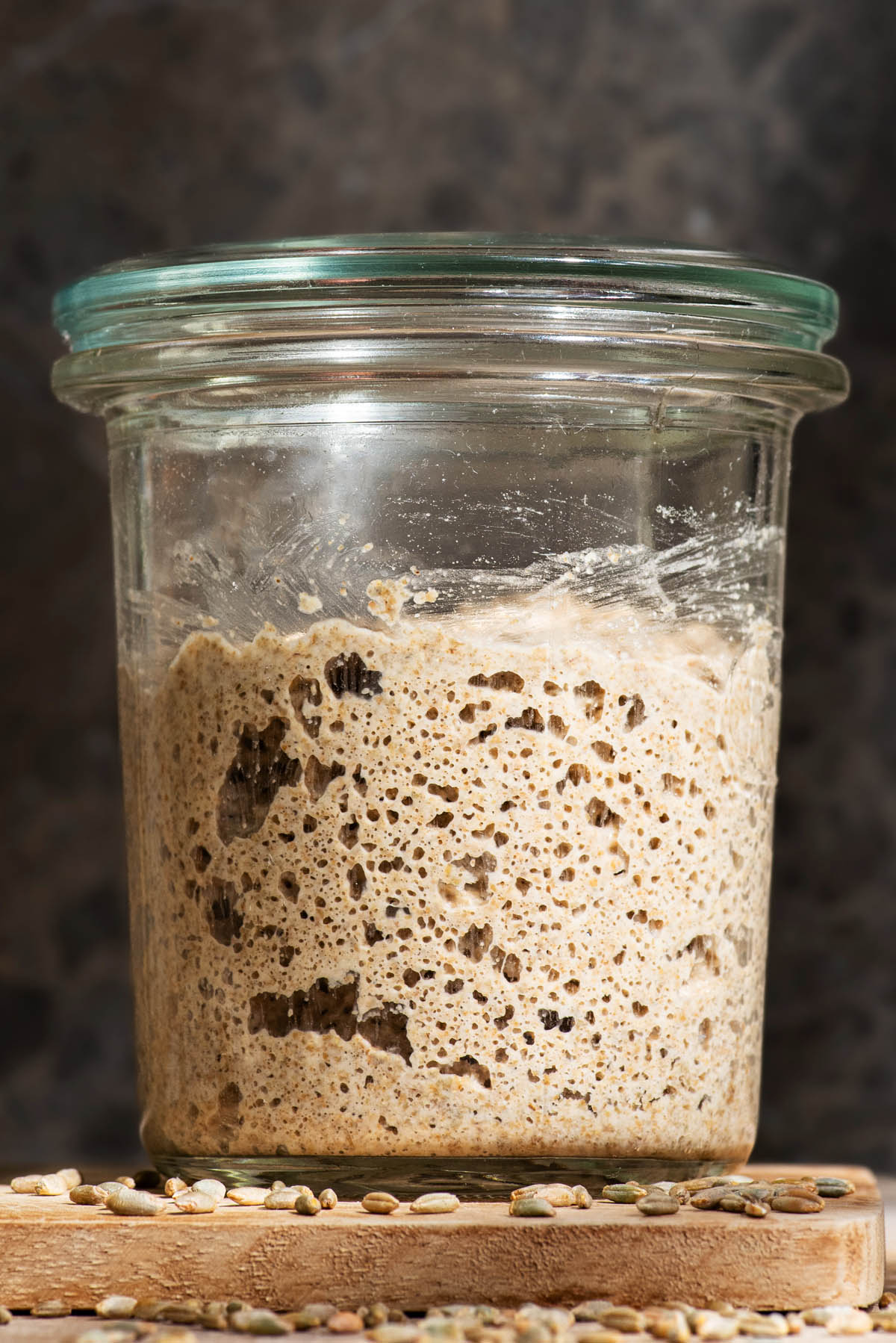
What we are going to do over a series of days is mix water and flour in certain proportions and under conditions to give the lactic acid bacteria community the opportunity to develop and colonize all that mixture which at the beginning has the appearance of a paste and over the days (if everything goes well) becomes a symbiotic community of bacteria, yeasts and fungi (SCOBY).
This community is composed of lactic acid bacteria (the famous lactobacilli that ferment our yogurt, but also our cheeses and sauerkraut, among many other foods), yeasts, and fungi.
One of its unique characteristics is that it contains many different microorganisms, various lactobacilli and yeasts, unlike yogurt or commercial yeast, which use a single microorganism isolated and reproduced in a laboratory.
This gives our bread unique flavors and aromas, makes it more easily digestible, and provides nutrients not found in breads made with commercial yeast.
The lactobacilli present in sourdough starter release lactic acid as they reproduce, giving bread (or pizza) a distinctive acidic flavor that many find pleasant and others unbearable.
While proper feeding of the starter and bread-making techniques can result in slightly acidic bread, in my experience, it’s impossible to achieve completely acidic bread using sourdough starter.
We will need:
- 1kg White flour 0, 00, 000 or 0000
- 1kg rye or wholemeal flour
- Chlorine-free water (if you are going to use tap water, it is good to leave it in a pitcher for 24 hours so that the chlorine evaporates)
- A 500ml glass jar or larger. Alternatively, a plastic container can be used.
- A precision scale
Day 1:
If you have white flour and rye or wholemeal flour, mix 500g of each and keep this mix to feed the sourdough starter over the next 7 to 10 days.
Take 50 grams of the flour mixture and mix it in the jar with 50 grams of water.
Cover with a tea towel and leave in a warm place in the kitchen, on top of the refrigerator, for example. Ideally, it should be at a temperature between 23 and 30 degrees Celsius.
Note: Sourdough can also be started with only white flour, but its evolution is slower, and in the case of some very refined flours it may not develop at all.
Day 2:
24 hours later we will add another 50g of the flour mixture and another 50g of water to the mixture.
We put it back in a warm place covered with a tea towel.
You may already see activity in the sourdough starter, with some bubbles and, in some cases, an increase in volume, even tripling the original height. This doesn’t mean it’s ready to use.
In the first 3 days, there is some activity from the lactic acid bacteria, but other bacteria, not the ones we’re looking for, also reproduce and ferment. You must continue with the feeding schedule for at least 6 days to have an active starter ready for use in bread making.
Day 3:
24 hours after feeding we begin feeding every 12 hours, which will continue until our sourdough starter is ready for between 5 and 7 days.
The feeding is done in the following way:
We poured 35g of our mixture into a clean jar.
We add 70g of the flour mixture and 70g of lukewarm water, at about 33/34 degrees C
We left it in a warm place with a tea towel on top.
At 12pm we repeat the feeding:
We poured 35g of our mixture into a clean jar.
We add 70g of the flour mixture and 70g of lukewarm water, at about 33/34 degrees C
And we put it back in a warm place covered with a tea towel.
Day 4:
We repeat the feeding every 12 hours :
We poured 35g of our mixture into a clean jar.
We add 70g of the flour mixture and 70g of lukewarm water, at about 33/34 degrees C
Day 5:
We repeat the feeding every 12 hours :
We poured 35g of our mixture into a clean jar.
Add 70g of the flour mixture and 70g of lukewarm water, at about 33/34 degrees C. Always leave the starter in a warm place.
Normally, by the time we feed our sourdough starter for the second time on day 5, we can already see activity in it. It starts to fill with bubbles and increases in volume during the 12 hours following feeding. We’ll continue feeding it for one more day, and then we can perform the float test to check its activity.
Day 6:
We repeat the feeding every 12 hours :
We poured 35g of our mixture into a clean jar.
We add 70g of the flour mixture and 70g of lukewarm water, at about 33/34 degrees C
After 12 hours from feeding, we can check if the sourdough starter has risen and perform the float test. Here’s a video showing how to do it:
Great! If it’s already floating, you can start using it to make your ferments for bread and pizzas!
Once activated, the starter can be stored in the refrigerator for several months. If you plan to use it and it’s been stored for more than a week, it’s best to activate it for a couple of days beforehand. How do you activate it? By feeding it every 12 hours with 35 grams of starter, 70 grams of flour, and 70 grams of warm water, leaving it in a warm place. This can be in a jar with a lid, but it doesn’t need to be tightly sealed.
Frequently asked questions I received after sharing the technique on social media:
What do I do with the things I discard during those days?
You can use it in another bread dough you’re making (not to make it rise, but to add a little flavor) or in dough for empanadas, pancakes, or cookies. Otherwise, you can compost it if you have a compost bin. And if not, just discard it, since you only use a small amount of flour and you’ll save a lot on yeast. 🙂
It was very active for the first two days, but then no bubbles appeared. Should I throw it out?
As I explained, the activity in the first few days is related to the development of non-lactic acid bacteria. If we follow the feeding schedule of every 12 hours and keep it in a warm place, we should see activity again for a few days until it passes the float test.
Liquid formed on top and all the flour paste remained at the bottom, what do I do?
You can stir it and feed it again every 12 hours as indicated from day 3, that should activate it.
It makes a lot of bubbles and grows, but when I do the float test it sinks to the bottom. What could it be?
It could be several things:
-She’s not active enough yet: Resume feeding every 12 hours as indicated from day 3
– It over-fermented. Check if it floats after 8 or 10 hours of feeding; if it does, you can make your bread starter at that point while it’s still active. This often happens in summer because the high temperatures cause the lactobacillus to grow very quickly.
-It still needs an hour or two of fermentation before it floats. To check, try again an hour or two later to see if it floats.
Good luck with your sourdough starter!