Let’s clean the coins we found with our metal detector!
We provide you with a series of well-explained steps so you can identify, clean, protect, and store your coins and finds discovered with your detector.
Cleaning an ancient coin is not an easy task, as each discovery requires a different approach.
Depending on the condition and the metal, it will be necessary to use one method instead of another.
However, before starting the cleaning, you must first study the find to avoid using a cleaning method that could damage the metal or remove the patina.

Things to keep in mind before starting coin cleaning
- Identify what your found object is.
- It provides protection to the find from the moment it emerges from the ground
The nature of the soil will influence the condition of your find.
If the soil is acidic, your coin is very likely to be damaged or, worse, crumble when you remove it from the ground.
It is not uncommon to see very thin coins break into several pieces when they are taken out of the ground.
Nor is it unusual to unearth a precious bronze coin, only for it to begin deteriorating and falling to pieces moments later.
To avoid this, you should protect your find as soon as you take it out of the ground, placing it in a foam box like the Coinpad.
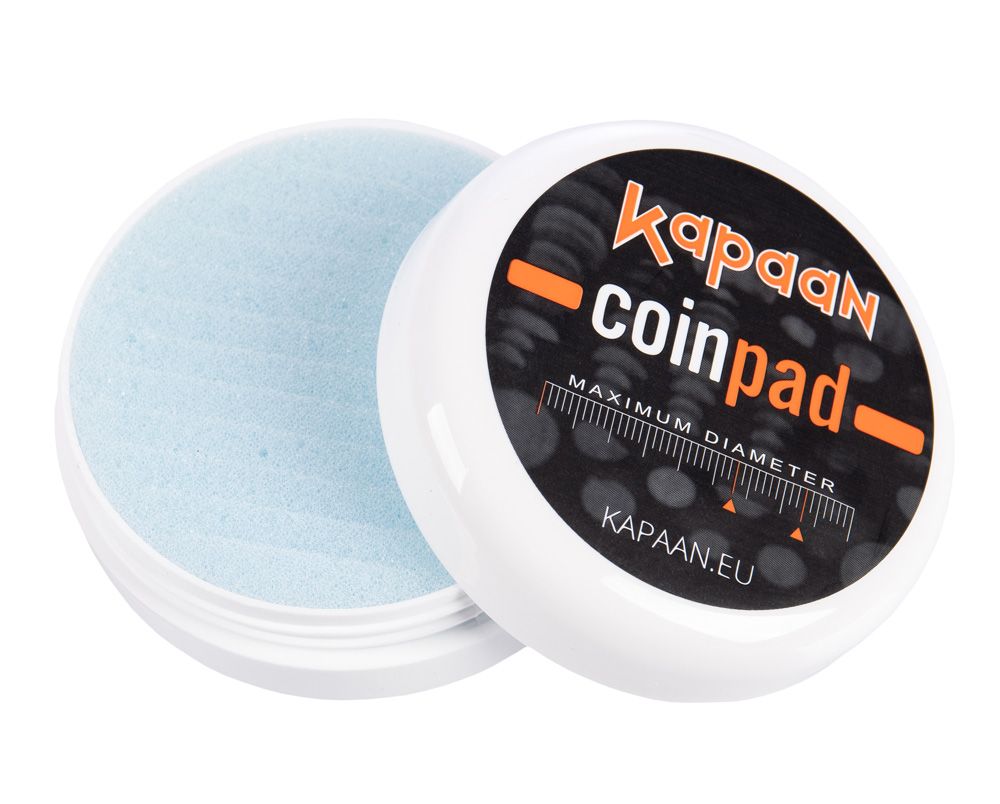
If your coin disintegrates, some treasure hunters place it in a tube filled with water to limit the impact of the changing environment.
In general, the deeper your find is, the more likely it is to be in good condition.
On sandy soil in the forest, coins are usually in good condition, whereas on beach sand, salt can have a more damaging effect.
Once again, this depends on the metal.
While gold and silver are protected, bronze and copper are more vulnerable to oxidation over time.
Don’t start cleaning the coin on the same ground.
If you’re just starting out, avoid aggressive cleaning.
The temptation is great to want to “restore” a coin or a find to try to return its original shine.
Keep in mind that if a find is damaged by the terrain or wear and tear, you cannot restore it because it has lost its reliefs and, therefore, material.
One of the most common mistakes is wanting to pickle the coins to make them shine.
For bronze finds, oxidation has formed over decades, centuries, or millennia, giving a color depending on the type of terrain where it has been located. It is essential to protect this oxidation or patina that gives all the value to this coin, especially if it is homogeneous.
You should not use harsh products such as vinegar, household cleaners, or lemon juice.
Ultrasonic cleaning should also be avoided, except for jewelry and more modern coins; electrolysis should be reserved for iron objects depending on their condition, as this process can damage them irreversibly.
Use chemical solutions with caution.
In this article, we will present you with chemical solutions that you should use depending on the type of findings and their condition.
To begin with, prioritize mechanical cleaning of your coins.
There are no miracle products for cleaning a coin; while some may be very useful, they will almost always require additional mechanical cleaning, as we will see below.
Don’t think you can clean different types of coins with the same method
For each metal, for each condition of coin, there is a corresponding cleaning method.
If you think you’ve found a cleaning method that works for all discoveries, you’re wrong.
If someone recommends a method that always works, you shouldn’t take it seriously.
Cleaning is an art, and at each stage of the process, each finding corresponds to a method, a tool, a product.
Remove the top layer of soil
Before starting the cleaning, it is necessary to remove the layer of dirt covering your find.
This can be done in the field with a multi-function brush, but you must stop when you reach the surface of the find and can distinguish the metal.

Keep in mind that the hard ground covering your coin also protects it; it’s best to wait for this first stage until you get home.
In this first instance, a magnifying glass will be very helpful.
Surface cleaning underwater with a brush
The simplest method is to clean your find underwater.
Contrary to popular belief, water will not harm your discovery, which may have been exposed to rainwater or humidity for centuries.
Pass your coin under water and gently remove most of the dirt with the palm of your thumb.
For the hardest layer, you will need to use some more specific tools.
Now we must remove the residual soil using a mechanical method
Once most of the soil has been removed underwater, or if you prefer not to use water, you can opt for a mechanical method to remove the top layer of soil or what remains of it.
You can use a cleaning pencil with a brass tip.
Keep in mind that brass can scratch and damage the patina, so you should stop as soon as you get close to the surface of the coin.
Remove the thickest soil using a chemical method
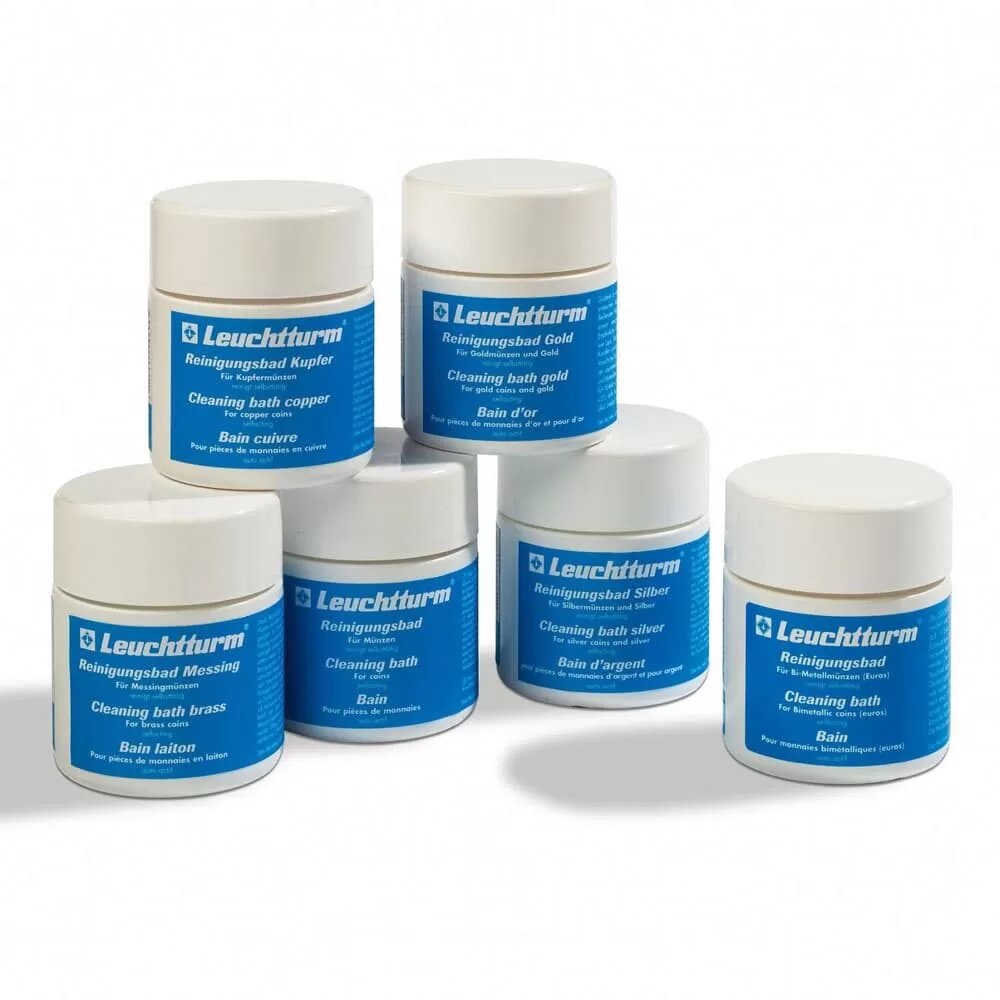
Once you have removed most of the soil, you can use a restorer.
This chemical product allows you to clean the coin without damaging it.
During this bath, which is done in a container provided with the product, you should not rub the coin before stabilizing it.
Avoid cleaning coins of different metals in the same bath; also avoid submerging coins of brass or copper.
You must use gloves, tweezers, and protective goggles.
Once most of the soil has been removed, much of the surface of your find is now visible and accessible.
You will know you have reached this stage when, upon passing your find underwater, nothing comes loose.
The choice of method will depend on the metal or alloy of the find.
You can use a wooden board to support your find during cleaning.
Avoid plastic boards or stands, which are too hard and can damage your coin if it is fragile; wood is preferable, as it is much softer.
How to clean bronze coins?
As you may have already gathered, for bronze pieces, the goal is to clean them without damaging the beautiful layer of oxidation that gives your discovery all its value.
To do this, you must choose the right tools.
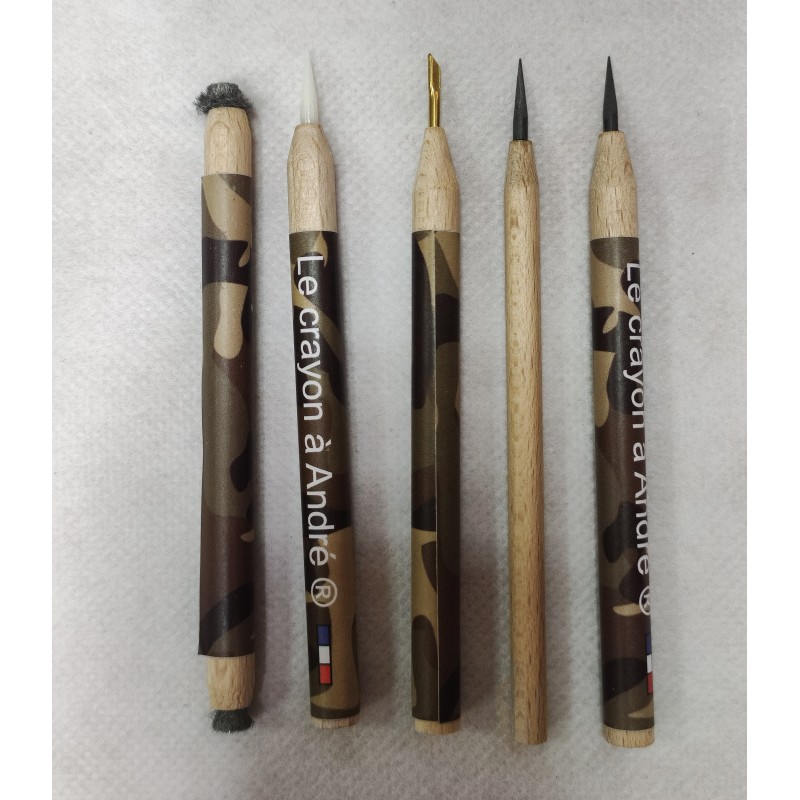
The fiberglass cleaning pencil is the most well-known.
With slow, circular movements, the fiberglass brush tip of the pencil will remove any dirt that is still stuck on.
Fiberglass does not remove the patina as long as it is not pressed hard.
You should not use this pencil on a gold or silver find, as you could scratch it.
Wear gloves and a mask when using this pencil.
The precision cleaning pen is a more precise version, as its name suggests.
Instead of a fiberglass brush, the pencil has a white composite lead.
Cleaning is more precise but slower than with a cleaning pencil.
For harder deposits, you can use a black graphite lead that comes with the pencil.
Sometimes, some coins have encrustations, that is, an oxidation so hard that it does not come off without applying force.
In this case, use the blade of the precision cleaning pencil to remove them.
How to clean copper coins?
As for copper, this depends on the condition of the coin.
In general, avoid chemical methods and initial cleaning with a restorative product, and opt for mechanical cleaning with fiberglass.
Sometimes 000 glass wool is used, but it is too imprecise and less suitable than a fiberglass-tipped pencil.
Cleaning other types of metals and alloys.
For modern coins, no special precautions are necessary, as most do not have a patina.
Of course, you can use the same mechanical cleaning methods as for bronze described in the previous paragraph.
How to clean silver and copper coins?
Silver, as a metal, is easy to clean.
Just be careful not to scratch it, and avoid mechanical methods.
If your silver coin has a beautiful, even black patina across its entire surface, we recommend that you do not remove it.
If the amount of silver is low, be careful not to use harsh chemicals.
How to clean gold coins?
Gold is stainless; it does not need to be cleaned.
It is true that some jewels may lose their shine over time, but in the case of ancient coins taken from the earth, one should not try to make them shine.
With gold, any method that could scratch it should be avoided.
Now we will detail the next step, and we will focus on the finishing.
How to perform detailed cleaning on reliefs?
With a magnifying glass, you can still see traces of dirt on the portrait on the obverse of your coin or on the legends, and that bothers you.
Once again, your precision cleaning pen will be your ally, this time thanks to its brass needle tips that will allow you to remove the last deposits in the smallest corners.
For final work, there are also precision needles with interchangeable leads.
Once the last deposits are gone, rub your find with a microfiber cloth.
There’s no need to use binoculars or a microscope; opt for a good 2-in-1 magnifying glass, which is much more practical.
How should we protect the coins we find with a metal detector?
Once you have found an object, the next step will be to protect it.
If you have used a chemical method, don’t forget to neutralize it by rinsing it with water or baking soda.
Before storing it, you need to protect it from the passage of time.
Even in a drawer, coins continue to oxidize; numismatic experts even speak of “monetary” patinas.
In general, you should store your findings away from light and moisture.
Some bronze or copper finds, and even some plated coins, may continue to deteriorate over time in the monetary system.
You can create a shield that will protect them from air and moisture, thus limiting oxidation.
Storing your coins found with the metal detector
To classify your modern coins, a numismatic album will suffice.
If your coins are fragile or have a brittle patina, the narrow plastic sheets that press into the album could damage them, especially when taking them out to look at them.
Opt for numismatic drawers or medal cases.
XL versions are also available with taller, variable-height compartments for items. These drawers have the advantage of being stackable.
You can even place transparent capsules to store your coins if you don’t want to leave marks on them.
And we will always recommend the use of gloves.