It’s hard to find anything quicker, easier, and tastier to make in the kitchen than homemade cookies (especially if you have a couple of “extra” hands ready to lend a hand).
There are countless cookie recipes, but we all usually have one that stands out above the rest, our favorite cookie recipe, the one that never fails.
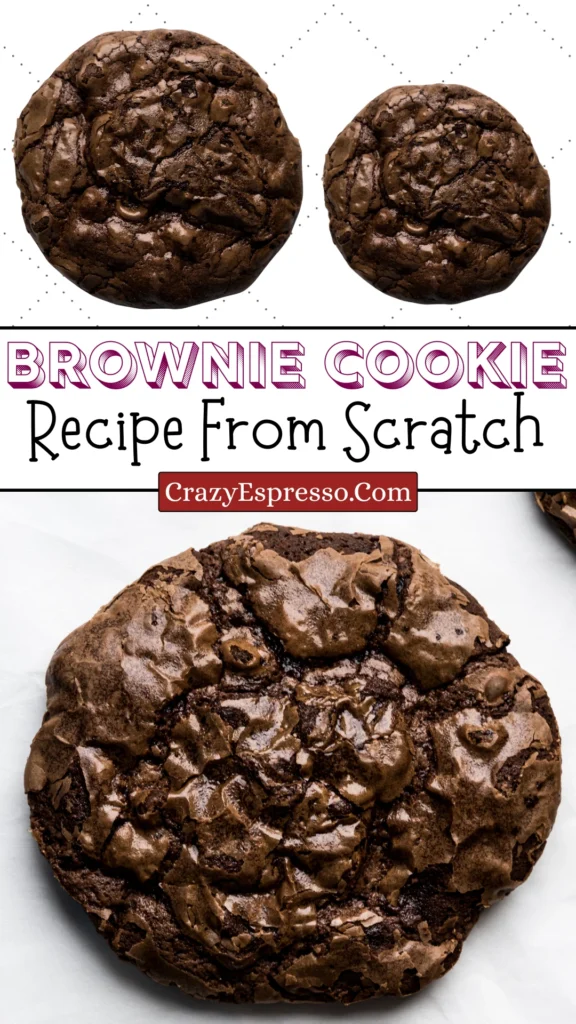
In our case, and after a long and undisputed reign of classic chocolate chip cookies, these brownie‑style chocolate cookies are our latest obsession.
And not just because they’re loaded with chocolate (and good chocolate at that, the kind we like to eat straight from the jar), but precisely because of that; choosing your chocolate carefully will make a huge difference in the final result.
After all, this ingredient alone—doubly starring thanks to the melted chocolate in the dough and the extra chocolate chips we add at the end—represents almost half (or more) of the contents of each of these chocolate cookies, so it seems more than understandable that it’s necessary to pay special attention to its selection.
Another of the virtues of these chocolatey cookies lies in their irresistible texture; if you love a good brownie as much as I do, you’ll know exactly what I mean.
I’m referring to that dense yet tender crumb, soft and melt‑in‑the‑mouth, bursting with flavor and intensity that at the very least makes you squint, and sometimes can even leave you speechless. You can see it, right?
And if all this weren’t enough, what do you think of its appearance? That color, that shine, those irregular cracks that whimsically crisscross its surface—they all promise good times (and if they’re in good company, even better).
It’s decided then. I’ll be waiting here with a couple of these and a glass of milk so you can tell me about your experience firsthand.
What do brownie cookies contain?
Primarily, brownie cookies are a concentrated source of:
- Carbohydrates: Coming from the flours and sugars used in its preparation, they provide the necessary energy to the body.
- Fats: Mainly saturated fats from butter, chocolate and other fatty ingredients, which provide flavor and texture.
- Sugars: Added to sweeten, they are responsible for its characteristic flavor.
- Proteins: In smaller quantities, they come from eggs and other ingredients such as nuts or seeds if added.
Chocolate brownie‑type cookies Recipe
Category: Confectionery
Diners: 12
Preparation time: 15 minutes
Cooking time: 10 minutes
Ingredients
| Ingredient | Quantity |
|---|---|
| Good quality chocolate (50%‑70% cocoa, according to personal preference), finely chopped | 225 g |
| Unsalted butter | 55 g |
| Whole cane brown sugar | 135 g |
| Pure vanilla extract | 1 teaspoon |
| Eggs (L) | 2 |
| All‑purpose wheat flour | 85 g |
| Pure cocoa powder, defatted and without added sugars | 12 g (2 level tablespoons) |
| Baking powder (Royal type) | 1 teaspoon |
| Salt | 1 teaspoon |
| Chocolate chips (or chopped chocolate) | 75 g |
| Flaky salt (optional) | to taste |
Preparation
- Preheat the oven to 180°C (electric and without fan) and place two oven racks, one in the upper third and the other in the lower third (2).
- In a medium heatproof bowl, place the finely chopped chocolate and butter and melt them using a double boiler set over a medium saucepan of simmering water (without letting it boil), stirring constantly with a whisk. It is very important to ensure that the bottom of the bowl never touches the water; the chocolate should melt thanks to the heat of the steam. The water temperature is too high to come into direct contact with the bowl containing the chocolate, as this would damage it from the excessive heat. The Nordic Ware double boiler makes this task truly simple and safe. If you prefer, you can also melt the chocolate and butter in the microwave, always at medium power and checking and stirring with a spatula every 30 seconds to prevent the chocolate from burning. Once melted and combined, let the mixture cool slightly while you continue with the process.
- In a separate small bowl, add the flour, cocoa powder, baking powder, and salt, and whisk until fully combined. Set aside.
- In the bowl of our electric mixer, fitted with the whisk attachment (or in a separate large bowl with a whisk, preferably electric), beat the eggs with the sugar and vanilla extract at medium‑high speed for about 4‑5 minutes until the mixture becomes light and fluffy. It is very important to incorporate enough air into the mixture at this point to achieve that attractive crackled surface on our cookies.
- Next, add the melted chocolate and butter (step 2), which will have cooled slightly, and gently combine until you get a homogeneous mixture.
- Next, add the reserved dry ingredients (step 3) and, if you’ve been using an electric mixer, gently fold them in by hand with a silicone spatula, using only the necessary movements until no traces of flour remain. The dough will be noticeably thinner than other types of cookie dough (like shortbread or chocolate chip cookies), but still thick enough to work with easily.
- We then place approximately 27g of dough per cookie (about a heaped tablespoon) onto two non‑stick baking trays (2), such as this one from DeBuyer, which eliminates the need for parchment paper, leaving about 5cm between them. To make this easier, we can use a small ice cream scoop or a piping bag (without a decorative nozzle). If we don’t have either of these, we can also use a couple of tablespoons, making sure the portions of dough are roughly rounded. For added convenience, we can lightly grease the spoons with non‑stick cooking spray or a thin film of neutral‑flavored oil (such as sunflower oil).
- Once our portions of dough are arranged on the trays, we distribute the chocolate chips or chunks, pressing them lightly into the dough (3). If the dough has hardened a bit (this will depend on the type of chocolate we’ve chosen (1) and the time elapsed since we melted it; if we placed the portions of dough using two spoons, it takes a little longer and the result is less uniform) and we want our cookies to have a more or less uniform shape, we can flatten the portions of dough slightly with our hands and even smooth out any visible irregularities with our fingertips. Even so, I personally find the rustic look of homemade cookies absolutely captivating.
- Finally, we bake our cookies for about 10‑12 minutes (depending on whether you prefer them softer or more cooked inside; I personally love them soft in the center like brownies, so I bake them for less time), swapping the positions of the baking trays halfway through the baking time. Their appearance won’t tell you when they’re done, so it’s best to err on the side of caution and not overbake them, as they’ll become dry and lose all their charm if overbaked.
- Remove them from the oven, sprinkle a few flakes of salt over the cookies (if you’d like to add that touch of salt, which I assure you is a great addition), and let them rest on the baking sheets for about 5 minutes before transferring them to a cooling rack with a flat spatula to finish cooling (they’re still a bit fragile fresh out of the oven). Even so, if one “slips through” before it’s completely cooled, I’m not going to tell anyone…
Nutritional Facts for Brownie Cookie Recipe
| Nutrient | Amount per Serving | % Daily Value* |
|---|---|---|
| Serving Size | 1 Cookie (45g) | — |
| Calories | 210 | 11% |
| Carbohydrates | 28g | 10% |
| Protein | 3g | 6% |
| Total Fat | 10g | 13% |
| Saturated Fat | 6g | 30% |
| Cholesterol | 28mg | 9% |
| Sodium | 95mg | 4% |
| Potassium | 120mg | 3% |
| Fiber | 2g | 7% |
| Sugars | 19g | — |
| Vitamin A | 180 IU | 4% |
| Vitamin C | 0mg | 0% |
| Calcium | 25mg | 2% |
| Iron | 1.8mg | 10% |
Note: Nutritional values are approximate and may vary depending on ingredients, chocolate type, cookie size, and preparation method used.
*Percent Daily Values are based on a 2,000-calorie diet.
Notes
- All ingredients must be at room temperature, unless otherwise stated.
(1) The higher the percentage of cocoa in the chocolate we choose, the more intense the flavor, and the denser our cookie dough will become as it cools. Even so, once in the oven, it will melt again without any problem.
(2) If we don’t have two wire racks and/or two non‑stick baking trays, we’ll bake our cookies in batches (leftover dough can stay in the bowl at room temperature between batches). If we’re using a conventional baking tray, we’ll need to line the bottom with a silicone mat or parchment paper. In this case, the tray should be placed in the center of the oven when we put the cookies in, and we’ll have to let it cool before baking the next batch.
(3) Some people prefer to add the chocolate chips directly to the dough (in the last step) instead of placing them on each of the already formed cookies. The difference is that they may not be as visible (this is purely an aesthetic choice), some cookies may have more chocolate than others, and if any chips fall onto the bottom of the cookie, they will melt upon contact with the baking sheet, leaving a gap. Furthermore, if using a piping bag to dispense the dough, the chips could get stuck.
- We can also refrigerate the cookie dough for about 30 minutes once all the ingredients are combined; this way, we can even handle it directly with our hands when dividing the portions.
- If you want your chocolate chip cookies even more chocolatey or with extra texture, try adding a few more chocolate chips to each cookie (you can even double the amount). You can also leave them out altogether, although I don’t recommend it; you’d be missing out on an absolutely indescribable experience.
- Although the texture and flavor will be slightly different, you can substitute olive oil for the butter. You’ll end up with some truly interesting and equally delicious cookies.
- If that seems like too many cookies, you can easily divide the quantities in half.
- They are stored at room temperature in an airtight container, protected from air, for about 3 days.
- Remember: 1 teaspoon = 5 ml; 1 tablespoon = 15 ml.