You can make bracelets, necklaces, and other accessories with brightly colored beads that young people often wear at raves. You can wear colorful bracelets from top to bottom on your arms to attend a rave.
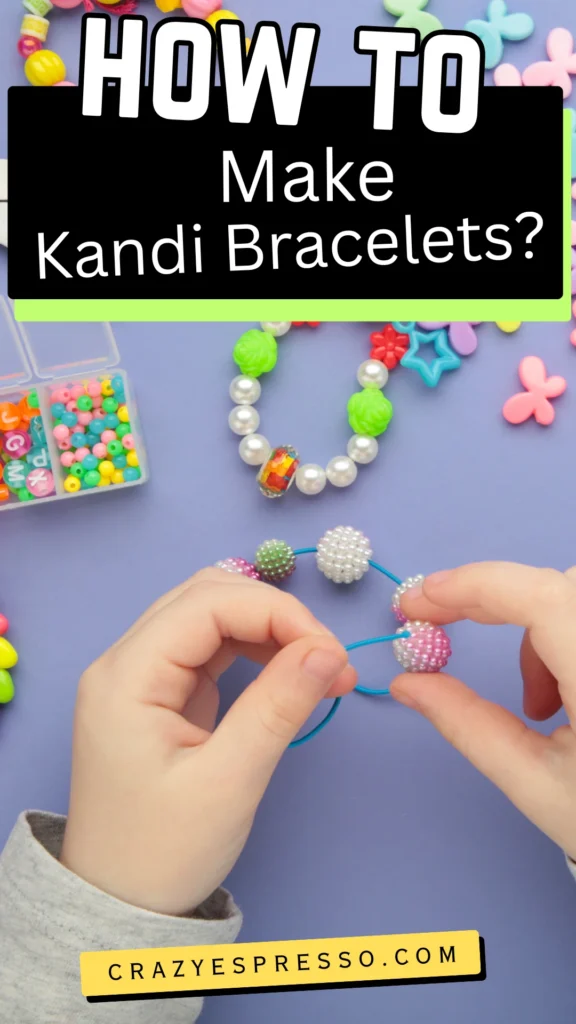
If you meet another raver, you can suggest a trade where they choose one of your bracelets in exchange for one of theirs. It’s fun to make these kinds of bracelets, and it’s also a popular way to sell them.
How to make a basic bracelet
1: Choose the right materials.

- For a basic bracelet, you’ll need several meters of elastic cord, a selection of pony beads, and scissors.
- While pony beads are classic for making a traditional bracelet, you can use any type of bead as long as the hole is large enough to be threaded twice onto the cord.
2: Measure and cut the cord.

- Depending on your wrist size and the desired width of the bracelet, you’ll need different amounts of cord.
- Wrap it around your wrist to get a general measurement, then multiply that length by 5 to 6.
- Cut the cord to this length. If you run out of cord while making the bracelet, you can always cut a little more and tie it on.
3: String the first row of beads.
Tie a knot at the end of the cord (leaving a small tail) and begin stringing the beads. Using 25 to 30 beads is standard, but you’ll only need enough to make the bracelet large enough to slide on and off your wrist without being too loose.


4: Tie off the first row.
Pull the cord and beads so they are neatly aligned against the knot at the end. Tie the short knotted end to the long loose end with a secure knot. Cut off the excess cord at the short end, but leave the long end intact.

5: String the second row of beads.
- Making the second row will be a little slower than the first, as it involves adding a single bead and then weaving the string over the previous row.
- To make the second row, string a bead onto the long end of the string, then slide it through the bead directly below and next to the bead you’re working with.
- Add another bead and slide the string through or under the next bead in the first row.
- Continue this process until you reach the starting point.
- Add a bead to the string, then pass it over the first bead and through the second bead of the first row.
- This is how the rows are woven.
- Since you’re skipping beads in the first row to weave the second, the bracelet will look zigzag with only two rows completed.

6: Add a third row of beads.
- Use the same procedure as before to add the third row.
- This time, you don’t need to tie the cord in a knot, as you can continue adding beads to fill in the gaps.
- Thread a bead onto the cord where there is an empty space, then attach it to the bracelet by passing the cord through the corresponding bead in the first row.
- Continue around the entire bracelet until you have created two complete rows of beads, then tie off the cord.

7: Add extra rows.
While you can technically complete the bracelet with just two rows of beads, many people prefer to add several rows beyond the first two. Use the method described earlier to weave beads together and create an uneven row. Then, add another row to fill in the gaps.

8: Finish the bracelet.
When you feel the bracelet is perfect, tie the cord and try it on to check the fit. If at any point during the making process you run out of cord, you can cut an extra piece and tie it to the ends, trimming any excess to create a smooth transition.