Tough steak is disappointing. You spend money on a nice piece of meat, but it ends up chewy and hard to eat. The good news is you can fix tough steak before cooking it. Tenderizing breaks down the hard muscle fibers and makes the steak soft, juicy, and easy to chew.
I’m Fatima. I have cooked many tough steaks in my life. I learned that even a cheap cut can taste like an expensive one if you tenderize it the right way. Let me show you five simple methods that really work.
Why Is Some Steak Tough?
Steak comes from different parts of the cow. Muscles that work a lot (like the shoulder or leg) are tough and chewy. Muscles that do less work (like the tenderloin) are naturally soft.
The goal of tenderizing is to break down the tough connective tissue inside the meat. You can do this with a tool, a marinade, or by cooking it slowly.
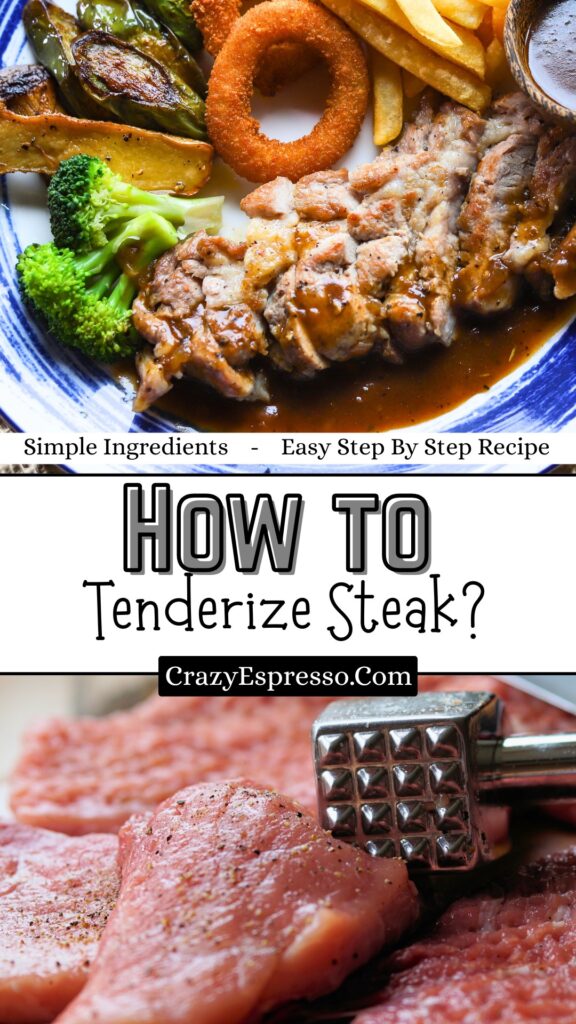
Method 1: Use a Meat Mallet (Mechanical Tenderizing)
This is the oldest and simplest way. You literally pound the steak with a heavy tool to break the fibers.
What You Need
- A meat mallet (also called a meat tenderizer). It has a flat side and a bumpy side.
- Or use a rolling pin, a heavy skillet, or even a hammer wrapped in plastic.
How to Do It
- Place the steak between two sheets of plastic wrap or wax paper. This stops meat from splattering.
- Start pounding from the center and work outward. Use the bumpy side of the mallet to create small cuts in the meat.
- Do not pound too hard. You want to flatten the steak slightly, not turn it into mush.
- Aim for an even thickness of about ½ inch.
Best Cuts for This Method
- Top round
- Bottom round
- Chuck steak
- Flank steak
Pro tip: If you do not have a mallet, use the edge of a small plate or the bottom of a heavy glass.
Method 2: Use a Fork (Simple DIY)
No special tools? No problem. A regular fork works too.
How to Do It
- Hold the fork like a hammer.
- Poke the steak all over on both sides. Push the prongs deep into the meat.
- Make hundreds of tiny holes. This breaks the muscle fibers and lets seasoning soak in.
Why It Works
The holes cut through the tough fibers. It also creates paths for salt and marinade to go deep inside the steak.
Pro tip: For even better results, poke the steak, then flip it and poke again. Do this 2-3 times.
Method 3: Salt Brine (Dry Brine)
Salt is a powerful tenderizer. It pulls out moisture, then the meat reabsorbs it along with the salt. This breaks down proteins and makes the steak juicy and flavorful.
How to Do It (Dry Brine)
- Pat the steak completely dry with paper towels.
- Sprinkle kosher salt generously on all sides. Use about ½ teaspoon per pound.
- Place the steak on a wire rack over a baking sheet.
- Put it in the fridge uncovered for 1 to 24 hours. The longer, the better.
- Before cooking, do not rinse the salt off. Just pat dry again and cook.
Best Steaks for Dry Brining
- Ribeye
- Strip steak
- Sirloin
- Flank steak
Pro tip: Do not use table salt. It is too fine and will make the steak too salty. Use kosher salt or sea salt.
Method 4: Acidic Marinade (Chemical Tenderizing)
Acids like lemon juice, vinegar, or yogurt break down tough meat fibers. This is a great method for thin steaks like flank or skirt.
How to Make an Acidic Marinade
| Ingredient | Amount | Purpose |
|---|---|---|
| Acid (lemon juice, lime juice, or vinegar) | ¼ cup | Breaks down fibers |
| Oil (olive or vegetable) | ½ cup | Adds moisture |
| Soy sauce or salt | 2 tbsp | Adds flavor |
| Garlic and spices | To taste | For taste |
How to Do It
- Mix all ingredients in a bowl or zip-top bag.
- Add the steak. Make sure it is fully covered.
- Refrigerate for 30 minutes to 2 hours. Do not leave it overnight – acid can make the meat mushy.
- Remove steak, pat dry, and cook.
Best Steaks for Acidic Marinade
- Flank steak
- Skirt steak
- Hanger steak
Pro tip: Yogurt is a very gentle acid. It tenderizes without making the meat mushy. Great for tougher cuts.
Method 5: Enzymatic Marinade (Fruit Power)
Some fruits contain natural enzymes that eat away at tough meat fibers. This method is very powerful, so you must be careful.
Fruits That Work
- Kiwi – Very strong. Use only 15-20 minutes.
- Pineapple – Strong. Use 30-45 minutes.
- Papaya – Contains an enzyme called papain. Use 30-60 minutes.
- Ginger – Mild. Use 1-2 hours.
How to Do It
- Peel and mash the fruit. Or use fresh juice (not bottled – bottled juice has no active enzymes).
- Mix with a little oil and salt to make a paste.
- Coat the steak and refrigerate.
- Watch the time – Over-marinating turns the steak into a weird, mushy texture.
- Rinse off the fruit, pat dry, and cook.
Best Steaks for Enzymatic Marinade
- Flank steak
- Skirt steak
- Round steak
Warning: Do not use this method on expensive steaks like ribeye. They are already tender. Save it for tough, cheap cuts.
Comparison Table: Which Method Should You Use?
| Method | Best For | Time Needed | Difficulty |
|---|---|---|---|
| Meat mallet | Any tough steak | 5 minutes | Easy |
| Fork poking | Any steak | 5 minutes | Very easy |
| Dry brine (salt) | All steaks (including good cuts) | 1-24 hours | Easy |
| Acidic marinade | Thin, tough cuts (flank, skirt) | 30 min – 2 hours | Medium |
| Enzymatic marinade | Very tough cuts (round, chuck) | 15 min – 1 hour | Medium (careful with time) |
Pro Tips for Tenderizing Steak
Do this ✅
- Always slice against the grain – Look at the lines on the meat. Cut across them, not along them. This is the most important rule for tender steak.
- Let the steak rest after cooking – Wait 5-10 minutes before slicing. The juices go back inside.
- Cook to the right temperature – Overcooked steak is always tough. Use a meat thermometer.
- Choose the right cooking method – Tough cuts like chuck are better for slow cooking or braising, not grilling.
Avoid that ❌
- Pounding too hard – You will crush the meat and make it flat and dry.
- Marinating too long in acid or enzymes – The steak will become mushy and gross.
- Using bottled fruit juice – The heat from pasteurization kills the tenderizing enzymes. Use fresh fruit.
- Forgetting to dry the steak – Wet steak does not sear well. Always pat dry before cooking.
Nutrition Facts (Per 4 oz cooked steak, tenderized but no added ingredients)
| Nutrient | Amount |
|---|---|
| Calories | 220 kcal |
| Protein | 26 g |
| Fat | 12 g |
| Saturated Fat | 5 g |
| Carbohydrates | 0 g |
| Fiber | 0 g |
| Sodium (with dry brine) | 400 mg |
Values vary based on cut of meat and cooking method.
Frequently Asked Questions (FAQs)
What is the fastest way to tenderize steak?
The meat mallet or fork poking method takes only 5 minutes. You can do it right before cooking.
Does salt really tenderize steak?
Yes. Dry brining with salt is one of the best methods. It breaks down proteins and helps the meat hold onto moisture. It also adds flavor.
Can I tenderize steak in the slow cooker?
Yes. Low, slow, moist heat breaks down tough connective tissue. This is perfect for chuck roast or brisket. Cook for 6-8 hours on low.
Why is my steak still tough after tenderizing?
Possible reasons:
- You did not slice against the grain.
- You overcooked it.
- You used a very cheap, tough cut that needs long, slow cooking, not quick tenderizing.
Can I tenderize a frozen steak?
It is harder to tenderize frozen meat. Thaw it completely first. Then use the mallet or fork method.
Is it safe to reuse a marinade?
No. The raw meat juice in the marinade can have bacteria. If you want to use it as a sauce, boil it for 5 minutes first.
What is the most tender cut of steak?
Tenderloin (filet mignon) is the most tender. It does not need any tenderizing. Ribeye and strip steak are also naturally tender.
Final Thoughts
Tenderizing steak is easy once you know the methods. Pound it. Poke it. Salt it. Marinate it. Each way works for different cuts and different time constraints.
Remember the two most important rules:
- Always slice against the grain.
- Do not overcook your steak.
Use a cheap cut like flank or round, tenderize it with salt or a mallet, cook it to medium-rare, and slice it correctly. You will be amazed at how soft and delicious it can be.