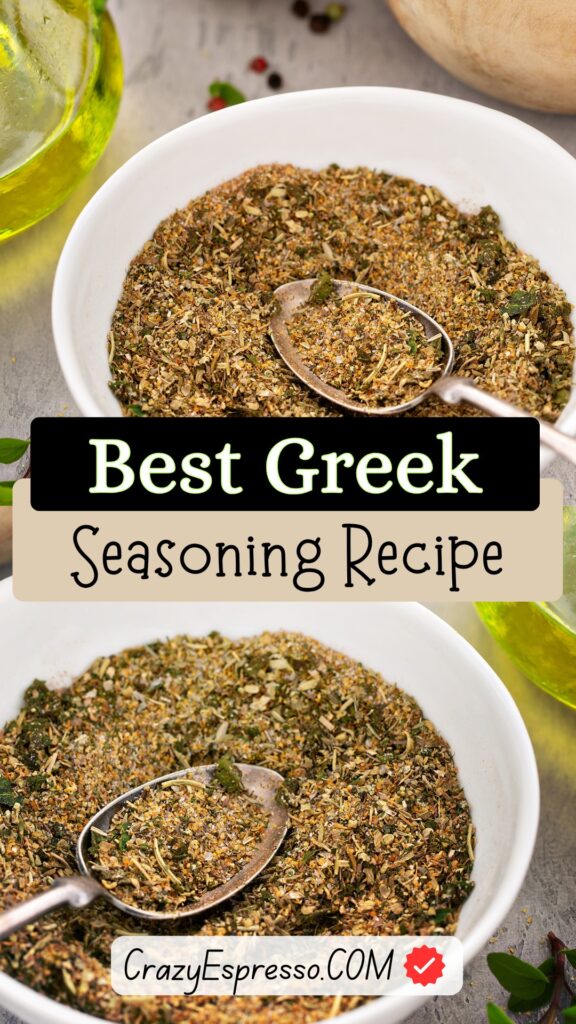
Greek seasoning is very easy to prepare with the combination of aromatic herbs and spices that you like best, as each commercial preparation does so; there is no orthodox formula for this seasoning ideal for salads, meats and fish.
There are many variations of Greek seasoning, a blend of aromatic herbs and spices used to flavor various dishes, from salads to stews and roasted meats and fish.
It’s similar to what we mentioned when we talked about Italian seasoning: supermarkets and bulk spice shops offer pre‑made blends with specific names.
They are usually seasonings for different types of culinary preparations, for curries, for barbecues, for rice dishes, for kebabs or skewers… and also offer mixtures of spices and aromatic herbs that aim to provide the flavors of a country’s culinary culture.
This doesn’t always mean it’s a spice used in the cuisine of the country indicated. It’s worth noting that even depending on the brand of spices used, you’ll sometimes find preparations with different names that have the same contents, but the ingredients are listed in a different order, perhaps one is missing, or there’s an extra one…
Greek seasoning is one of the preparations we can find in the wide catalog of mixtures of aromatic herbs and spices, but of course, as usual we are going to recommend that you make it yourselves according to your taste, since it is not a legitimate recipe.
Some of the most commonly used aromatic herbs in Greek cuisine are known, such as spearmint or mint, oregano, dill… usually all spice mixes that allude to Greek gastronomy include them, but there are also those who add the rest of the popular aromatic herbs, thyme, marjoram, bay leaf, basil, parsley, rosemary, etc.
When we talk about these prepared aromatic blends, you already know that they are made with dried herbs. This is how they can be stored and used from time to time. Fresh herbs last much less time. In any case, you could make the blend fresh before seasoning the dish; it will be much fresher and have more aroma and flavor, without a doubt.
We usually make our Greek seasoning with equal parts mint and oregano, plus onion and garlic powder, a little grated lemon zest (dried if you’re storing it), and salt. Try it; it’s a great seasoning to mix with a little extra virgin olive oil and rub on meats or fish before cooking. You can also add a generous amount of extra virgin olive oil and vinegar to make a vinaigrette for salads.
If we’re preparing the seasoning for meats, we add black pepper to enhance the flavor. However, if you’re making it without this spice, you simply add the pepper to the food you’re going to cook. We do the same when we want to add dill to some salads and fish dishes.
So we recommend experimenting with the base, adjusting the proportions of each ingredient to your liking—more herbs than garlic and onion, of course—and salt in moderation. Once you’ve tried it, let us know what you think and how you like to prepare your Greek seasoning.
Greek Seasoning Recipe
Time: 05 minutes
Portions: 20
Meal: Salt‑free seasoning
Method: No cooking
Ingredients: Marks 20 portions
| Ingredient | Quantity |
|---|---|
| Dried oregano | 3 tbsp |
| Dried basil | 2 tbsp |
| Garlic powder | 2 tbsp |
| Onion powder | 2 tbsp |
| Dill | 1 tbsp |
| Ground black pepper | 1 tbsp |
| Ground thyme | 1 tbsp |
| Ground nutmeg | ½ tsp |
Directions
- In a small bowl, add all the ingredients.
- Mix well until fully combined.
- Use immediately or store in an airtight container until ready to use.
Tips
Try this seasoning with the Chicken Salad with Tabouli!
Nutritional Information
20 servings per recipe
Serving size: (3g)
| Nutrient | Amount per serving | % Daily Value* |
|---|---|---|
| Calories | 10 | |
| Total Fat | 0g | 0% |
| Saturated Fat | 0g | 0% |
| Trans Fat | 0g | |
| Cholesterol | 0mg | 0% |
| Sodium | 0mg | 0% |
| Total Carbohydrates | 2g | 1% |
| Dietary Fiber | 1g | 4% |
| Total Sugars | 0g | |
| Contains 0g of added sugars | 0% | |
| Protein | 0g | |
| Vitamin D | 0mcg | 0% |
| Calcium | 24mg | 2% |
| Iron | 1mg | 6% |
| Potassium | 41mg | 0% |
* The % Daily Value (DV) indicates how much a nutrient in a serving contributes to a daily diet. 2,000 calories a day is the general recommendation.