Normally, inflammation occurs when we get hurt. The area reddens and swells because the body releases cytokines, substances whose purpose is to “repair” the damage caused by the impact.
This acute inflammation is necessary and beneficial. However, when an inflammatory process persists beyond this initial moment, the cellular damage coexists with the body’s efforts to repair it, causing the inflammation to become chronic.
This not only leads to discomfort but also creates a breeding ground that can give rise to degenerative diseases.
And the thing is, the inflammation that isn’t visible is the most harmful. The inflammation caused by a blow is obvious, but there’s another kind that we can’t see, that we don’t notice, and that doesn’t hurt, caused by the accumulation of fat in the abdomen, which is the most dangerous.
How does it occur? Abdominal fat also causes the release of cytokines into the bloodstream, specifically adipokines, because they originate from fat cells, or adipocytes. This continuous release of adipokines is what causes invisible inflammation.
Ultra-processed foods like pastries also produce inflammation. There are several factors that cause it, but the main ones are an unbalanced diet, excessively rich in fats and sugars, and chronic stress. The good news is that these are two factors we can change.
7-Day Anti-Inflammation Diet Plan
| Day | Meal | Description |
|---|---|---|
| Monday | Breakfast | Soaked oatmeal and a teaspoon of cinnamon + tea, coffee with or without milk, or unsweetened plant-based milk |
| Lunch | Tomato and onion salad + ratatouille with chickpeas and 1 egg + 2 tangerines | |
| Dinner | Cream of asparagus soup + chicken burger with peppers + herbal tea | |
| Tuesday | Breakfast | Wholemeal toast with Iberian ham + tea, coffee with or without milk, or unsweetened plant-based milk |
| Lunch | Vegetable salad with tuna belly and light vinaigrette + Grapes | |
| Dinner | Vegetable stew + Grilled sardines with lemon + Relaxing herbal tea | |
| Wednesday | Breakfast | Wholemeal toast with canned tuna + tea, coffee with or without milk, or unsweetened plant-based milk |
| Lunch | Tomato and onion salad + Stewed lentils with vegetables + 1 orange | |
| Dinner | Zucchini cream soup (without cream or processed cheese) + Hake in light green sauce + Relaxing herbal tea | |
| Thursday | Breakfast | Soaked oat flakes and a teaspoon of cinnamon + tea, coffee with or without milk, or unsweetened plant-based milk |
| Lunch | Gazpacho + Baked mackerel on a bed of potato and tomato + Apple | |
| Dinner | Onion soup without bread or cheese + Country-style omelet + Relaxing herbal tea | |
| Friday | Breakfast | Wholemeal toast with mashed avocado and a pinch of turmeric + tea, coffee with or without milk, or unsweetened plant-based milk |
| Lunch | Spinach and walnut salad + Baked salmon with roasted broccoli + 1 pear | |
| Dinner | Pumpkin cream (no cream) + Turkey breast with grilled zucchini + Relaxing herbal tea | |
| Saturday | Breakfast | Soaked oatmeal with grated apple and cinnamon + tea, coffee with or without milk, or unsweetened plant-based milk |
| Lunch | Mixed green salad + Chickpea and spinach curry + 1 handful of berries | |
| Dinner | Leek and potato soup (light) + Baked sea bass with asparagus + Relaxing herbal tea | |
| Sunday | Breakfast | Wholemeal toast with fresh cheese and sliced tomato + tea, coffee with or without milk, or unsweetened plant-based milk |
| Lunch | Roasted vegetable salad + Brown rice with vegetables and tofu + 1 orange | |
| Dinner | Cold cucumber and yogurt soup + Grilled chicken breast with sautéed mushrooms + Relaxing herbal tea |
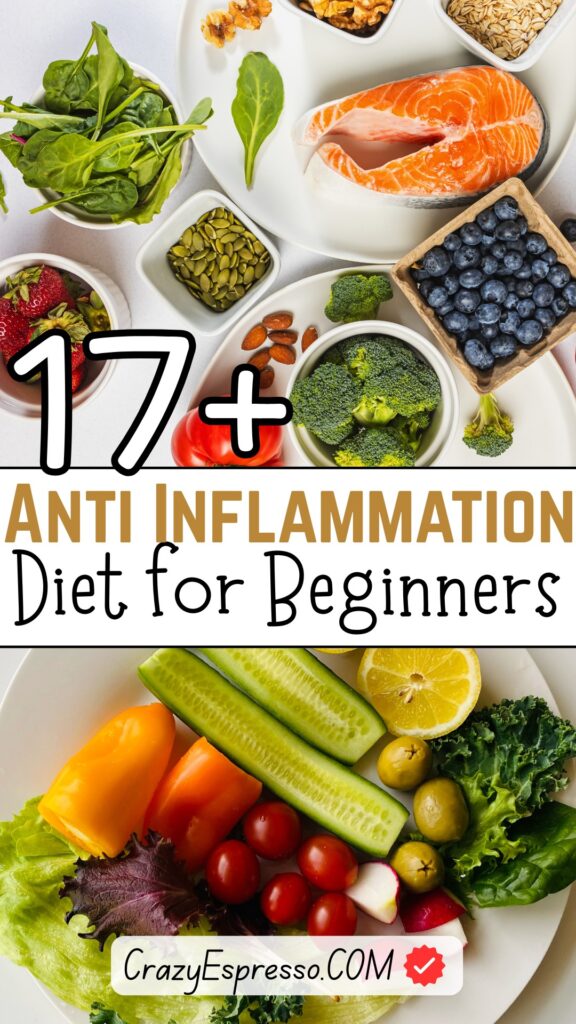
17+ Anti-Inflammation Diet Principles, Foods, and Tips
Below is a list of 17+ recommendations based on anti‑inflammatory nutrition science. Incorporate these into your daily routine to help reduce chronic inflammation.
- Eat colorful fruits and vegetables daily – Aim for at least 5 servings. Berries, leafy greens, oranges, and bell peppers are rich in antioxidants.
- Choose whole grains over refined – Oats, brown rice, quinoa, and whole wheat bread provide fiber that helps lower inflammatory markers.
- Include omega-3 fatty acids – Found in oily fish (salmon, sardines, mackerel, tuna), walnuts, flaxseeds, and chia seeds.
- Use extra virgin olive oil as your main fat – It contains oleocanthal, which has anti-inflammatory effects similar to ibuprofen.
- Limit ultra-processed foods – Avoid pastries, cookies, chips, fast food, and ready-made meals that contain trans fats and refined sugars.
- Reduce red and processed meats – Limit beef, pork, sausages, bacon, and ham. Replace with legumes, poultry, or fish.
- Spice it up with turmeric and ginger – Both have powerful anti‑inflammatory compounds. Add black pepper to turmeric to enhance absorption.
- Cut back on added sugars – Avoid sugary drinks, candies, desserts, and sweetened yogurts. Use fresh fruit to satisfy sweet cravings.
- Eat fermented foods – Yogurt, kefir, sauerkraut, kimchi, and kombucha support gut health, which reduces systemic inflammation.
- Stay hydrated with water and herbal teas – Green tea, ginger tea, and chamomile tea are especially anti‑inflammatory. Avoid soda and sweetened beverages.
- Limit alcohol consumption – Excessive alcohol increases inflammation. If you drink, do so in moderation (one glass of red wine occasionally may be beneficial due to resveratrol).
- Avoid artificial trans fats – Found in margarine, commercial baked goods, and fried fast foods. Check labels for “partially hydrogenated oils.”
- Include nuts and seeds daily – A small handful of almonds, walnuts, or pumpkin seeds provides healthy fats and vitamin E.
- Manage chronic stress – Practice meditation, deep breathing, yoga, or regular physical activity. Stress hormones like cortisol can trigger inflammation.
- Get adequate sleep – Poor sleep increases inflammatory cytokines. Aim for 7–8 hours of quality sleep per night.
- Exercise regularly – Moderate activity (walking, cycling, swimming) reduces inflammation. Avoid overtraining, which can have the opposite effect.
- Maintain a healthy waist circumference – Excess belly fat releases pro-inflammatory adipokines. Follow the WHR guidelines mentioned earlier.
- Cook with anti-inflammatory herbs – Oregano, rosemary, basil, mint, and cilantro add flavor and beneficial plant compounds.
- Eat legumes several times a week – Lentils, chickpeas, beans, and peas are rich in fiber and phytonutrients that lower inflammation.
- Consider a Mediterranean-style diet – This pattern naturally contains all the anti‑inflammatory principles: fish, olive oil, vegetables, fruits, nuts, and whole grains.
Conclusion
There’s no single formula to determine if you have abdominal bloating, but there are three key factors that can indicate whether or not you’re experiencing it:
- Waist-to-hip ratio (WHR) – It’s not easy, but your waist circumference can give you a clue. The waist-to-hip ratio (WHR) is a formula used to determine the proportion of fat that accumulates in these areas. To calculate it, measure your waist at the level of the last floating rib and your hips at their widest point. Divide the waist measurement in centimeters by the hip measurement. The ideal results are 0.7 for women and 0.9 for men. A WHR greater than 0.8 in women and 0.95 in men indicates central obesity; and the more fat that accumulates in the love handles, the more bloating.
- Biological age (telomere length) – It’s not easy, but your waist circumference can be a clue. If you look older than your ID indicates, you may be suffering from silent inflammation, according to research from the University of Southern Denmark. The study determined that the shorter the telomeres—the protective caps at the ends of chromosomes, also known as “biological clocks”—the more chronic inflammation was present.
- Other general symptoms – While these are general symptoms, others can be associated with inflammation, such as persistent fatigue, mood swings, localized aches and pains, and swelling.