The splits, also known as the splits, are an impressive movement that every dancer should master. It consists of opening the legs so that they are aligned with each other and extended in opposite directions, forming an angle of at least 180 degrees.
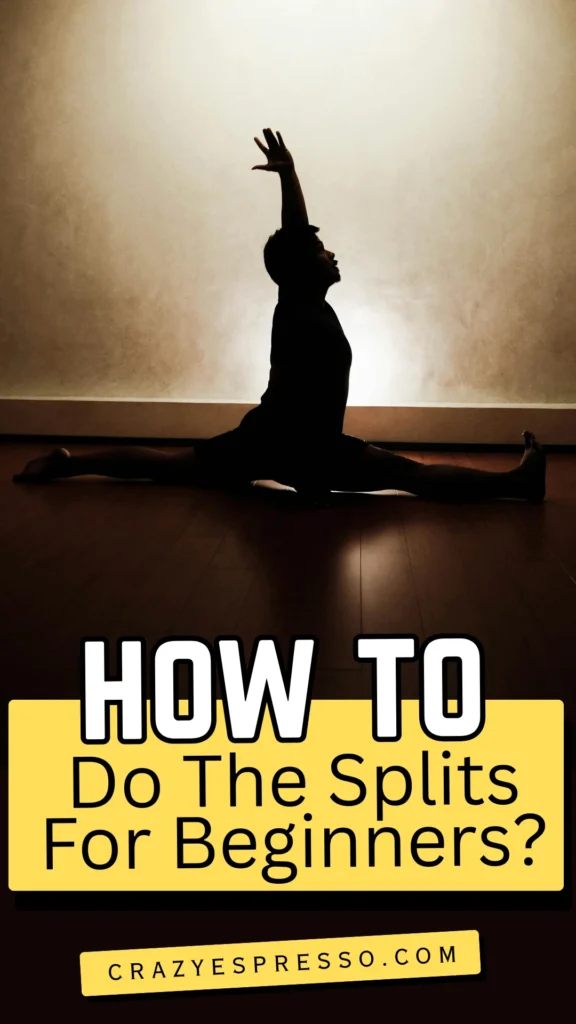
Regardless of the athletic activity for which it is practiced: ballet, rhythmic gymnastics, artistic gymnastics, hip hop, figure skating, yoga, contortionism, martial arts, synchronized swimming or modern jazz dances, the front or side split as a warm‑up exercise is a recurring element that dancers often practice.
However, not everyone can do this move. It all depends on your level of motivation, your age, and your dance background.
To help you in this process, here are some exercises you should do regularly to achieve a perfect leg split.
Start by warming up
Are you motivated to learn how to do the splits? Don’t forget, like anything else, it will take time and effort, but anything is possible if you want it.
And if the idea of doing it alone doesn’t appeal to you, why not take a dance class? Find out more about dance classes in Madrid or salsa classes in Barcelona.
To progress in the best conditions, it’s essential to dedicate time to warming up. In any sport, warming up is the first step to a good workout, as it helps prevent muscle injuries, which can sometimes be quite serious, especially when trying to do a split without any preparation.
If you already play a sport, take advantage of your warm‑up to do your dance exercises. Swimming, running, or brisk walking are excellent activities to start working on your cardiovascular fitness. There are new sports that are starting to emerge and can be very effective for building endurance (TRX, CrossFit, Bodypump, and others).
Before attempting the splits, you should perform some leg exercises. These exercises involve kneeling and extending one leg forward so that the foot is flat on the ground, while simultaneously extending the other leg so that it is fully extended with the toes touching the ground.
After doing the splits, lie down with your legs stretched out and shake them to loosen the muscles.
Stretching exercises should last about 30 seconds each to be effective. You should also repeat them in sets so your muscles get used to them.
But be careful, don’t overexert your muscles! Don’t rush to gain flexibility; taking your time is the best way to succeed. You have to stop when it starts to hurt. Don’t try to go any further.
By the way, to warm up more effectively, choose appropriate clothing: something comfortable, breathable, and warm. Some athletic leggings can be too rigid for certain stretches and will therefore limit your leg opening. Lightweight clothing generally allows for full joint mobility.
Even if you do these exercises on your own, don’t hesitate to ask a sports teacher from time to time to avoid making bad movements.
The best exercises for doing a front split
The front split is usually the most well‑known and popular among beginner dancers. However, achieving this feat of flexibility takes a lot of time and effort.
To achieve this, dancers must regularly work muscles like the hamstrings and inner thighs. Below, you’ll find some exercises that will help you master this famous split and amaze everyone!
Joint movement
In this exercise, you’ll need to lie on your back with your knees bent. Try to hold each knee with one hand. Move your legs from side to side. You can do this simultaneously or alternately. Since it’s a free movement, you can also do it in circles, opening and closing your legs, weaving your legs, and so on.
The butterfly exercise
Even if you like animals and insects, don’t trust the pretty name of this exercise too much, because in reality, it’s like torture.
To perform this exercise, sit on the floor, ideally with your back against a wall. Place the soles of your feet flat on the floor and then grasp your ankles. Slowly lower your chest as you bring your knees towards the floor. Hold this position for a few minutes, then release. Repeat the exercise until your muscles feel more prepared.
Be careful not to overdo it. If it’s your first time exercising, your body needs time to adjust. Pushing yourself too hard will only cause health problems.
You just need patience to be able to do the splits effectively. The great thing about this exercise is that you’ll notice progress over time because you’ll see your knees getting closer to the ground each time, and you won’t feel so uncomfortable.
The position of the V
To take the exercises a step further, lean against the wall again and extend your legs. They should be touching the floor. Open them as wide as you can. You have to try to bring them to the wall. Of course, you won’t be able to yet because you’re still warming up, but try your best without overdoing it.
The second step is to lower your chest forward until you feel the inner thighs pulling.
There’s another version of this exercise to further work your inner thighs. Maintain your V‑position and keep your buttocks on the floor. Stretch your torso forward, but shift your weight onto each leg alternately.
Leg stretch
Stand up and step forward with your right leg. Then, bend your front knee and extend your left leg. Try to place both hands on the floor and push gently. Hold this position for one minute and then switch legs. This isn’t a quick stretch; try to do four repetitions with each leg. Notice how your muscles stretch as you control your breathing.
The little frog
Unlike the butterfly pose, lie face down, bend your knees, and bring your feet together. Try to keep your feet flat on the floor and you’ll feel your pelvis lift. Rest your elbows on the floor while keeping your head facing the floor. Rock forward and backward. Notice the opening. Do this exercise for a few minutes and repeat.
Gravity is your best friend!
This last exercise is more relaxing than the previous ones.
Lie on your back with your buttocks against the wall. Before doing the exercise, make sure the wall is clear of furniture or anything else that might obstruct your movement.
Extend your legs in a V shape as in the previous exercise. The only difference is that this time your legs will be in the air. Gravity will act on your legs and gently stretch them.
This exercise will help you relax at the end of your warm‑up because it doesn’t require any special effort. Just let yourself go as far as you can.
Notice how the weight of your legs allows you to open wider each time.
The unique thing is that for it to be truly effective, you need to do the exercise for about ten minutes. But think of it as a way to improve both your flexibility and your breathing, which is very important in each of these exercises, as it helps you better manage pain and stress.
When you want to come out of the pose, simply do so gently, especially to avoid possible injury. Bring your legs together slowly, as in the starting position. You will feel strong resistance, but don’t stop. Keep coming up until they meet.
The best exercises for doing a side split
The side split is less popular than the front split, but in dance, it’s important to master it.
By performing these few exercises regularly, you will reach your goal and perhaps one day become a star dancer.
Lunge exercises
First, the forward stride is a position that should be held for approximately 30 seconds.
Step forward with one leg and position it at a right angle. Extend the back leg without forcing it too much. If you feel pain, stop immediately; you should only feel a slight stretch in your muscles.
There’s another variation of the forward lunge that also helps improve flexibility for doing a split. Start in the same position as for a forward lunge, but this time place your back knee on the ground. Hold this position for 30 seconds.
Let’s move on to the reverse lunge. You can alternate between different types of lunges to avoid getting too tired or always working the same muscles.
The reverse lunge works the posterior thigh muscles. To do this, you need to shift your body weight onto your back leg while extending your front leg.
All types of lunges will allow you to work your leg muscles and increase their flexibility. The key is to alternate between different lunges to exercise multiple muscles in the same workout.
Once you complete the lunge exercises, return to the starting position and try lowering your elbows forward while keeping your back leg straight. This will give your pelvis and muscles one last workout.
Standing hamstring stretch
To perform this stretch, you can use a bar or do it standing up. It stretches the back of your leg and hip flexor muscles. Place your right foot in front of your hip, and your left foot on the floor should remain under your left hip. Keeping your chest lifted, gently lean forward until you feel a gentle stretch in the back of your hamstrings. Try to hold the position for a few seconds and, as always, remember to repeat the exercise with the other leg.
Touching the tips of the toes
For this exercise, you’ll need to be seated or standing. Keep your feet parallel, slightly wider than hip‑width apart, and don’t lock your knees. Lift your hips upward as you bend your torso over your legs, bringing your chest as close to your legs and head as possible. Try to stretch further with each breath. Hold the position and repeat the exercise.
And now you’re ready to try a side split! You’ll get there little by little, but you can already try lowering your pelvis as far as your limit, always keeping your pain threshold in mind.
How long does it take to do a leg split?
The splits is an exercise that takes time, a lot of time, especially if you’ve never done gymnastics or any other sport that requires flexibility. So you need to understand that you won’t be able to do the splits overnight.
The time it takes you to master this exercise will depend on many factors. What is truly satisfying is observing your progress and seeing how, little by little, you have achieved a better version of the posture.
Those who have practiced gymnastics or sports for years find it easier to identify points of reference and exercises to perform. Furthermore, their bodies more or less remember the efforts they have already made.
If you’ve never done gymnastics or dance, your success with this exercise will depend on other factors. Some people are more flexible than others and find it easier to improve their flexibility; they’re lucky.
Age is also a key factor. Younger people will find it much easier to do a split in a very short time. The body becomes much less flexible over time. This doesn’t mean the exercise is impossible, but rather that more patience and perseverance will be needed to achieve the desired results.
The desire to know how to do a split should be strong enough not to give up after the first attempt.
It’s also important to consider the frequency of your workouts. With only one workout per month, it will be very difficult to see results. On the other hand, by practicing a little every day, you’ll progress much faster.
Of course, if you learn to do the splits on your own, sometimes you’ll find it hard to find time during the day to practice, but if you hire a private teacher or take dance classes, your pace can be more consistent.
It will be up to you to see which method suits you best.
Other variations of the splits
This exercise has numerous variations, such as those listed below:
- The grand jeté, or leap, consists of taking a short run‑up (double step, step), usually initiated with the right leg. After the run‑up, the dancer jumps as high as possible, opening the legs so that they perform a split in the air, and lands with the legs together. The position of the arms is crucial, as they should form a cross with the head and torso.
- The squat, not considered a true variant, consists of separating the legs laterally until reaching 180º.
- The split jump consists of a jump and during that jump performing a split, landing again with the legs together in the same place where the jump was made.
- The highest split consists of exceeding the 180º angle of the split, reaching in some cases 270º – 315º.
- The flexed split is one in which the leg that is located behind is flexed, reaching if possible to touch its own head with the tip of the toe.
The golden rules for doing the splits without getting injured
- Don’t force it. Forcing it is always bad because even though muscles are naturally elastic, if we stretch them too much before they are ready, they can tear.
- Practice daily. The only way to gain the flexibility to do the splits correctly is through daily practice. For example, if you can’t practice every day, some professionals recommend practicing the pose at least three times a week and holding it for 20 seconds at a time to allow the muscles to release during the stretch. Remember, though, that it takes time.
- Always warm up. Static stretching is recommended when doing these flexibility exercises, as preparing your muscles will help you avoid injuries.
- Stretching. It’s difficult to do a split directly without stretching with some exercises.
- Don’t lose motivation. Although it may seem difficult at first, consistency and perseverance, as well as your motivation, will be the key elements to achieving your dream.